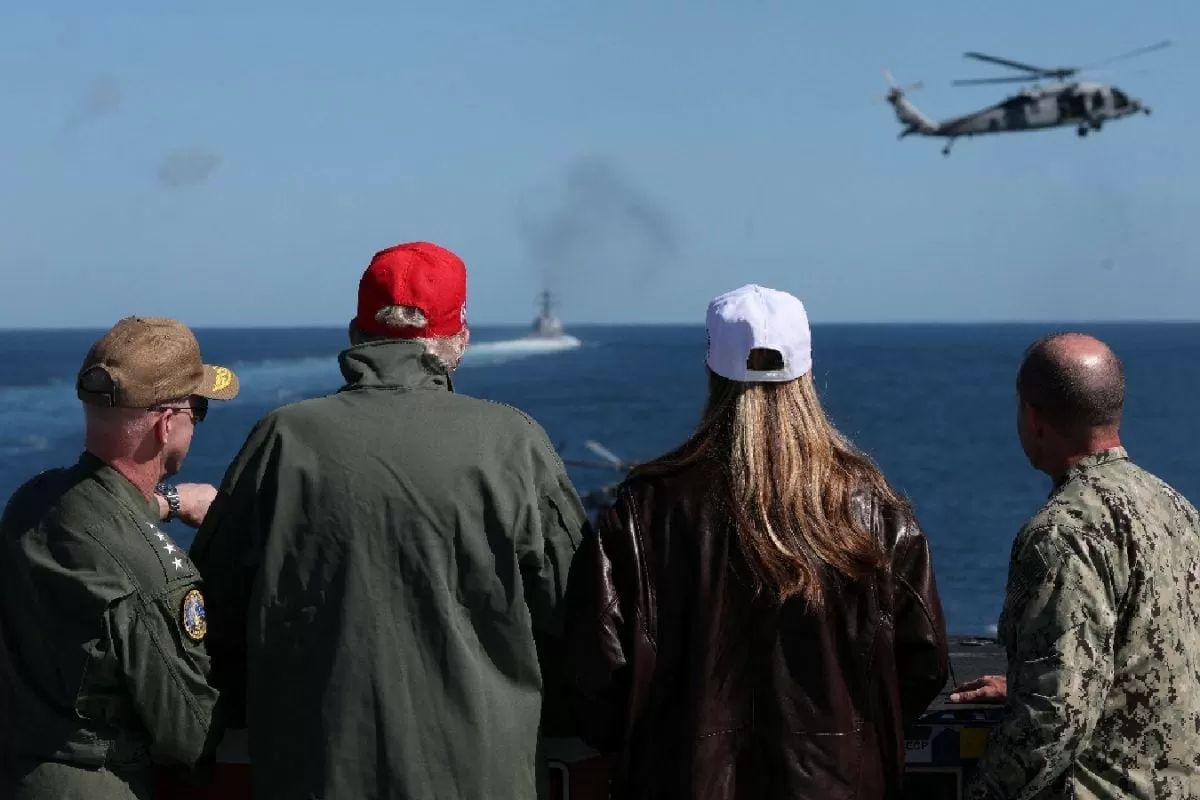
US Navy Would Escort Oil Tankers Through Strait Of Hormuz If Necessary: Donald Trump
The Strait of Hormuz is a vital waterway that connects the Persian Gulf to the Gulf of Oman, serving as a gateway for international trade and commerce. Located between Iran and Oman, this narrow stretch of water is only 21 miles wide at its narrowest point, making it a strategic chokepoint for global energy supplies. It is estimated that nearly a fifth of the world's oil supply passes through this crucial waterway, making it a crucial lifeline for the global economy.
The Strait of Hormuz has been a significant trade route for centuries, dating back to the ancient Silk Road. However, its importance has only increased in recent times, with the discovery of vast oil reserves in the Middle East. Today, the strait serves as a major shipping route for oil and gas exports from countries such as Saudi Arabia, Iran, Iraq, Kuwait, and the United Arab Emirates. It is also a crucial route for imports of goods and commodities into these countries, making it a vital link in the global supply chain.
The significance of the Strait of Hormuz cannot be overstated. It is responsible for the transportation of around 21 million barrels of oil per day, which accounts for approximately 35% of the world's seaborne oil shipments. This makes it the most critical chokepoint for oil trade in the world. Any disruption in the flow of oil through this waterway can have severe consequences for the global economy, leading to a spike in oil prices and affecting industries and consumers worldwide.
Despite its importance, the Strait of Hormuz has been a source of tension and conflict in the region. The waterway is bordered by Iran on one side and Oman on the other, with the United Arab Emirates and Qatar also having access to its waters. This has led to territorial disputes and political tensions, with countries vying for control over the strait. In recent years, there have been several incidents of attacks on oil tankers passing through the strait, raising concerns about the safety and security of this vital waterway.
However, despite these challenges, the Strait of Hormuz continues to function as a crucial trade route, thanks to the efforts of the countries bordering it. Iran, Oman, and the other Gulf countries have recognized the importance of this waterway and have taken steps to ensure its safety and security. The United States Navy also plays a significant role in safeguarding the strait, with its Fifth Fleet stationed in Bahrain, just a few miles away from the strait.
Moreover, the countries bordering the Strait of Hormuz have also invested in infrastructure and technology to improve the efficiency of the waterway. This includes the development of modern ports, expansion of shipping lanes, and the use of advanced navigation systems. These efforts have not only made the strait safer but have also increased its capacity to handle the growing volume of trade passing through it.
The Strait of Hormuz is not just a vital trade route; it is also a natural wonder. The waterway is home to a diverse ecosystem, with rich marine life and coral reefs. It is also a popular tourist destination, with its picturesque views and opportunities for water sports and fishing. The countries bordering the strait have recognized the importance of preserving this natural wonder and have taken steps to protect its environment and promote sustainable tourism.
In conclusion, the Strait of Hormuz is a crucial waterway that connects the Middle East to the rest of the world. Its significance in global trade and commerce cannot be overstated, and any disruption in its functioning can have severe consequences for the global economy. However, with the efforts of the countries bordering it and the support of the international community, the strait continues to serve as a vital lifeline for the world's energy supplies. It is a testament to the power of cooperation and the importance of safeguarding our shared resources for the benefit of all.