US Imposes Unprecedented Economic Blockade Against Iran, Treasury Chief Warns
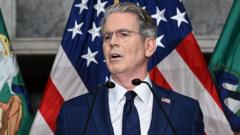
Historic Economic Offensive Against Iran Announced
The United States Treasury Department has unveiled what officials describe as the most comprehensive Iran economic sanctions campaign in the nation's history. Treasury Secretary Scott Bessent delivered the stark warning that American authorities intend to completely sever all economic connections with the Islamic Republic, marking an unprecedented escalation in financial pressure against Tehran.
Complete Economic Isolation Strategy
According to Bessent's recent statements, the Iran economic sanctions regime will extend beyond bilateral relations. The administration plans to systematically isolate any nation or entity that maintains financial partnerships with Iran. This multilateral approach represents a fundamental shift in how the United States enforces its Iran economic policy.
The Treasury Secretary emphasized that countries choosing to conduct business with Iranian entities will face severe consequences. This strategy effectively creates a choice for global financial institutions and governments: maintain relations with Iran or preserve access to American markets and banking systems.
Scope of the Financial Blockade
The proposed Iran economic sanctions encompass multiple sectors including energy, banking, trade, and investment. Bessent indicated that the administration would target the country's capacity to engage in international commerce, effectively cutting off vital revenue streams that sustain the Iranian economy.
Financial institutions worldwide have already begun reviewing their Iran-related activities in anticipation of enhanced enforcement measures. International banks operating in the United States face particular pressure, as regulatory authorities have made clear that any institution facilitating Iranian transactions faces potential penalties and removal from American financial systems.
Strategic Deterrence Through Economic Pressure
The administration characterizes this unprecedented Iran economic sanctions offensive as a strategic necessity rather than punitive action. Officials argue that comprehensive financial isolation serves as a deterrent against regional destabilization and nuclear proliferation concerns. By making the economic cost prohibitively high, policymakers believe they can influence Iranian government behavior and policy decisions.
The Treasury Department plans to actively monitor sanctions compliance across international markets. Enforcement mechanisms will include targeted designations, license revocation, and potential criminal prosecution for violations. Companies and individuals operating across borders must now conduct rigorous due diligence to ensure no financial flows benefit Iranian entities.
Global Economic Ramifications
The comprehensive Iran economic sanctions campaign will likely affect global energy markets, international trade patterns, and currency exchange rates. Countries heavily dependent on Iranian trade or investment, particularly in Asia and the Middle East, face difficult adjustments to their economic strategies.
Treasury officials acknowledge that implementing this Iran economic sanctions regime requires coordinated international effort. However, the administration has made clear that nations refusing cooperation will face secondary sanctions and economic consequences. This approach aims to create unanimous compliance regardless of individual countries' foreign policy preferences.
Implementation Timeline
While Bessent did not announce a specific implementation date, Treasury Department officials suggested that enhanced Iran economic sanctions measures would be rolled out in phases. Initial announcements regarding targeted designations and sectoral restrictions are expected within weeks, with broader financial measures following subsequently.
The Treasury Secretary's warnings represent the most aggressive posture toward Iran economic isolation since the original nuclear sanctions regime was established. This escalation signals the incoming administration's intention to prioritize maximum pressure policies as a cornerstone of Middle Eastern strategy and national security doctrine.


