UN Calls Mexico’s Cartel-Forced Disappearances 'Crimes Against Humanity,' Sheinbaum's Government Rebukes Claim
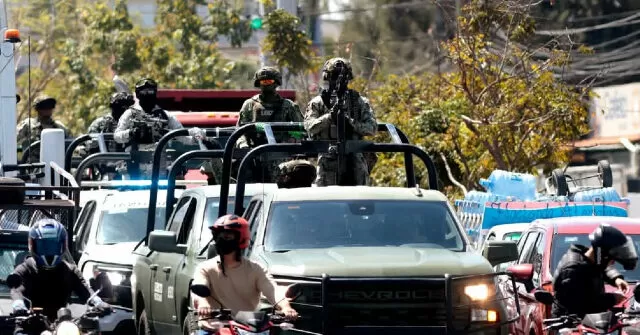
The United Nations has recently published a scathing report on the issue of enforced disappearances in Mexico, specifically those related to the notorious Mexican Cartels. The report, released by a UN committee, has called on the UN Secretary General to take action on this pressing matter and has labeled these disappearances as "crimes against humanity." However, the Mexican government, under the leadership of Mayor Claudia Sheinbaum, has strongly rebuked these claims.
The report, which was published by the UN Committee on Enforced Disappearances, has shed light on the alarming number of disappearances in Mexico, particularly those that are linked to the Cartels. The committee has expressed deep concern over the lack of action taken by the Mexican government to address this issue and has urged the UN Secretary General to request action from the General Assembly.
Enforced disappearances, also known as forced disappearances, are a grave violation of human rights and are considered a crime against humanity under international law. It refers to the abduction or detention of individuals by state authorities or organized criminal groups, followed by a refusal to acknowledge the person's fate or whereabouts. This practice has been prevalent in Mexico for many years, with thousands of people disappearing without a trace.
The UN report has highlighted the alarming statistics of enforced disappearances in Mexico, with over 40,000 cases reported since 2006. The majority of these cases are believed to be linked to the Cartels, who use this tactic as a means of controlling and intimidating the population. The report has also expressed concern over the lack of accountability for these disappearances, with very few cases resulting in prosecutions.
In light of these findings, the UN committee has called on the Mexican government to take immediate action to address this issue. They have urged the government to thoroughly investigate all cases of enforced disappearances, hold those responsible accountable, and provide justice and reparations to the victims and their families. The committee has also called for the implementation of measures to prevent future disappearances and to protect those who are at risk.
However, the Mexican government, under the leadership of Mayor Claudia Sheinbaum, has strongly rejected the claims made by the UN committee. In a statement, the government has stated that they do not agree with the characterization of enforced disappearances as "crimes against humanity." They have also emphasized that they have taken significant steps to address this issue, including the creation of a special prosecutor's office to investigate these cases.
Mayor Sheinbaum has also expressed her commitment to addressing the issue of enforced disappearances in Mexico. She has stated that her government is working tirelessly to ensure that justice is served for the victims and their families. She has also emphasized the need for international cooperation in addressing this issue, stating that it is a global problem that requires a collective effort to solve.
In conclusion, the UN report on enforced disappearances in Mexico has shed light on a pressing issue that has been plaguing the country for many years. The committee's call for action from the UN Secretary General and the General Assembly is a crucial step towards addressing this issue and providing justice to the victims and their families. While the Mexican government may have rejected the claims made in the report, it is clear that more needs to be done to address this grave violation of human rights. It is time for the international community to come together and take action to end enforced disappearances in Mexico once and for all.