Trump Signs Executive Order Limiting the Years of Eligibility, Number of Transfers
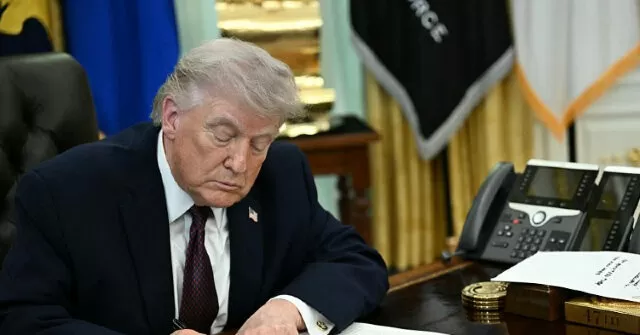
President Trump has taken another step towards fulfilling his promise of reforming and restructuring college sports in the United States. On Wednesday, he signed an executive order (EO) that aims to limit the number of years a player is eligible and the number of transfers in college sports.
The EO, titled "Protecting the Integrity of College Sports," is a major move towards ensuring fairness and equality in college sports. It comes after years of debate and controversy surrounding the eligibility and transfer rules in college sports.
Under the new order, college athletes will be limited to a maximum of five years of eligibility to compete in their respective sports. This means that once a player has completed five years of college, they will no longer be eligible to play for their school.
In addition, the EO also limits the number of transfers a player can make during their college career. This rule aims to prevent the exploitation of college athletes by coaches and schools who may pressure them to transfer for their own benefit.
President Trump believes that these changes will not only benefit the athletes but also the integrity of college sports as a whole. In a statement, he said, "College sports should be about the love of the game and the pursuit of education, not about exploiting young athletes for profit."
The decision to limit the years of eligibility and transfers has been met with mixed reactions. While some argue that it may limit opportunities for athletes, others believe that it will create a more level playing field and prevent the exploitation of young players.
One of the main concerns surrounding college sports is the pressure on athletes to perform at a high level while also maintaining their academic responsibilities. With the new EO, athletes will have a maximum of five years to balance their athletic and academic commitments, providing them with a fair chance to succeed both on and off the field.
The EO also addresses the issue of transfer rules, which have been a hot topic in recent years. Many college athletes have faced challenges when trying to transfer to a different school, with some facing restrictions and penalties from their previous school. This has often resulted in athletes being stuck in a school or program that may not be the best fit for them.
The new rule will allow athletes to transfer without facing any restrictions or penalties, as long as they meet the academic requirements of their new school. This will give athletes the freedom to choose the best fit for their academic and athletic goals, without being held back by restrictive transfer rules.
President Trump's executive order has been welcomed by many in the sports community, including college athletes and coaches. They believe that these changes will not only benefit the athletes but also promote fairness and integrity in college sports.
However, some critics argue that the new rules may limit opportunities for athletes, especially those who may need more than five years to complete their education. They also believe that the restriction on transfers may lead to a decrease in competition and diversity in college sports.
Despite the mixed reactions, it is clear that President Trump's executive order is a step in the right direction towards reforming and restructuring college sports. It aims to provide a fair and equal playing field for all athletes and promote the true spirit of sportsmanship and education.
In conclusion, President Trump's decision to limit the years of eligibility and transfers in college sports is a positive move towards creating a more fair and equal system for athletes. It is a step towards protecting the integrity of college sports and ensuring that they remain a platform for athletes to pursue their passion for sports while also receiving a quality education.