Trump Backs United Ireland Plan During Republic Visit
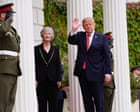
Trump's Unexpected Support for Irish Unification
During an official visit to the Republic of Ireland, US President Donald Trump has publicly voiced his backing for a unified Ireland, stating he would welcome such a development. The United Ireland prospect has long been debated among politicians and citizens, but Trump's endorsement marks a rare international intervention on the sensitive constitutional matter. Trump suggested that Irish reunification appears inevitable, and therefore the process might proceed without further delay.
The American leader's comments emerged at the beginning of a scheduled two-day visit to the Irish republic on Saturday, catching observers by surprise given the diplomatic complexities surrounding the issue. His remarks represented an unexpected position from a sitting US president on a matter traditionally handled with considerable diplomatic sensitivity.
Political Reactions and Official Responses
The intervention prompted immediate and stern responses from both the British government and Northern Irish unionist political figures. Officials from the UK swiftly contested Trump's characterization of the situation, seeking to clarify their position on maintaining the union between Great Britain and Northern Ireland. Unionist leaders in Northern Ireland similarly objected to the American president's statement, emphasizing their preference for the current constitutional arrangement.
The controversy highlights the ongoing tension between those who advocate for Irish unification and those who support maintaining the existing political framework. Trump's statement has effectively reignited debate over a question that remains deeply divisive within both Irish and British political circles.
Understanding the Unification Question
The concept of a united Ireland continues to generate significant discussion within Ireland, Northern Ireland, and internationally. The partition of Ireland, which occurred in 1921, created the Irish Free State and the Irish republic, while six counties in the north remained part of the United Kingdom. This division has shaped political relations and territorial disputes for over a century.
The Good Friday Agreement of 1998 established a framework allowing for potential reunification through constitutional means, provided both majorities in Northern Ireland and the Irish republic consent to such arrangements. This legal pathway remains available but continues to generate considerable debate among elected officials and the general population.
The Current Political Landscape
Trump's comments regarding a united Ireland reflect broader international awareness of the constitutional question, though his approach differs significantly from the measured diplomatic language typically employed by world leaders addressing this sensitive issue. The remark underscores how the Irish unification debate occasionally captures global political attention, particularly when prominent international figures offer their perspectives.
The statement from the American president suggests a simplified view of what remains a complex political and constitutional question affecting millions of people across the island and beyond. While some Irish nationalists welcomed his comments as support for their constitutional aspirations, others viewed the intervention as inappropriate external interference in internal British and Irish affairs.
Implications and Ongoing Debate
Trump's declaration about a united Ireland has demonstrated how deeply embedded the constitutional question remains in Irish political discourse and how sensitive the matter continues to be for all parties involved. The rapid response from UK and Northern Irish authorities illustrates the enduring significance of the territorial arrangement established over a century ago.
As discussions about Irish unification continue at various levels of government and civil society, interventions from international figures like the US president serve to maintain attention on the question. Whether such external commentary influences the trajectory of political developments within Ireland and Northern Ireland remains an open question for political analysts and observers.