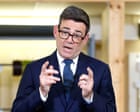
Labour Secures Decisive Victory in Greater Manchester Mayoral Election
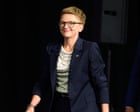
Labour's Commanding Success in Greater Manchester Mayoral Race
In a significant political development, the Greater Manchester mayoral byelection has delivered a resounding triumph for Labour. The party's candidate has successfully claimed the position previously held by departing Andy Burnham, demonstrating renewed voter confidence in the region's traditionally dominant political force. The Greater Manchester mayoral byelection results reflect Labour's capacity to recover electoral ground in key constituencies where opposing parties had previously made inroads.
Bev Craig Takes the Helm in Manchester
Bev Craig, who leads Manchester city council, has emerged victorious in the closely watched contest. As the incoming mayor, Craig assumes control of one of the United Kingdom's most significant elected positions outside the capital. This role carries substantial influence over regional policy, economic development, and strategic decision-making affecting millions of residents across the conurbation. The transition marks a pivotal moment for Labour's governance in the North West.
Recovery of Lost Ground Against Reform and Green Parties
The election outcome proves particularly noteworthy given recent electoral shifts in the political landscape. During May's local elections, Reform UK and the Green Party had successfully captured support in specific Greater Manchester constituencies, signalling potential vulnerabilities in Labour's traditional strongholds. However, the byelection results demonstrate that these gains were not necessarily indicative of a permanent realignment. Labour's comprehensive victory suggests the party has effectively reconnected with voters in areas where their support had temporarily wavered.
Strategic Regions Returned to Labour Control
Across multiple districts within the Greater Manchester region, voters returned to supporting Labour candidates, reversing the trend observed during the spring electoral cycle. This recovery indicates that local concerns and Labour's policy platform resonated sufficiently to rebuild the electoral coalition that had fractured months earlier. The party's messaging and candidate selection appear to have successfully addressed voter grievances that had driven support toward alternative options.
Significance of the Mayoral Position
The Greater Manchester mayoral role represents considerably more than ceremonial responsibility. The position encompasses executive authority over crucial areas including transport infrastructure, economic regeneration, housing policy, and coordination between multiple local authorities. As mayor, Craig will oversee strategic initiatives affecting employment, business development, and quality of life for residents across the metropolitan area. This authority makes the role one of the most consequential in regional British politics beyond Parliament itself.
Succession Following Burnham's Departure
Andy Burnham's previous tenure established the position as increasingly prominent within national political discourse. His successor inherits both established infrastructure and heightened public expectations. Craig's election ensures continuity of Labour administration while providing opportunity for fresh priorities and approaches to longstanding regional challenges. The transition occurs during a period of significant economic and social policy development.
Voter Response and Electoral Performance
The decisiveness of Labour's victory margin provides clear evidence of substantial public endorsement. The party's ability to consolidate support across diverse communities within Greater Manchester—despite earlier losses to alternative parties—demonstrates resilience and renewed appeal. Turnout levels and vote distributions will likely inform strategic calculations for both Labour and opposition parties as they prepare for future electoral contests.
Implications for Regional Politics
Labour's dominant performance carries implications extending beyond the immediate mayoral contest. The result suggests that the party has stabilized its position in a region historically central to its electoral prospects. For Reform UK and the Green Party, the outcome indicates that their May advances may have represented tactical voting rather than fundamental shifts in voter preference. These dynamics will shape strategic planning for upcoming local, regional, and national elections.
Looking Forward
With Bev Craig now positioned as Greater Manchester's chief executive, attention turns to her policy agenda and governing approach. Early priorities may include addressing economic development, transport improvements, and housing challenges affecting the region. Her administration will operate within broader Labour frameworks while maintaining flexibility to address locally-specific concerns. The mayoral office provides a platform for both implementing Labour's regional vision and potentially building Craig's profile for broader political influence.
The Greater Manchester mayoral byelection outcome reinforces Labour's continued dominance in one of Britain's most economically significant regions, establishing direction for governance in the years ahead.