Emergency EU Summit Addresses Ceuta Border Migrant Crisis
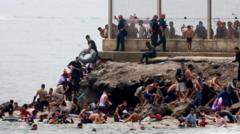
EU Convenes Urgent Meeting on Ceuta Migrant Crossings
The European Union has scheduled an emergency session to address the escalating situation surrounding Ceuta migrant crossings and the diplomatic tensions emerging between Spain and fellow EU member states. The mounting pressure at this strategic North African enclave has prompted high-level discussions among European leadership, with representatives gathering to formulate coordinated responses to the ongoing migration challenge.
Rising Tensions Between Spain and EU Partners
Ceuta migrant crossings have become a flashpoint in EU relations, as strained diplomatic exchanges have intensified between Madrid and other European capitals. Spain finds itself at the center of complex discussions regarding border management, resource allocation, and shared responsibility for handling migration flows. The tensions reflect broader disagreements over how EU nations should collectively address and distribute the burden of migrant arrivals at external borders.
The Ceuta Border Situation
Located on the North African coast, Ceuta serves as a critical entry point for migrants seeking access to European territory. The enclave's proximity to Morocco and its geographical position have made it a focal point for migration patterns. Recent weeks have witnessed a significant surge in attempted crossings, with migrants utilizing various routes to reach this Spanish territory. The influx has strained local resources, emergency services, and administrative capacity, prompting Spanish authorities to request enhanced EU-level support and coordination.
EU Response and Emergency Protocols
In response to Spain's escalating concerns, the European Union has activated emergency protocols to address the Ceuta migrant crossings crisis. The scheduled meeting will bring together interior ministers, border security officials, and migration experts to examine current data, assess operational capabilities, and establish unified strategies. European Commission representatives are expected to present comprehensive analyses of the situation, including demographic information about arriving migrants and projections for continued movements.
Strategic Coordination Mechanisms
The emergency forum aims to establish better coordination mechanisms among EU member states operating along external borders. Discussions will likely focus on burden-sharing arrangements, financial support for Spain, and enhanced cooperation with Moroccan authorities regarding border management. Additionally, EU officials will review existing asylum processing procedures to determine whether modifications are necessary to handle the current volume of arrivals more efficiently.
Broader EU Migration Policy Implications
The crisis at Ceuta highlights persistent challenges within European migration policy frameworks. The enclave's situation exemplifies how geographical vulnerabilities can create concentrated pressure points that require disproportionate resource allocation. Member states continue to debate the most effective approaches for managing external borders while maintaining humanitarian standards and respecting international conventions regarding asylum seekers and migrants.
Bilateral Relations and National Interests
Beyond the immediate Ceuta migrant crossings issue, the situation has exposed differing national priorities among EU members. Some states prioritize stricter border controls and deportation mechanisms, while others advocate for more inclusive reception policies. Spain's position as the frontline nation dealing directly with arriving migrants has given Madrid considerable leverage in pushing for EU-wide support and financial assistance to manage the ongoing situation effectively.
International Cooperation Framework
Addressing Ceuta migrant crossings requires more than internal EU cooperation; it demands engagement with North African governments, particularly Morocco. The emergency meeting will likely address bilateral negotiations aimed at reducing departure points for migrants and implementing joint patrol operations in regional waters. Such international cooperation is viewed as essential for creating sustainable solutions that address root causes of migration while protecting both migrant safety and border security interests.
Implementation and Future Outlook
Following the emergency session, EU officials are expected to announce concrete measures for immediate implementation. These may include temporary emergency funding, deployment of additional border personnel, and agreements on burden-sharing arrangements. The Ceuta migrant crossings situation demonstrates that European migration management requires continuous adaptation and willingness from all member states to contribute resources and expertise toward comprehensive solutions.
The severity and urgency with which EU leadership has responded to the Ceuta situation underscores recognition that European border security and migration policy remain interconnected challenges requiring sustained diplomatic engagement and institutional cooperation across the union.


