Dover Road Blockade: Far-Right Group Threatens Return if Police Inaction Continues
Dover Road Blockade Emerges as Growing Political Flashpoint
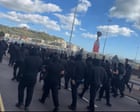
The Dover road blockade staged by masked activists has reignited urgent discussions about extremist mobilization and law enforcement response capabilities. According to campaigners and political figures, the coordinated disruption at Dover's port represents a troubling pattern that could intensify without immediate intervention from authorities. The demonstrated ability of organized groups to mobilize swiftly and execute large-scale protests on Britain's roads has alarmed officials across multiple government levels.
Patriot Platform's Role in the Dover Demonstration
Patriot Platform, an anti-immigration organization with documented connections to far-right movements, claimed responsibility for orchestrating the Dover road blockade. The group, which publicly describes itself as embodying a "fierce love for our homeland," coordinated the participation of multiple activists dressed in black attire and masks who systematically blocked access routes to the port facility. This tactical approach reflects increasingly sophisticated protest coordination methods employed by extremist-leaning organizations seeking to amplify their message through disruption.
The organization's stated mission centers on immigration policy opposition, positioning itself as a grassroots movement defending national interests. However, political analysts and civil rights organizations have questioned the group's ideological positioning and funding sources, noting troubling connections to established far-right networks and figures within the British political landscape.
Political Response and Campaigner Warnings
Politicians spanning multiple constituencies have expressed serious concern regarding the potential for repeated disruptions similar to the Dover road blockade. Elected officials have publicly called for enhanced police presence and stricter enforcement protocols to prevent future occurrences. The warnings suggest that without demonstrable law enforcement action, organized groups like Patriot Platform will likely attempt additional large-scale demonstrations designed to maximize public attention and disrupt critical national infrastructure.
Nick Lowles, founder of Hope Not Hate, has characterized the situation as reflecting systemic police underperformance. His assessment suggests that perceived inaction by law enforcement has emboldened far-right organizations to perceive themselves as capable of organizing at significant scale without meaningful consequences. This calculus, if accurate, could create dangerous incentives for escalatory tactics and expanded protest participation.
Understanding the Far-Right Movement's Mobilization Strategy
The Dover road blockade illustrates modern extremist protest methodologies that prioritize visual impact, media attention, and coordinated group action. By organizing activists in uniform black clothing and masks, groups like Patriot Platform create an intimidating appearance designed to signal organized strength and ideological commitment. This theatrical approach serves multiple strategic purposes: it demonstrates organizational capability, attracts media coverage, and projects an image of determined collective action to both supporters and opponents.
Law Enforcement Challenges and Resource Questions
Police forces managing the Dover demonstration faced decisions about appropriate response protocols when confronted with mass protests blocking critical infrastructure. The apparent restraint exhibited by officers has drawn scrutiny from politicians questioning whether resources were adequately deployed or whether policy guidance discouraged more assertive intervention. These questions reflect broader debates within British law enforcement about balancing protest rights with public order maintenance and infrastructure protection.
Future Implications for the Dover Region and Beyond
The success of the Dover road blockade in generating substantial publicity has potentially created a template for future anti-immigration activism. If groups perceive that similar demonstrations can achieve political impact and media attention without severe legal consequences, incentives exist for replication at other critical sites. The warnings issued by campaigners and politicians suggest that summer 2026 could witness additional coordinated disruptions unless enforcement strategies change substantially.
Community stakeholders in Dover have expressed frustration about ongoing uncertainty regarding port operations and public safety. Local businesses and residents have documented economic costs associated with the blockade, including delayed shipments and disrupted commerce. These practical consequences raise pressure on authorities to prevent recurrence.
Civil Society Response and Counter-Activism
Organizations dedicated to combating extremism have intensified monitoring of Patriot Platform's activities and public communications. Hope Not Hate and similar groups are providing political leaders and law enforcement with detailed intelligence about the organization's structure, funding, and planned activities. This intelligence-sharing approach attempts to provide authorities with information necessary to prevent future large-scale disruptions before they materialize.
The Dover road blockade represents a significant moment in Britain's ongoing struggle with extremist-driven activism. Whether authorities respond with enhanced enforcement capabilities and whether Patriot Platform proceeds with threatened escalation will substantially influence the political landscape surrounding immigration policy debates in coming months. The stakes extend beyond Dover to encompass fundamental questions about democratic protest rights, infrastructure security, and state capacity to maintain public order while respecting legitimate political expression.