
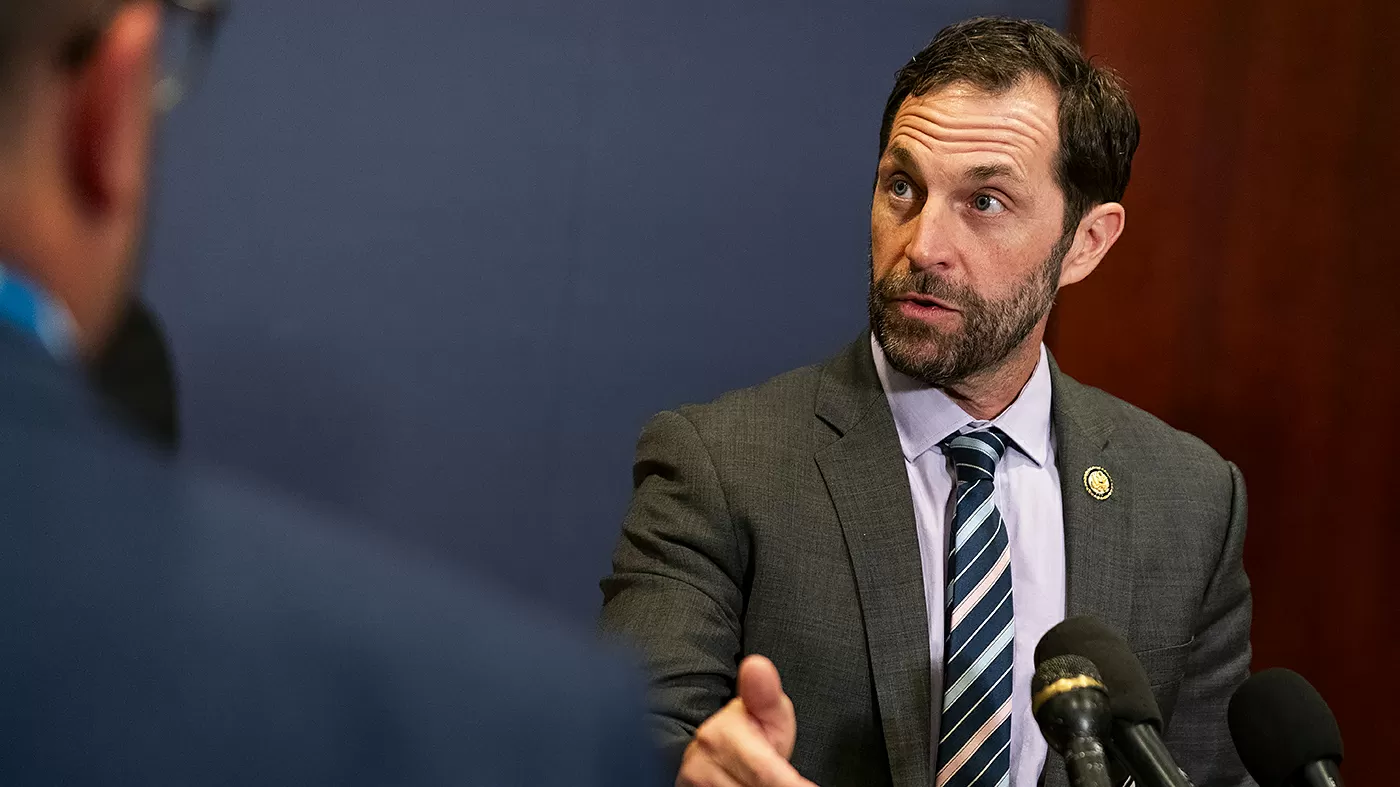
Rep. Jason Crow (D-Colo.) has raised concerns about the U.S. blockade in the Strait of Hormuz, stating that Russia is the “real winner” in this situation. The holdup of oil exports has not only caused a disruption in the global market, but it has also given Russia an opportunity to strengthen its position as a major oil exporter. In an interview with CNN’s Kate Bolduan, Rep. Crow questioned the end game of the blockade, especially considering that Iran was already blockading the Strait of Hormuz.
The Strait of Hormuz, located between Iran and Oman, is a vital waterway for global oil trade. It is estimated that about 20% of the world’s oil supply passes through this narrow strait. The recent tensions between the U.S. and Iran have led to a blockade of this strategic waterway, causing a spike in oil prices and creating uncertainty in the global market.
Rep. Crow, a member of the House Armed Services Committee, expressed his concerns about the impact of the blockade on the global economy. He stated that while the U.S. is trying to pressure Iran, it is ultimately Russia that is benefiting from this situation. With the U.S. imposing sanctions on Iran, Russia has been able to increase its oil exports and gain more control over the global market.
It is no secret that Russia has been trying to expand its influence in the Middle East. The U.S. blockade in the Strait of Hormuz has given Russia an opportunity to strengthen its ties with Iran and other countries in the region. This could have long-term implications for the U.S. and its allies, as Russia continues to assert its dominance in the global oil market.
Rep. Crow also questioned the end game of the blockade, stating that it is not a sustainable solution. Iran has been blockading the Strait of Hormuz for years, and the U.S. blockade is only adding to the existing tensions in the region. It is important to find a diplomatic solution to this issue rather than resorting to measures that could have severe consequences.
The U.S. has been trying to pressure Iran into renegotiating the 2015 nuclear deal, which the U.S. withdrew from in 2018. However, the U.S. blockade in the Strait of Hormuz has only escalated tensions between the two countries. It is crucial for the U.S. to find a way to de-escalate the situation and resume diplomatic talks with Iran.
In the midst of all this, it is important to remember that the real victims of this blockade are the people of Iran. The sanctions and blockades have caused severe economic hardships for the Iranian people, who are already struggling under the weight of their government’s mismanagement. The U.S. must consider the humanitarian consequences of its actions and work towards finding a peaceful resolution.
In conclusion, Rep. Jason Crow’s remarks about the U.S. blockade in the Strait of Hormuz are a reminder that the consequences of such actions go beyond just political and economic implications. It is crucial for the U.S. to consider the long-term effects of its decisions and work towards finding a diplomatic solution to the tensions in the region. The U.S. must also be mindful of the fact that its actions could inadvertently benefit its adversaries, such as Russia. Let us hope that the U.S. takes the necessary steps to de-escalate the situation and work towards a peaceful resolution.
