
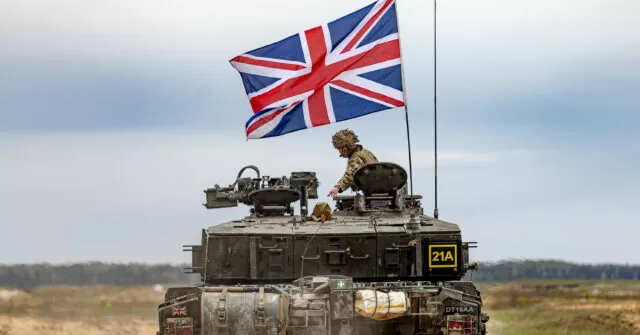
Former NATO boss, Anders Fogh Rasmussen, has recently spoken out about the dire state of Britain’s military. In a scathing interview with Breitbart, Rasmussen criticized the government’s lack of investment in the armed forces, calling it “shameful” and warning that it is putting the country in peril.
Rasmussen, who served as Secretary General of NATO from 2009 to 2014, knows a thing or two about military funding. During his time in office, he oversaw the alliance’s involvement in the Afghanistan war and was a strong advocate for increased defense spending among member countries. Now, he is using his expertise to highlight the alarming situation in Britain.
In the interview, Rasmussen did not hold back in his criticism of the UK government, stating that the military is “undernourished” and “parlous” due to a lack of funding. He also highlighted the dangerous consequences of this neglect, stating that the country’s security is at risk.
The former NATO boss specifically pointed fingers at the Treasury and its so-called “experts” who, in his words, have a “corrosive complacency” towards defense spending. This is a sentiment that has been echoed by many military leaders and experts in recent years, as the UK government continues to prioritize budget cuts over national security.
Rasmussen’s words are a wake-up call to the government and the public. It is time to take action and address the critical state of the military. As the former NATO boss rightly points out, the UK is facing numerous security threats, both at home and abroad. From terrorism to cyber attacks, the country needs a well-equipped and well-trained military to protect its citizens.
But instead of investing in the armed forces, the government has chosen to cut spending, leaving the military with outdated equipment and inadequate resources. This has resulted in a decline in morale and recruitment, as well as a loss of skilled personnel. It is a vicious cycle that needs to be broken before it is too late.
Rasmussen’s interview is a stark reminder that national security should never be compromised for the sake of saving money. As a country, we must prioritize the safety and well-being of our citizens, and that starts with a strong and well-funded military.
It is not just the government that needs to act, but the public as well. We must demand that our leaders prioritize defense spending and provide our military with the resources they need to do their job effectively. It is also important to support and show appreciation for our troops, who are risking their lives to protect our country.
In conclusion, Rasmussen’s interview sheds light on a critical issue that has been ignored for far too long. The government’s neglect of the military is not only shameful, but it is also a threat to our national security. It is time for action and for the government to take responsibility for the safety of its citizens. Let us not wait for a tragedy to happen before we realize the dire consequences of underfunding the military. Together, we can ensure that Britain’s armed forces are well-equipped and ready to face any challenges that may come our way.
