
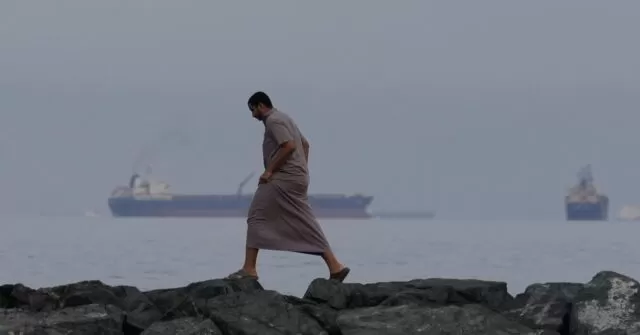
The Strait of Hormuz, a strategic waterway located between Iran and Oman, has long been a key route for global trade, with approximately one-fifth of the world’s oil passing through its narrow waters. However, recent tensions in the region have caused significant disruptions to shipping, resulting in major concerns for international commerce.
Ship-tracking services have recently reported that despite Iran’s promise to halt terror attacks on civilian vessels as part of its ceasefire agreement with the United States and Israel, traffic through the Strait of Hormuz remains at less than 10 percent of its normal level. This news comes as a blow to the hopes of a swift return to normalcy in the region.
The ceasefire agreement, signed by Iran and the two aforementioned countries, was meant to ease tensions and ensure the safety of ships passing through the Strait of Hormuz. However, it seems that Iran’s promises have not been fully upheld, causing shipping to remain slow in the crucial waterway.
This news is particularly concerning for global trade, as the Strait of Hormuz is a vital route for the transportation of goods, particularly oil. Any disruption to shipping in this area can have serious consequences on the global economy, leading to increased costs and delays for businesses.
The recent slowdown in shipping through the Strait of Hormuz is not the first of its kind. In 2019, there were a series of attacks on commercial ships in the region, which resulted in increased tensions between Iran and the United States. This led to heightened security measures and a decrease in shipping activity in the area.
While the ceasefire agreement was meant to alleviate these tensions and ensure the safety of ships passing through the Strait of Hormuz, it seems that more needs to be done to fully restore confidence in the region. The slow pace of shipping through the Strait is a clear indication that there is still a level of uncertainty and risk for vessels passing through.
The continued slowdown in shipping also highlights the importance of finding long-term solutions to the ongoing tensions in the region. It is not enough for Iran to simply promise to halt terror attacks on civilian vessels; concrete actions must be taken to ensure the safety and security of shipping in the Strait of Hormuz.
In the face of these challenges, it is important to remain positive and hopeful for the future. While the current situation may seem discouraging, it is crucial to remember that the Strait of Hormuz has always been a vital route for global trade and will continue to be so in the future.
Moreover, the ceasefire agreement itself is a positive step towards de-escalating tensions and finding a peaceful solution to the issues in the region. It is important to continue to work towards building trust and cooperation between all parties involved in order to ensure the safety and smooth flow of shipping through the Strait of Hormuz.
In conclusion, while the recent news of slow shipping through the Strait of Hormuz may be disheartening, it is important to remain optimistic and continue to work towards finding a lasting solution to the ongoing tensions. The world relies heavily on the trade passing through this crucial waterway, and it is in the best interest of all involved to ensure its safety and stability. Let us hope that through continued efforts and cooperation, the Strait of Hormuz will soon return to its normal pace, serving as a key route for global trade once again.
