
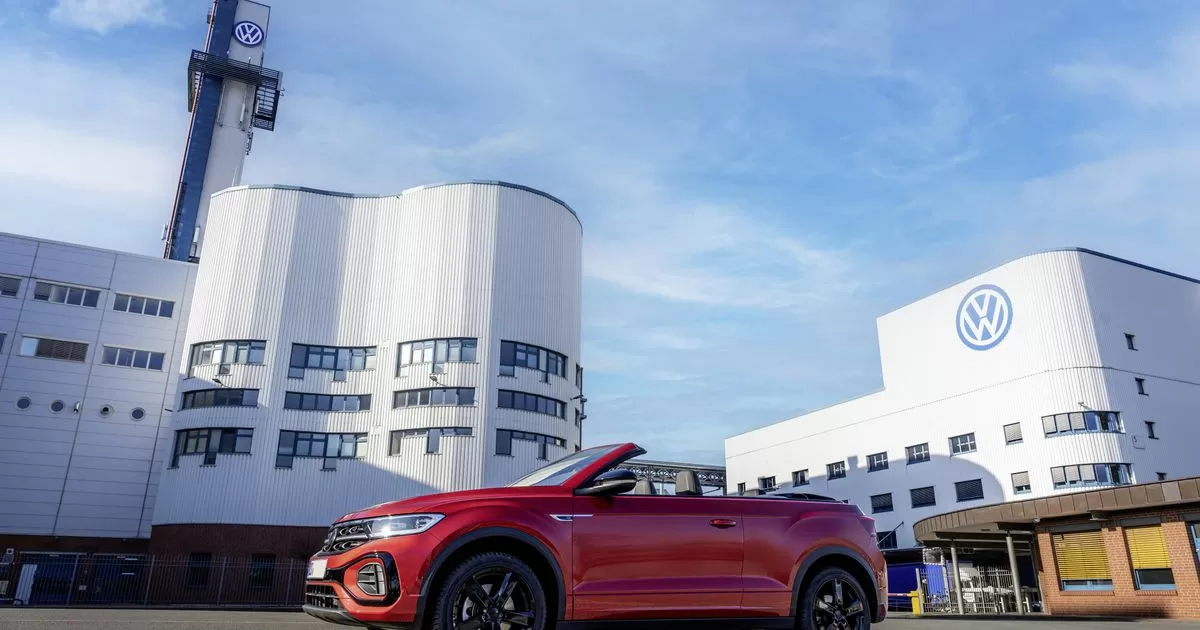
The Volkswagen factory in Osnabrück, Germany has been a hub of innovation and production for decades. From the iconic Beetle to the modern T-Roc Cabriolet, this factory has been at the forefront of the automotive industry. However, recent developments have sparked discussions about the future of this factory and its potential to serve a greater purpose.
It has been reported that the Volkswagen factory in Osnabrück could potentially be converted to produce components for a missile defence system. This news has caused quite a stir in the automotive world, with many wondering how this shift in production could impact the factory and its employees.
The T-Roc Cabriolet, which is currently being produced at the Osnabrück factory, has been a popular choice among car enthusiasts. Its sleek design and advanced features have made it a top contender in the convertible market. However, with the rise in global security concerns, the demand for missile defence systems has also increased. This has led to discussions about the possibility of converting the factory to produce components for these systems.
While some may see this as a drastic change for the factory, it is important to understand the potential benefits of such a move. The production of missile defence components would not only serve a greater purpose in terms of global security, but it would also bring in new opportunities for the factory and its employees.
Firstly, the conversion of the factory would require a significant investment in terms of technology and infrastructure. This would not only modernize the factory but also create job opportunities for skilled workers. The production of missile defence components would require a highly skilled workforce, and the factory’s location in Osnabrück provides access to a pool of talented individuals.
Moreover, the production of these components would also bring in a new stream of revenue for the factory. With the increasing demand for missile defence systems, there is a potential for long-term contracts and partnerships with governments and defense organizations. This would not only secure the future of the factory but also contribute to the local economy.
Additionally, the conversion of the factory would also have a positive impact on the environment. The production of missile defence components would require advanced technology and processes, which would result in a more sustainable and eco-friendly production line. This aligns with Volkswagen’s commitment to reducing their carbon footprint and promoting sustainable practices.
Furthermore, this move would also showcase the versatility and adaptability of the Osnabrück factory. The ability to shift from producing cars to components for missile defence systems demonstrates the factory’s capability to evolve and meet the changing demands of the market. This would solidify the factory’s position as a leader in the automotive industry and a valuable asset to the Volkswagen brand.
Of course, the conversion of the factory would also mean the end of production for the T-Roc Cabriolet. However, this does not necessarily mean the end of the model. Volkswagen could potentially shift the production of the T-Roc Cabriolet to another factory, ensuring that the model continues to be available for customers.
In conclusion, the potential conversion of the Volkswagen factory in Osnabrück to produce components for a missile defence system is a positive and forward-thinking move. It would not only bring in new opportunities for the factory and its employees but also contribute to global security efforts. This decision showcases Volkswagen’s commitment to innovation and adaptability, and we can only look forward to the future developments of this iconic factory.
