
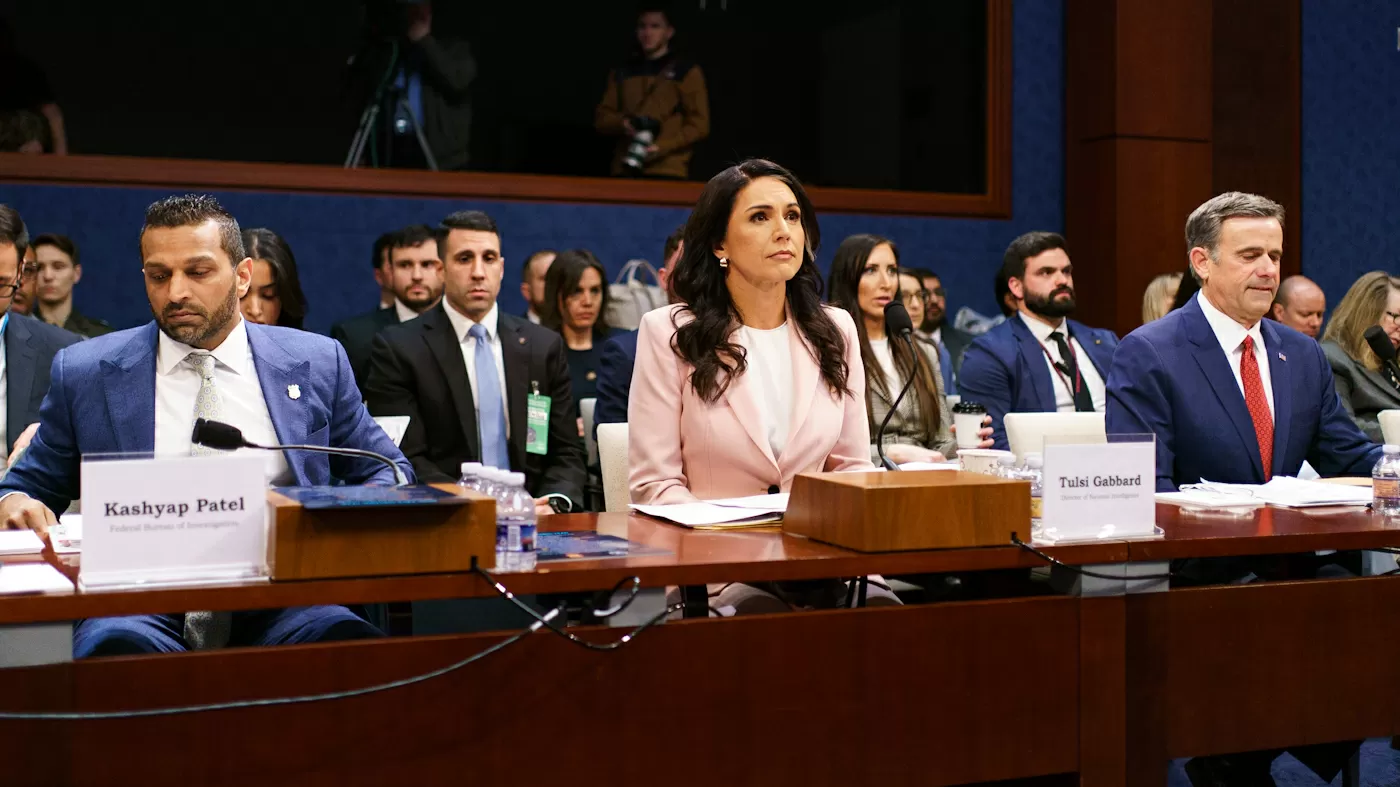
Director of National Intelligence Tulsi Gabbard faced a second day of intense questioning on Thursday as she testified before Congress about Iran’s nuclear capabilities and the threat it poses to the United States. Joined by CIA Director John Ratcliffe and FBI Director Kash Patel, Gabbard was grilled on whether Iran was close to building nuclear weapons and if it posed an “imminent threat” to the U.S. before President Trump initiated the ongoing Middle Eastern war.
The hearing, which took place in front of the House Intelligence Committee, was a crucial opportunity for Gabbard to provide insight into the current state of affairs in the Middle East and the role of Iran in the ongoing conflict. As the Director of National Intelligence, Gabbard is responsible for providing accurate and unbiased intelligence to the President and other top officials, making her testimony highly anticipated.
Gabbard’s testimony shed light on the complex and volatile situation in the Middle East, where tensions between the U.S. and Iran have escalated in recent years. She emphasized that Iran’s nuclear program remains a top concern for the U.S. and its allies, and that the country has made significant progress in its pursuit of nuclear weapons.
However, Gabbard also stressed that there is no evidence to suggest that Iran is currently in possession of nuclear weapons or that it poses an imminent threat to the U.S. She explained that while Iran has the capability to develop nuclear weapons, it has not yet made the decision to do so. This statement is in line with the findings of U.S. intelligence agencies, which have consistently stated that Iran is not currently pursuing nuclear weapons.
Gabbard’s testimony also addressed the ongoing conflict in the Middle East and the role of the U.S. in the region. She stated that the U.S. has a responsibility to maintain stability and security in the Middle East, but that military intervention should always be a last resort. She emphasized the importance of diplomacy and working with allies to address issues in the region.
During the hearing, Gabbard was also questioned about President Trump’s decision to launch a strike on Iranian General Qasem Soleimani in January 2020. She stated that while Soleimani was a threat to U.S. interests, the decision to take military action should have been thoroughly evaluated and discussed with Congress.
Gabbard’s testimony was met with praise from both Democrats and Republicans on the committee. She was commended for her thorough and unbiased analysis of the situation in the Middle East and her commitment to providing accurate intelligence to the President and other top officials.
In a time of heightened tensions and conflicting information, Gabbard’s testimony provided much-needed clarity on the situation in the Middle East. Her expertise and experience in the field of intelligence were evident throughout the hearing, and her commitment to serving the American people was commendable.
As the Director of National Intelligence, Gabbard plays a crucial role in keeping the country safe and informed. Her testimony was a reminder of the importance of having competent and dedicated individuals in positions of leadership, especially in times of crisis.
In conclusion, Director of National Intelligence Tulsi Gabbard’s testimony before Congress on Iran’s nuclear capabilities and the ongoing Middle Eastern conflict was a testament to her expertise and dedication to serving the American people. Her insights and analysis provided much-needed clarity on the complex situation in the region and reaffirmed the importance of diplomacy and careful consideration before taking military action. Gabbard’s testimony was a reminder of the crucial role played by intelligence agencies in keeping the country safe and informed, and her commitment to this role is commendable.
