
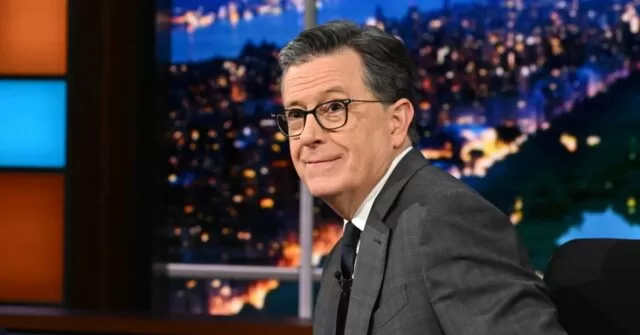
In today’s world of social media and public figures, it is not uncommon for individuals to use their platforms to express their opinions and thoughts. However, when those opinions are used to attack and belittle others, it is a clear display of unprofessionalism and lack of respect. This was the case when White House Communications Director Steven Cheung took to social media to deliver a public character appraisal of The Late Show’s host, Stephen Colbert. In a post on Thursday, Cheung described Colbert as a “sad and pathetic excuse for a human being” and accused him of “killing the legacy of The Late Show.” Such derogatory remarks not only reflect poorly on Cheung himself, but also on the administration he represents.
It is no secret that Colbert has been a vocal critic of President Trump and his policies. However, as a public figure, he has every right to express his opinions and use his platform to hold those in power accountable. This is a fundamental aspect of democracy and freedom of speech. By attacking Colbert in such a crude and unprofessional manner, Cheung has only highlighted the administration’s intolerance towards criticism and dissent.
It is disappointing to see a government official resorting to personal attacks instead of engaging in a constructive and respectful dialogue. Cheung’s words not only reflect poorly on himself, but also on the administration he represents. As a public servant, he should be held to a higher standard and should refrain from using derogatory language towards others, especially those in the media who have a responsibility to inform and educate the public.
Furthermore, Cheung’s statement that Colbert has “killed the legacy of The Late Show” is baseless and unfounded. The Late Show has been a staple in late night television for decades and has continued to thrive under Colbert’s leadership. In fact, Colbert’s sharp wit and political commentary have attracted a wider audience and have made the show even more relevant in today’s political climate. To suggest that Colbert has ruined the show’s legacy is not only false, but also disrespectful to the hard work and dedication of the entire Late Show team.
It is also worth noting that this is not the first time that the Trump administration has attacked the media and public figures. This pattern of behavior only serves to further divide and polarize the country. As leaders, it is their responsibility to set an example of respectful and civil discourse, rather than resorting to name-calling and insults.
In contrast, Colbert responded to Cheung’s remarks with humor and grace, simply stating, “I have jokes, he has the launch codes. So, it’s a fair fight.” This is a perfect example of how to handle criticism in a mature and professional manner. It is important to remember that the media’s role is to hold those in power accountable, and it is up to the government to listen and engage in productive dialogue, rather than attacking and silencing dissenting voices.
In conclusion, Cheung’s public character appraisal of Stephen Colbert is not only unprofessional and disrespectful, but also reflects poorly on the administration he represents. Instead of resorting to personal attacks, it is important for government officials to engage in respectful and constructive dialogue with the media. As for Colbert, he continues to entertain and inform audiences with his sharp wit and political commentary, and his legacy on The Late Show remains strong. Let us not let petty and divisive remarks overshadow the importance of civil discourse and the role of the media in a democratic society.
