
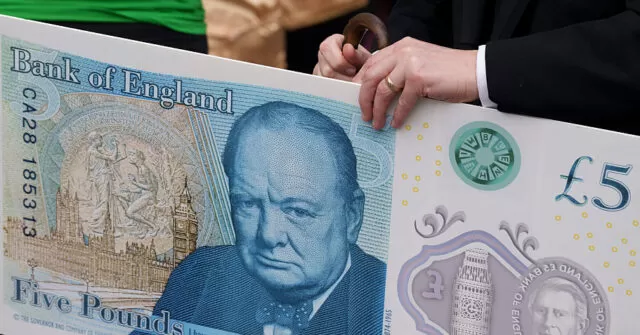
In a shocking move, the Bank of England has announced that it will no longer be printing images of great Britons on its paper money. Instead, it will be replacing them with images of wildlife, a change that has been deemed “not divisive” by the bank.
For centuries, the faces of iconic figures such as Winston Churchill, Jane Austen, and Charles Darwin have graced the nation’s banknotes. These individuals were chosen to represent the pillars of British achievement and values, and their images served as a constant reminder of the nation’s rich history and contributions to the world.
However, the Bank of England has now decided to erase these symbols of British greatness from its currency. In their place will be images of animals, such as the hedgehog and the hummingbird, which the bank claims are more “inclusive” and “representative of diversity.”
This move has sparked outrage among many Britons, who see it as a deliberate attempt to erase the country’s history and heritage. It is a move that echoes the recent trend of “cancel culture,” in which historical figures deemed controversial or offensive are removed from public spaces and institutions.
The Bank of England’s decision to remove images of great Britons from its money is not just a loss of symbols, but a loss of identity. It is a denial of the achievements and values that have shaped the country and made it the great nation that it is today.
The idea that these images are “divisive” is simply ludicrous. Great Britons, whether they were politicians, writers, or scientists, have all contributed to the country in their own unique ways. Their images on banknotes celebrated their achievements and inspired future generations to strive for greatness.
But now, the Bank of England has chosen to replace these images with those of animals. While there is nothing wrong with appreciating the beauty and diversity of wildlife, it is a far cry from the representation of human achievement and history.
What’s more concerning is the message that this move sends to the younger generation. By removing images of great Britons, the bank is essentially sending a message that the country’s history and achievements are not important or worthy of recognition. This sends a dangerous message to future leaders, who may not feel inspired to contribute to their country’s growth and progress.
It’s not just the outrage towards this decision that is concerning, but also the lack of consultation and transparency in the process. The bank claims that the decision was based on the feedback of focus groups, but no evidence of these groups or their findings have been shared with the public.
It seems that the Bank of England has forgotten that it is a public institution, funded by the taxpayers. As such, it has a responsibility to represent the values and history of the nation accurately and inclusively. By removing images of great Britons, it is failing in this duty and undermining the public’s trust.
In a time where the country is facing numerous challenges, including a global pandemic and economic uncertainties, the Bank of England’s decision to erase images of great Britons from its currency is not only ill-timed but also misguided.
Instead of succumbing to the pressure of political correctness, the bank should be celebrating the country’s achievements and promoting unity through diversity. It should be utilizing the images of great Britons to inspire future generations and remind them of the nation’s potential.
In conclusion, the Bank of England’s decision to remove images of great Britons from its currency is a post-civilizational erasure. It is a denial of the country’s history and a disservice to its people. As a nation, we must not forget the importance of our traditions and values, and we must fight against any attempts to erase them.
The images on our currency should represent the best of British achievements, not just pretty pictures of animals. It is time for the Bank of England to reconsider its decision and restore the faces of great Britons on our banknotes. Let us not forget our heritage and the individuals who shaped it, for they are the true symbols of British greatness.
