
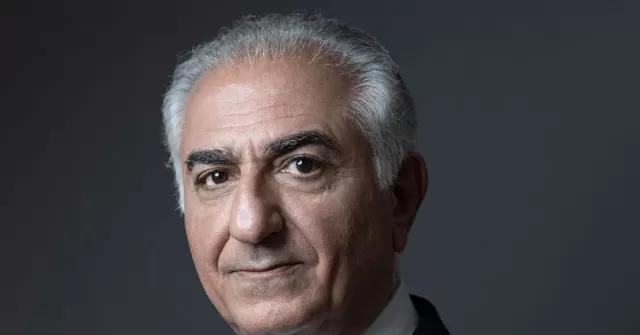
On Sunday, Lisa Daftari, founder of The Foreign Desk, appeared on “The Alex Marlow Show” to discuss the current situation in Iran. In the interview, Daftari raised the intriguing possibility of the return of the Shah of Iran, and the potential for Reza Pahlavi, the son of the late Shah, to play a role in the country’s future.
Daftari’s comments came in response to Marlow’s question about the recent protests in Iran and the possibility of regime change. While some have suggested that the Iranian people could rise up and overthrow the current regime, Daftari argues that this scenario is unlikely. Instead, she proposes a different approach – the return of the Shah.
The idea of the Shah’s return may seem far-fetched to some, but Daftari believes it is a possibility worth considering. She argues that this would not be a restoration of the previous monarchy, but rather a new beginning for Iran under the leadership of Reza Pahlavi. Daftari describes Pahlavi as someone who understands American policy and would be a friendly ally to the United States.
For those unfamiliar with Iranian history, the Shah was the ruler of Iran from 1941 to 1979, when he was overthrown in the Iranian Revolution. The revolution brought about the establishment of the Islamic Republic of Iran and the rise of Ayatollah Khomeini. The Shah’s son, Reza Pahlavi, was forced into exile and has been living in the United States since then.
But with the current political climate in Iran and growing dissatisfaction with the regime, Daftari argues that the time may be ripe for the return of the Shah. She believes that Pahlavi, with his Western education and understanding of democratic values, could be the voice of change that the Iranian people are seeking.
Daftari also points out that there is a growing movement within Iran, led by the youth, calling for a secular and democratic Iran. This movement, known as the Green Movement, has been gaining momentum in recent years and Pahlavi has been vocal in his support for their cause. His return could provide a unifying figure for this movement and give it a chance to succeed.
Of course, the idea of the Shah’s return is not without its challenges. Daftari acknowledges that there are still many Iranians who remember the Shah’s rule and may not be open to the idea of his son leading the country. There are also concerns about the potential backlash from the current regime and their loyal supporters.
However, Daftari remains optimistic and believes that with the right support and strategy, Pahlavi could make a comeback. She suggests that the United States, as well as other Western countries, should show their support for Pahlavi and the Green Movement, and work towards a peaceful transition of power in Iran.
In the end, it is up to the Iranian people to decide their future. But the possibility of Pahlavi’s return and the establishment of a democratic and prosperous Iran is a hopeful one. It would not only bring about positive change for Iran, but also have a significant impact on the stability of the Middle East and the world.
In conclusion, the return of the Shah and the potential for Reza Pahlavi to play a role in Iran’s future is a topic that should not be dismissed. It may seem like a distant dream now, but with the right support and determination, it could become a reality. As Lisa Daftari suggests, we should not rule out this option and instead, work towards a better future for Iran and its people.
