
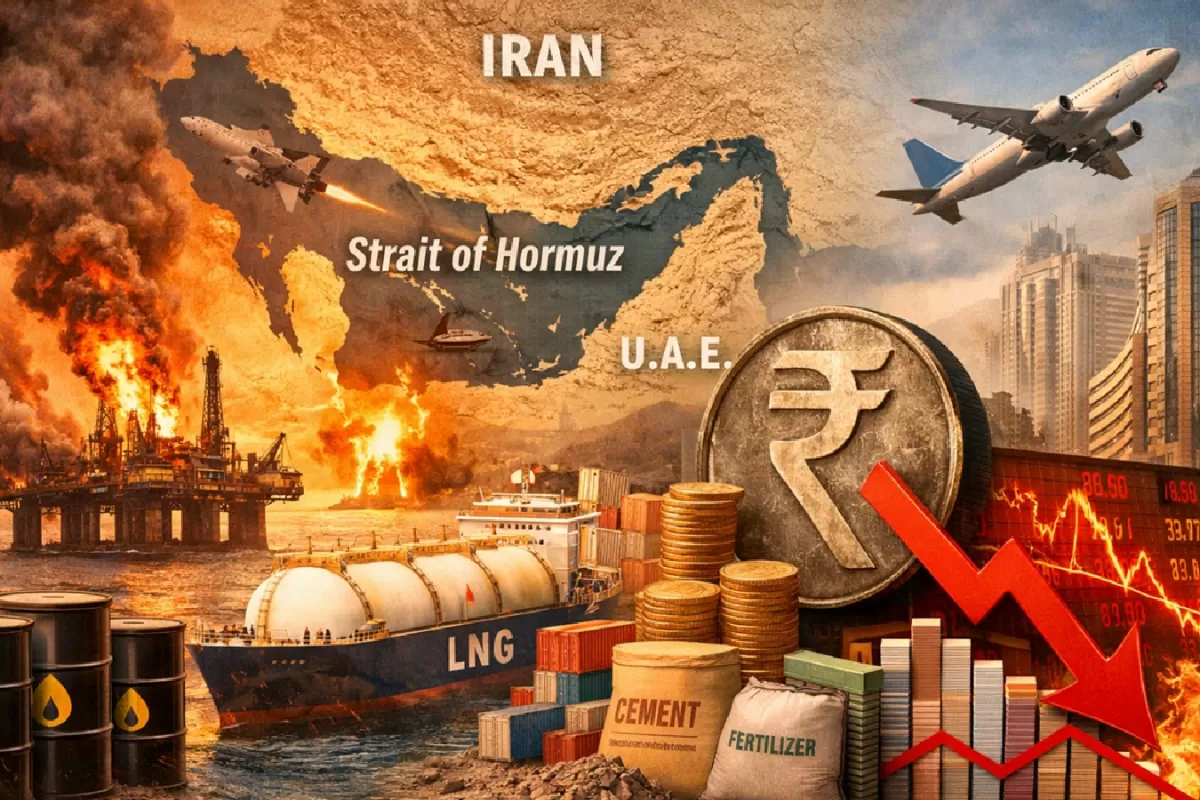
India is a country that heavily relies on imports for its crude oil requirements. In fact, more than 80% of its oil consumption is fulfilled through imports. This makes India vulnerable to oil price shocks, which can have a significant impact on its economy.
Geopolitical tensions around the world have a direct impact on the price of oil. Any disturbance in major oil producing countries or conflicts between nations can lead to a sudden rise in oil prices. This can have a ripple effect on the global economy, and India is not immune to it.
Oil is a major component of India’s import bill, and any increase in its price has a direct impact on the country’s trade deficit. This, in turn, affects the value of the Indian rupee, making it weaker against other major currencies. A weaker rupee leads to an increase in the cost of other imported goods, which can cause inflation and put pressure on the overall economy.
But it’s not just the trade deficit and currency value that are affected by oil price shocks. The increase in oil prices also impacts the cost of production for many industries, such as transportation, manufacturing, and agriculture. This results in higher prices for goods and services, which ultimately affects the common man.
For a country like India, where a large portion of the population is still struggling to make ends meet, any increase in the cost of essential goods and services can have a severe impact. It can lead to a decrease in consumer spending, which can slow down economic growth. This is particularly concerning for a developing nation like India, where economic growth is crucial for lifting people out of poverty.
Moreover, high oil prices also affect the government’s budget. India’s domestic oil prices are determined by international oil prices, and any increase in the latter leads to a rise in the former. This means that the government has to either cut down subsidies on fuel or increase taxes to cover the increased cost. Both options have their own consequences, with the former leading to public outcry and the latter further burdening the common man.
The Indian government has taken some measures to reduce the country’s dependence on oil imports, such as promoting alternative sources of energy and increasing domestic oil production. However, the fact remains that India is still heavily reliant on oil imports, and any disruption in the global oil market can have a significant impact on its economy.
In recent years, we have seen how geopolitical tensions have led to oil price shocks. The trade war between the United States and China, tensions in the Middle East, and the current COVID-19 pandemic have all contributed to fluctuations in oil prices. These events have highlighted the need for India to diversify its energy sources and reduce its dependence on oil imports.
One way to achieve this goal is by investing in renewable energy sources. India has set a target of achieving 175 GW of renewable energy capacity by 2022, and it has made significant progress in this direction. The country has also taken steps to promote electric vehicles, which can reduce the demand for oil. In addition, India has been exploring new sources of oil imports, such as Russia and the United States, to reduce its dependence on Middle Eastern countries.
While India still has a long way to go in reducing its dependence on oil imports, it is taking steps in the right direction. The recent decrease in oil prices due to the COVID-19 pandemic has provided some relief to the Indian economy, but it is essential for the country to continue to work towards diversifying its energy sources to mitigate the impact of future oil price shocks.
In conclusion, oil price shocks are among the fastest channels through which geopolitical tensions affect the Indian economy. With its heavy reliance on oil imports, India is vulnerable to any disruptions in the global oil market. However, the country is taking steps to reduce its dependence on oil imports and promote alternative sources of energy. It is crucial for India to continue on this path to ensure a stable and sustainable future for its economy.
