
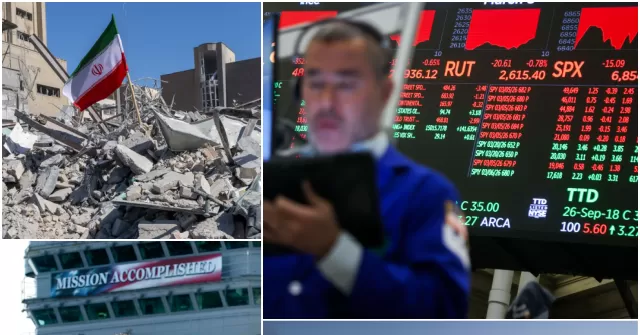
Randolph Bourne, a renowned American writer and intellectual, once stated, “war is the health of the state.” This quote has been widely cited, especially in recent times, as it accurately reflects the relationship between war and the economy. However, what often goes unsaid is the other part of Bourne’s statement: “war is a disease in the economy.” As tensions rise between the United States and Iran, it is essential to recognize the potential economic costs of a prolonged war.
In the wake of the recent airstrike that killed Iranian General Qassem Soleimani, the world has been on edge, bracing for a potential war between the two nations. While military and political analysts have been discussing the potential outcomes of such a conflict, the economic impact often takes a backseat. However, as history has shown us, war and the economy are deeply interconnected, and any prolonged conflict could result in devastating consequences for the global economy.
First and foremost, a long and drawn-out conflict with Iran would undoubtedly lead to a spike in oil prices. Iran is one of the world’s largest oil producers and is strategically positioned in the Strait of Hormuz, a crucial oil shipping route. Any disruption in the production or shipment of oil from Iran would cause a significant increase in oil prices, which would have a ripple effect on the global economy. Higher oil prices mean increased costs for businesses, which would ultimately be passed onto consumers in the form of higher prices for goods and services. This, in turn, could lead to inflation and a decrease in consumer spending, which is a significant driving force of any economy.
Furthermore, a prolonged war would require significant military spending, which would add to the national debt and put a strain on the economy. The United States is already dealing with a massive national debt, and any additional military expenditures would only exacerbate the situation. This could result in higher taxes, cuts in government spending on essential programs, or both, which would have a direct impact on citizens and businesses alike. Moreover, such a scenario could also lead to a decrease in investor confidence, which would cause the stock market to plummet, affecting retirement savings and investments.
Another significant concern is the potential disruption of global trade and supply chains. Iran is not only a major oil producer but also an important trade partner for many countries. Any conflict would undoubtedly lead to disruptions in trade, causing a domino effect on supply chains and international trade. This would have a severe impact on businesses that rely on imports or exports, as well as on the global economy as a whole. The uncertainty surrounding such a conflict could also lead to a decrease in business investments and decisions, further affecting the economy.
Aside from the direct economic impact, a prolonged war could also have long-term consequences for the economy. War often results in loss of life, destruction of infrastructure, and displacement of people. This would not only have a devastating impact on human lives but also on the economy. Rebuilding efforts and humanitarian aid would require significant resources and could take years to fully recover. Additionally, the psychological toll of war on individuals and society as a whole cannot be overlooked. The fear and uncertainty that come with conflict can have long-lasting effects on consumer confidence and spending, which would affect the economy long after the war has ended.
It is also worth noting that a prolonged war would divert attention and resources away from other crucial issues such as healthcare, education, and poverty. These are all essential elements of a thriving economy, and their neglect could have long-term consequences. Furthermore, a conflict with Iran could also lead to a rise in anti-American sentiment, which would have a significant impact on international trade and foreign investments.
In conclusion, it is vital to recognize that war is not only a threat to human lives but also to the economy. As Randolph Bourne aptly stated, “war is a disease in the economy.” The potential economic costs of a prolonged war with Iran are too significant to ignore. It is crucial for leaders to carefully consider the potential consequences and explore diplomatic solutions to prevent a full-blown conflict. While the health of the state is important, the health of the economy must not be overlooked.
