
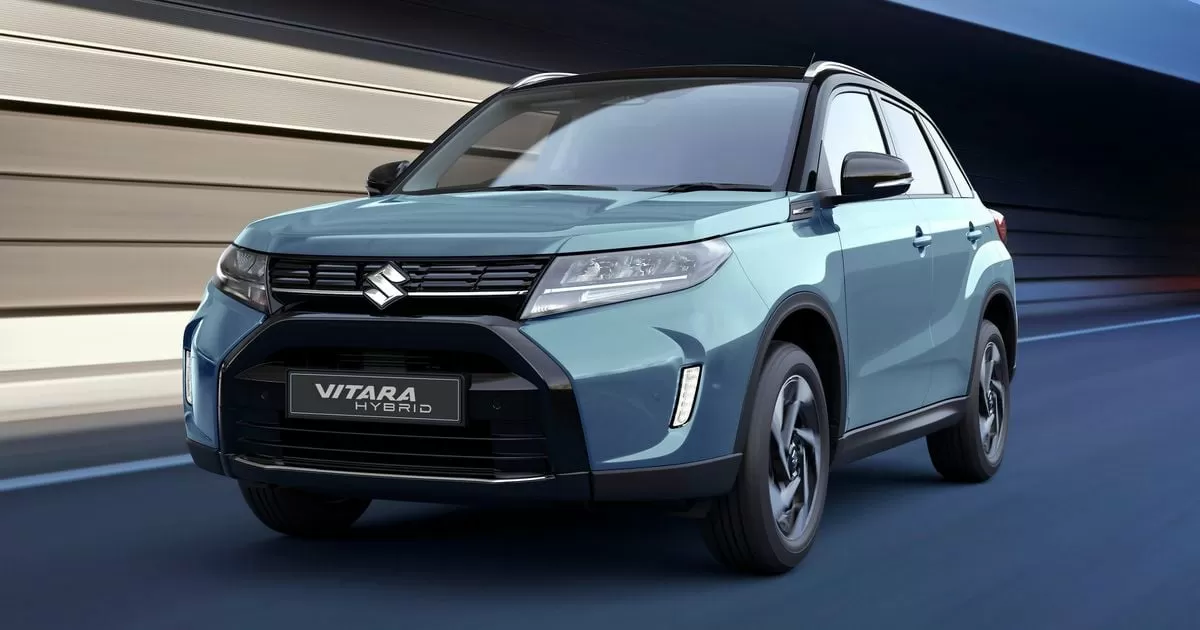
The Suzuki Vitara has been a popular choice among car enthusiasts for its sleek design, powerful engine, and affordable price. However, with the growing concern for the environment and the need for more fuel-efficient vehicles, Suzuki has introduced a mild hybrid version of the Vitara. While this may seem like a step in the right direction, the reality is that the Suzuki Vitara (mild) Hybrid offers only marginal fuel economy gains over its more powerful non-electrified forebear, for a higher price.
Let’s take a closer look at the Suzuki Vitara (mild) Hybrid and see if it lives up to its expectations.
Firstly, let’s understand what a mild hybrid is. A mild hybrid vehicle uses a small electric motor to assist the engine, providing a slight boost in power and improving fuel efficiency. However, unlike a full hybrid, the electric motor cannot power the vehicle on its own. This means that the Suzuki Vitara (mild) Hybrid still relies heavily on its traditional gasoline engine for power.
Now, let’s talk about the fuel economy gains. The Suzuki Vitara (mild) Hybrid claims to have a fuel economy of 20 km/l, which is only a marginal improvement over the non-hybrid version’s 18 km/l. This may not seem like a significant difference, especially considering the higher price tag of the hybrid version. In fact, some experts argue that the fuel economy gains are so small that it may not even be noticeable in day-to-day driving.
Moreover, the mild hybrid technology used in the Suzuki Vitara is not as advanced as other full hybrid vehicles in the market. This means that the electric motor is not as powerful, and the battery is not as large, resulting in a limited electric-only driving range. This defeats the purpose of having a hybrid vehicle, which is to reduce emissions and save on fuel costs.
Another factor to consider is the price. The Suzuki Vitara (mild) Hybrid is priced significantly higher than its non-hybrid counterpart. This means that buyers will have to pay a premium for a vehicle that offers only marginal fuel economy gains. This may not be a wise investment for those looking to save on fuel costs in the long run.
On the positive side, the Suzuki Vitara (mild) Hybrid still retains its stylish design and powerful engine. It also comes with some added features, such as regenerative braking, which helps to recharge the battery while driving. However, these features may not be enough to justify the higher price and marginal fuel economy gains.
In conclusion, while the Suzuki Vitara (mild) Hybrid may seem like a step towards a more eco-friendly future, it falls short in delivering significant fuel economy gains for a higher price. The mild hybrid technology used in this vehicle is not as advanced as other full hybrid vehicles, and the fuel economy gains are not significant enough to justify the higher cost. As a result, it may not be the best option for those looking for a more fuel-efficient vehicle.
