
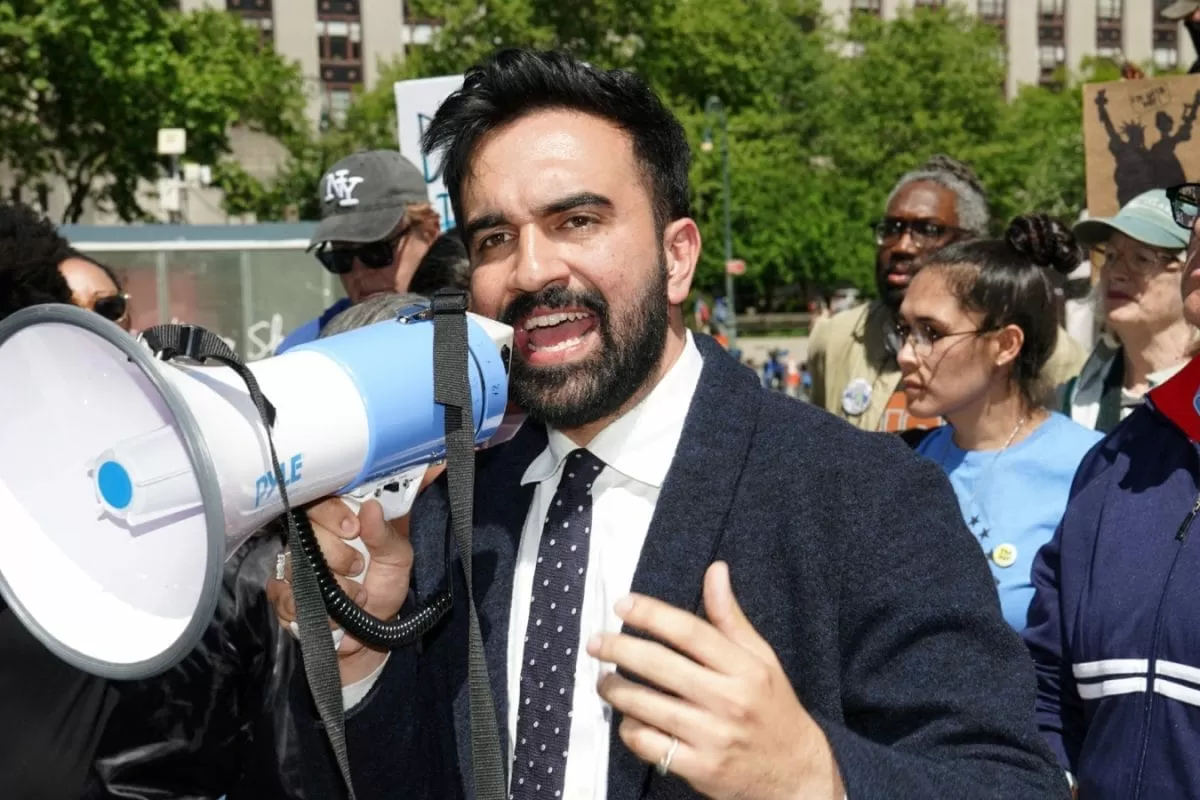
In a recent statement, Zohran Mamdani, a member of New York City Council, emphasized on the importance of tackling the current fiscal challenges faced by the city. He highlighted the need for difficult choices and outlined two possible paths to bridge the shortfall.
With the pandemic causing major disruptions to the economy, New York City is grappling with a significant budget shortfall. This has been compounded by the sharp decrease in revenue from tourism and sales tax, as well as increased costs due to the pandemic response. As a result, the city is facing tough decisions in order to maintain financial stability and continue providing essential services to its residents.
In this scenario, Zohran Mamdani has stepped in to offer his perspective on the issue. He emphasized the gravity of the situation and stated that the city must be willing to make difficult choices in order to bridge the funding gap. He also pointed out that there are two distinct paths that the city can take in order to overcome the current challenges.
The first path, according to Mamdani, is to resort to austerity measures and cut essential services and programs. This is a short-sighted approach that may provide temporary relief, but ultimately would have detrimental effects on the well-being of New Yorkers. It would also have a disproportionate impact on marginalized communities that are already bearing the brunt of the pandemic.
On the other hand, Mamdani proposed a second path that he believes is a more sustainable approach to addressing the city’s financial challenges. This involves exploring alternative sources of revenue such as implementing a progressive tax system and enacting a “wealth tax” on the ultra-rich. This approach would not only bridge the shortfall but also promote social and economic justice in the city.
Mamdani’s proposed “wealth tax” would target real estate holdings worth more than $5 million, as well as high-income earners. He argued that this would not only generate much-needed revenue for the city but also help reduce income inequality. It would also encourage those with the means to contribute more towards the collective well-being of the city.
Moreover, Mamdani highlighted the successes of other cities that have implemented a similar tax system, such as San Francisco and Vancouver. This demonstrates that such measures are not only feasible but also effective in generating revenue and reducing inequality.
The councilmember also stressed the need for collaboration and open communication between the city leadership and its residents in order to find long-term solutions to the budget shortfall. He suggested the formation of a committee consisting of experts and community representatives to engage in a dialogue and offer solutions. This would not only help in generating innovative ideas but also foster a sense of community involvement and ownership of the issue.
Mamdani’s call to action comes at a crucial time when the city is in dire need of a sustainable and inclusive plan to tackle the current fiscal challenges. His proposed approach aligns with the values of fairness and equity, which are essential for building a thriving and resilient city for all.
In conclusion, Zohran Mamdani’s statement serves as a wake-up call for New York City to address its financial challenges with a long-term perspective. The two paths presented by him offer a clear choice between short-term austerity measures and a more sustainable approach that prioritizes the well-being of all New Yorkers. It is now up to the city leadership and its residents to come together and make the right choice for the future of New York.
