
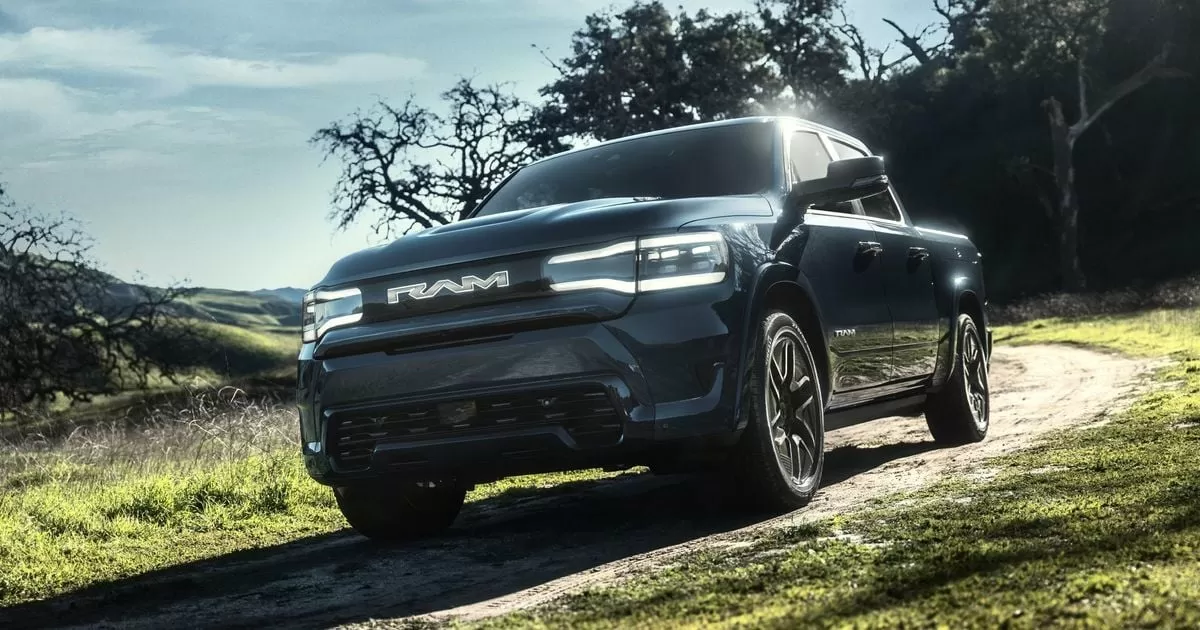
In recent years, there has been a significant shift in the automotive industry towards electric vehicles (EVs). Companies have been investing heavily in developing and promoting EVs as the future of transportation. However, Stellantis North America, the parent company of iconic brands such as Jeep, Ram, and Dodge, is considering a bold move – swinging back to V8 engines. This decision may seem counterintuitive, but it could be the key to returning Stellantis North America to good health. While it may come with an initial financial hit, the long-term benefits could be substantial.
The automotive industry has been buzzing with excitement over the potential of EVs. They are seen as the solution to reducing carbon emissions and combating climate change. As a result, governments around the world have been offering incentives and subsidies to encourage consumers to switch to EVs. This has led to a surge in demand for electric vehicles, with many automakers rushing to release their own models.
Stellantis North America has also been investing in EVs, with plans to release 10 new electric models by 2025. However, the company has been facing financial challenges in recent years. In 2020, Stellantis North America reported a net loss of $1.3 billion, and the COVID-19 pandemic only exacerbated the situation. As a result, the company has been looking for ways to turn things around and return to profitability.
One of the strategies being considered by Stellantis North America is a return to V8 engines. This may seem like a step backward, but it could be a smart move for the company. V8 engines have been a staple of American muscle cars for decades, and they have a loyal fan base. By reintroducing V8 engines in their vehicles, Stellantis North America could tap into this market and potentially increase sales.
Moreover, V8 engines are known for their power and performance, something that EVs are still struggling to match. While EVs have made significant improvements in terms of range and acceleration, they still cannot compete with the raw power of a V8 engine. This could give Stellantis North America an edge in the market, especially in the performance car segment.
Another advantage of V8 engines is their lower production costs compared to EVs. EVs require expensive batteries and other components, which can significantly drive up the production costs. On the other hand, V8 engines are relatively simple and cost-effective to produce. This could help Stellantis North America reduce its production costs and increase its profit margins.
However, the switch back to V8 engines would come with an initial financial hit for Stellantis North America. The company would have to invest in retooling its factories and developing new V8 engines, which could be a significant expense. Moreover, they would have to convince consumers that V8 engines are still a viable option in a world where EVs are gaining popularity.
But the potential benefits of this move outweigh the initial costs. By tapping into the market for V8 engines, Stellantis North America could increase its sales and revenue. This would help the company return to profitability and strengthen its position in the highly competitive automotive industry.
Furthermore, the demand for V8 engines is not limited to the United States. Countries like Australia, Russia, and the Middle East have a strong market for V8 engines, and Stellantis North America could potentially tap into these markets as well. This would not only increase their sales but also diversify their customer base.
In conclusion, while the automotive industry is moving towards EVs, Stellantis North America’s decision to swing back to V8 engines could be a game-changer for the company. It may come with an initial financial hit, but the long-term benefits could help Stellantis North America return to good health. By tapping into the market for V8 engines, the company could increase its sales, reduce production costs, and strengthen its position in the market. It’s a bold move, but one that could pay off in the long run.
