
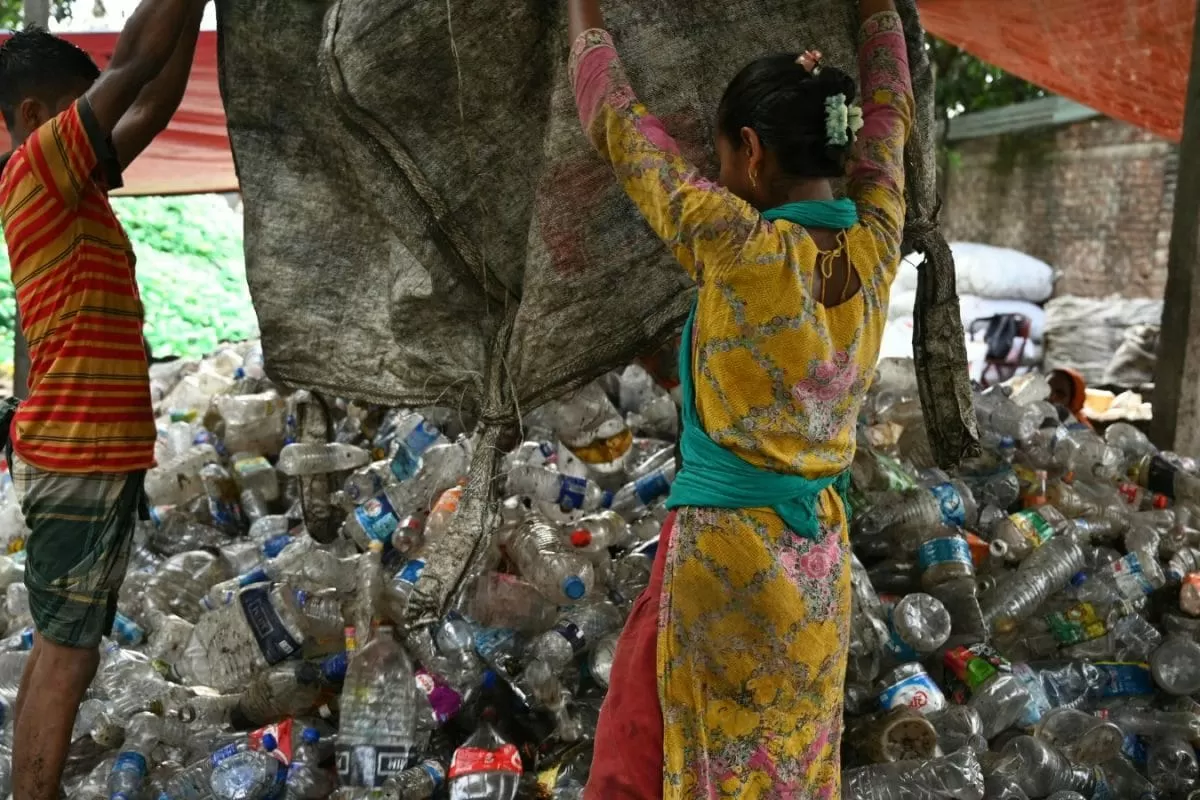
In recent years, the issue of waste management has become increasingly pressing. With the growing population and consumerism, the amount of waste generated has also increased, and it has become essential to find sustainable solutions to deal with it. One such solution has been proposed by the Centre for Science and Environment (CSE) in their latest report, which suggests that reducing GST on recyclable waste to 5% or zero, along with fully integrating informal supply chains, could turn the current loss into a net fiscal gain.
The CSE report highlights the fact that currently, the waste management sector in India is facing multiple challenges. One of the major challenges is the high rate of Goods and Services Tax (GST) imposed on recyclable waste, which ranges from 12% to 18%. This high tax rate acts as a disincentive for the informal waste collectors and recyclers who are the backbone of the waste management system in India. As a result, most of the waste ends up in landfills or dumped in the open, leading to environmental pollution and health hazards.
The report further states that integrating the informal waste supply chain with the formal sector can bring significant benefits. Informal waste collectors and recyclers, who often work in unorganized and unsafe conditions, can be trained and equipped with proper tools and equipment to improve their productivity and efficiency. This integration can also create additional employment opportunities, especially for women, and provide a steady source of income for the marginalized communities.
Moreover, the CSE report suggests that by reducing GST on recyclable waste to 5% or zero, the government can encourage more people to participate in waste management and recycling activities. This will not only help in reducing the amount of waste going to landfills but also increase the revenue generated from the sale of recycled materials. The report estimates that this move can result in a net fiscal gain of Rs. 2,500 crore for the government.
The CSE report also highlights the need for proper waste segregation at source. The current practice of mixing all types of waste together not only makes it difficult to recycle but also increases the cost of waste management. Proper waste segregation can reduce the cost of waste management and increase the efficiency of the recycling process, resulting in a higher value of recycled materials.
The proposed solution by CSE is not only economically viable but also has significant environmental benefits. By reducing the amount of waste going to landfills, it will help in reducing greenhouse gas emissions and also conserve natural resources. Recycling one ton of paper can save 17 trees, 380 gallons of oil, 3 cubic yards of landfill space, and 4,000 kilowatts of energy. Imagine the impact of recycling all the waste generated in a country like India!
Furthermore, the CSE report also suggests that the government can use the revenue generated from the sale of recycled materials to invest in better waste management infrastructure and facilities. This will not only improve the overall waste management system but also create a circular economy where waste is seen as a resource rather than a burden.
It is heartening to see that the government has already taken some steps in this direction. In the latest Union Budget, the Finance Minister announced a reduction in GST on electric vehicles from 12% to 5%. This move has not only made electric vehicles more affordable but also encouraged people to switch to cleaner modes of transportation. Similarly, reducing GST on recyclable waste can be seen as a step towards promoting sustainable waste management practices.
In conclusion, the proposal by CSE to reduce GST on recyclable waste to 5% or zero, along with fully integrating informal supply chains, is a win-win situation for all stakeholders. It will not only improve the efficiency of the waste management system but also create employment opportunities, generate revenue for the government, and have significant environmental benefits. It is high time that the government takes action and implements this proposal, and we as responsible citizens, must also do our part by properly segregating waste at source and supporting the informal waste collectors and recyclers in our communities. Let us work together towards a cleaner and greener India.
