
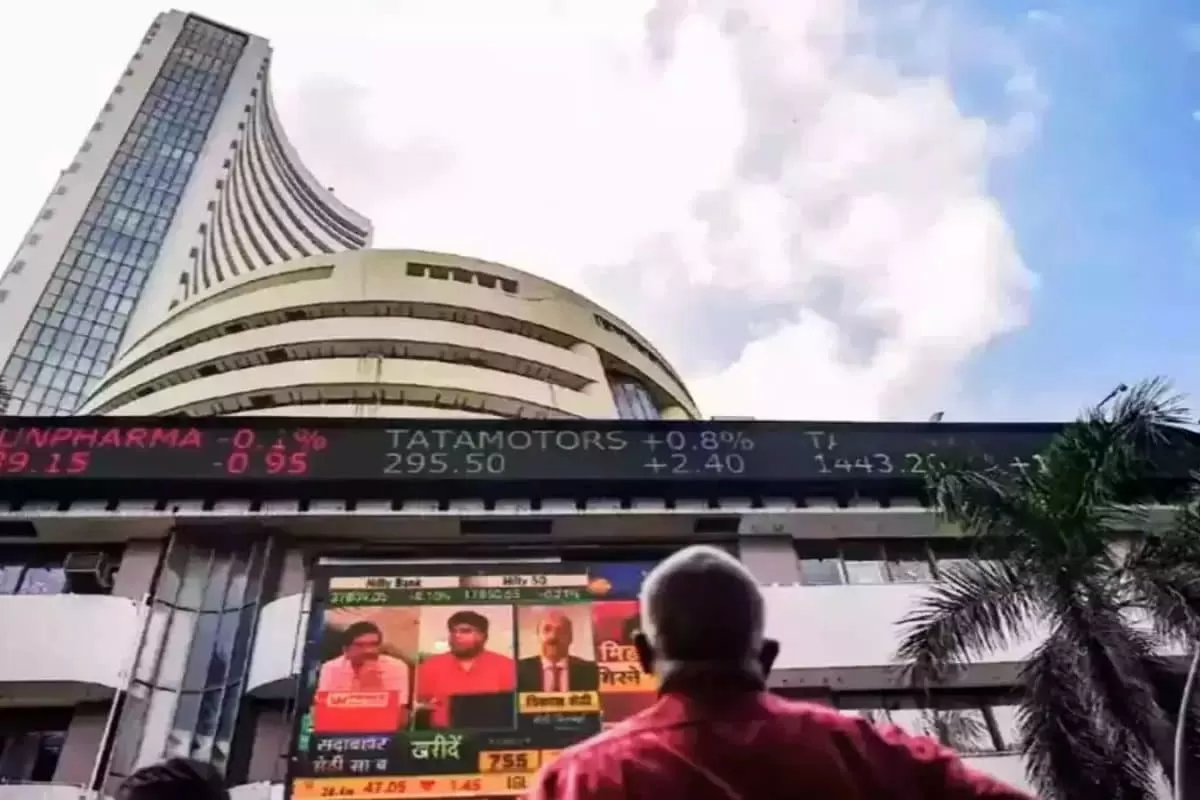
Indian equity indices, the Sensex and Nifty, are facing a weak start on Wednesday as mixed global cues continue to weigh on sentiment. The stock market has been on a rollercoaster ride in recent weeks, with sharp fluctuations and unpredictable movements. Investors are eagerly waiting for a clear direction, but the current scenario is causing confusion and uncertainty.
The Sensex and Nifty are the two most prominent indices of the Indian stock market, representing the overall performance of the top companies listed on the Bombay Stock Exchange (BSE) and National Stock Exchange (NSE) respectively. These indices are considered as a barometer of the Indian economy and are closely watched by investors, traders, and analysts.
On Tuesday, the Sensex closed at 38,365.35, down by 0.13%, while the Nifty ended at 11,317.35, down by 0.18%. The market sentiment was dampened by the mixed global cues, with Asian markets trading lower and US markets closing in the red. The ongoing trade tensions between the US and China, along with the political turmoil in Hong Kong, have added to the uncertainty in the global markets.
The Indian stock market has been facing headwinds for the past few months, with the economic slowdown, liquidity crunch, and corporate governance issues plaguing the market. The recent budget announcements, including the increase in surcharge on the super-rich, have also dampened the sentiment of the market. The government’s decision to merge public sector banks and the ongoing crisis in the automobile sector have further added to the concerns of investors.
However, it is important to note that the Indian economy is still one of the fastest-growing in the world, with a strong domestic consumption and a growing middle class. The government has also taken several measures to boost the economy, including the recent corporate tax rate cut, which is expected to provide a much-needed boost to the corporate sector. The Reserve Bank of India (RBI) has also been proactive in its approach, cutting interest rates four times this year to support growth.
Moreover, the recent reforms announced by the government, such as the merger of public sector banks and the proposal to set up a Rs. 100 lakh crore infrastructure fund, are expected to have a positive impact on the economy in the long run. The government’s focus on infrastructure development and ease of doing business is also expected to attract more foreign investments, which will further strengthen the Indian economy.
In the midst of all the uncertainties, it is important for investors to stay calm and not panic. The stock market is known for its volatility, and it is important to have a long-term perspective while investing. The current scenario may seem challenging, but it also presents an opportunity for investors to buy quality stocks at attractive valuations.
It is also important to note that the Indian stock market has shown resilience in the past and has bounced back from challenging situations. The Sensex and Nifty have delivered impressive returns over the years, and there is no reason to believe that it won’t continue to do so in the future. The Indian economy has a strong foundation, and with the government’s focus on reforms and growth, the stock market is expected to bounce back in the coming months.
In conclusion, while the Indian equity indices may face a weak start on Wednesday, it is important to remember that the stock market is a long-term game. The current scenario may seem challenging, but it also presents an opportunity for investors to buy quality stocks at attractive valuations. The Indian economy has a strong foundation, and with the government’s focus on reforms and growth, the stock market is expected to bounce back in the coming months. So, let’s stay positive and keep a long-term perspective while investing in the Indian stock market.
