
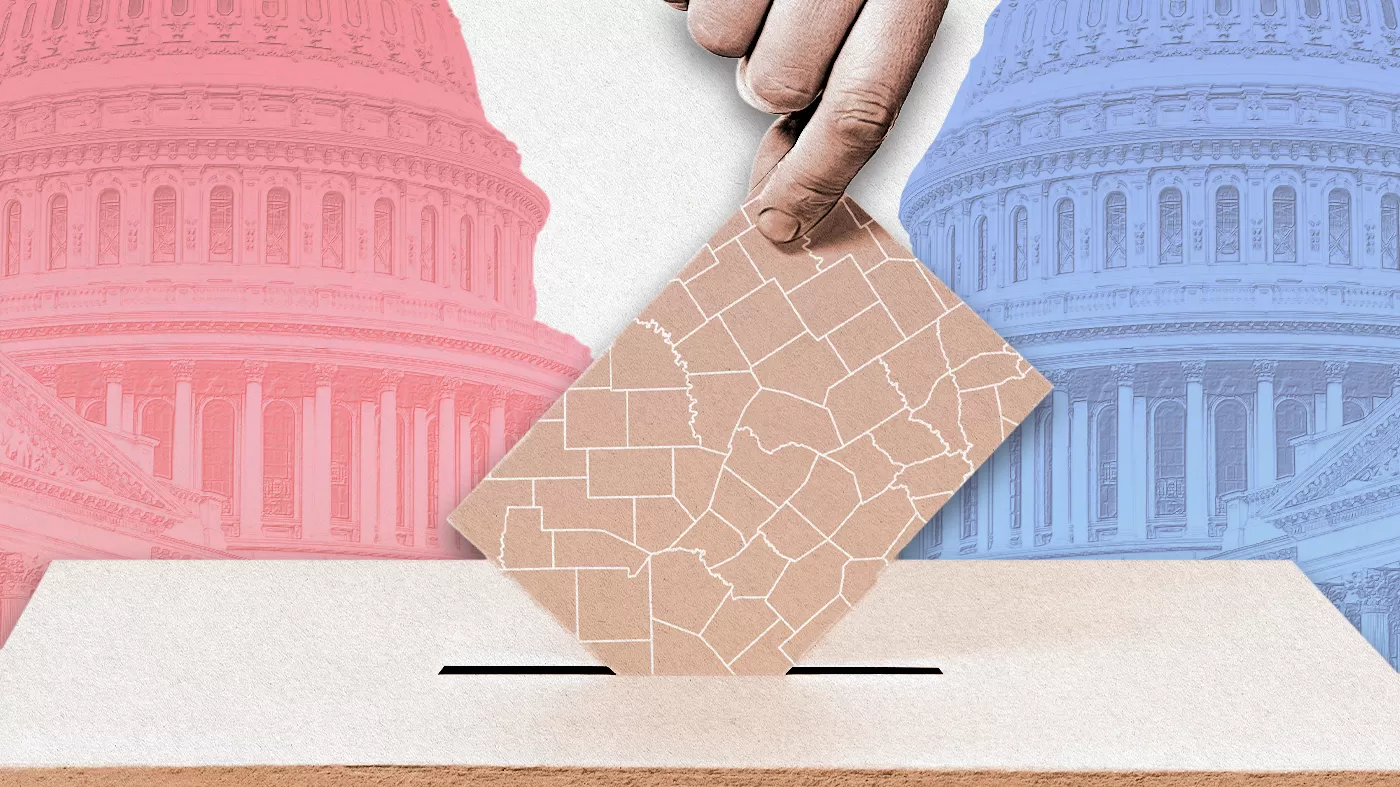
The year 2025 has been marked by a fiery battle over redistricting, triggered by Texas’s move to redraw its congressional map. This move has sparked a domino effect, with other states like California and Missouri following suit, and it is expected that several more will join in the coming year. With the 2026 midterms just around the corner, the redistricting frenzy has taken on a new urgency for politicians, voters, and pundits alike.
The redistricting process, which occurs every ten years, is the redrawing of political boundaries to account for population shifts and ensure equal representation for all citizens. This year, the stakes have been raised as political parties jockey for control of power in the upcoming midterms. The battle over redistricting has become a hot topic, with both parties vying for an advantage in the new maps.
Texas’s move to redraw their congressional map earlier this year set off a chain reaction, as other states quickly followed suit. California, the largest state in terms of population, took the lead and approved their new maps in record time. With a diverse population and a significant number of congressional seats, California’s redistricting plan has been closely watched by political observers. The state has been praised for a fair and transparent process that has resulted in more competitive districts and a more accurate representation of the state’s demographics.
Missouri, another state that has recently redrawn its lines, has also earned positive reviews for its efforts to create more balanced districts. The new maps have been commended for being more reflective of the state’s urban and rural areas, ensuring that all voices are heard in the political process. This move has been seen as a win for democracy, as it promotes fair and effective representation for all Missourians.
The ripple effect of Texas’s redistricting has been felt across the country, with more and more states joining in the process. Some experts predict that up to 20 states could approve new maps by the end of 2025, setting the stage for a fiercely competitive midterm election. This level of engagement and participation in the democratic process is a promising sign for the future of our nation.
While redistricting has always been a contentious issue, this time around, there seems to be a different tone. Instead of partisan bickering and power grabs, many states have taken a bipartisan approach to create fair and balanced districts. This change in attitude is a welcome one, as it reflects a commitment to serving the best interests of the people rather than personal political gain.
The new maps have also sparked a renewed interest in civic engagement and voter participation. With the promise of more competitive districts and a fairer representation of all citizens, people are more motivated than ever to make their voices heard. In the past, the redistricting process has often resulted in voter apathy and disengagement, but this time, we see a different story. The redistricting fight has reignited a sense of civic duty and responsibility, reminding us all that our vote does make a difference.
Looking forward to next year, there is no doubt that the redistricting battle will continue to rage on. More states are expected to redraw their lines, and with the midterms looming, the stakes are high. However, instead of seeing this as a negative, we should view it as a positive. The redistricting process is an opportunity for us to shape our democracy and ensure that it works for all of us. By participating in this process, we are exercising our fundamental rights as citizens and playing an active role in shaping our future.
In conclusion, the redistricting fight sparked by Texas’s efforts has been a game-changer for our nation. It has sparked a much-needed conversation about fair and effective representation and has reignited a sense of civic duty and responsibility. As we move towards the 2026 midterms, let us remember that our vote matters and that redistricting is our chance to shape our democracy for the better.
