
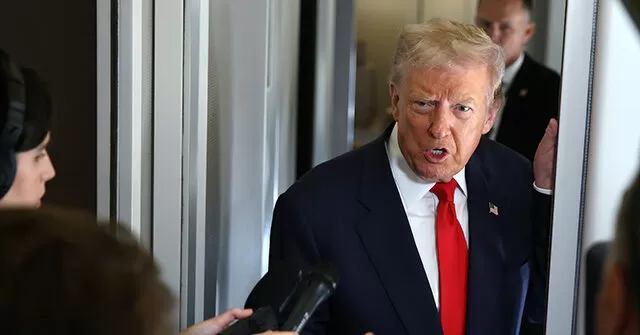
In a recent press conference on Air Force One, President Trump made a statement that has caught the attention of many Americans. He said that he would consider putting an end to the taxation on gambling winnings. This news has been met with excitement and anticipation from the gambling community, as well as from those who believe in the principles of limited government and individual freedom.
The President’s comments came in response to a question about the recent Supreme Court decision to strike down a federal law that prohibited sports betting in most states. This decision has opened up the possibility for states to legalize and regulate sports gambling, which has been a hot topic in the country for years.
During the press conference, President Trump stated, “I’m going to look at it very seriously. I’m going to look at it very strongly. But I have not spoken to anybody about it yet. I would certainly be open to it. I think it’s something we’ll have to seriously consider.” This statement has given hope to many that the President may take action to end the taxation on gambling winnings.
Currently, gambling winnings are taxed at a rate of 24% for federal income tax purposes. This means that if someone wins a large sum of money at a casino or through sports betting, they are required to pay a significant portion of their winnings to the government. This has been a source of frustration for many gamblers, who argue that they should be able to keep all of their winnings without being heavily taxed.
The idea of ending the taxation on gambling winnings is not a new one. In fact, there have been several attempts in the past to pass legislation that would eliminate this tax. However, these efforts have been unsuccessful, and the tax on gambling winnings has remained in place.
But with the recent Supreme Court decision and the President’s comments, there is renewed hope that this tax may finally be abolished. This would be a significant victory for the gambling community and for those who believe in personal freedom and limited government.
The potential elimination of the tax on gambling winnings would have a positive impact on the economy as well. It would encourage more people to participate in gambling activities, which would generate more revenue for the industry and create jobs. It would also attract more tourists to states that have legalized sports betting, boosting their local economies.
Moreover, ending the taxation on gambling winnings would align with the President’s overall goal of reducing taxes and promoting economic growth. By allowing individuals to keep more of their winnings, they would have more disposable income to spend, which would stimulate the economy.
Of course, there are some who argue that the tax on gambling winnings is necessary to fund government programs and services. However, the amount of revenue generated from this tax is relatively small compared to other sources of government income. In fact, it is estimated that eliminating the tax would only result in a 0.1% decrease in federal revenue.
In addition, the taxation on gambling winnings is seen by many as unfair and discriminatory. Other forms of income, such as lottery winnings and stock market gains, are not taxed at such a high rate. This creates an unequal playing field and goes against the principles of fairness and equality.
In conclusion, President Trump’s statement about considering an end to the taxation on gambling winnings has sparked hope and excitement among many Americans. This potential change would not only benefit the gambling community, but also align with the President’s goals of reducing taxes and promoting economic growth. It is time for the government to seriously consider ending this unfair and unnecessary tax. Let’s hope that President Trump follows through on his promise to “seriously consider” this issue and takes action to make it a reality.
