
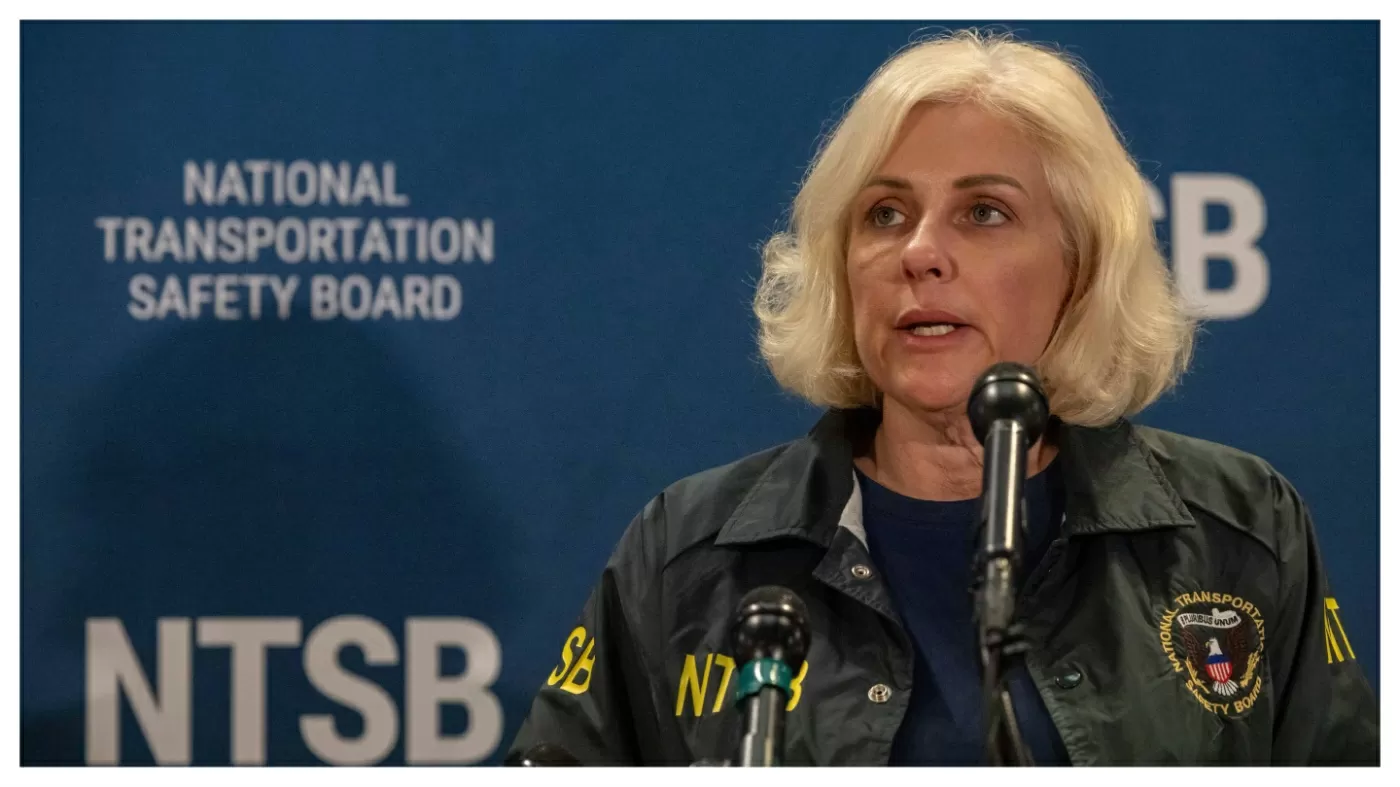
National Transportation Safety Board (NTSB) Chair Jennifer Homendy has expressed strong opposition to a provision in the National Defense Authorization Act (NDAA) passed by the House of Representatives on Wednesday. In a press conference, Homendy stated that the NTSB is vehemently against Section 373 of the NDAA, which she believes gives the military unrestricted access to sensitive information.
The NTSB is an independent federal agency responsible for investigating transportation accidents and promoting safety in all modes of transportation. With a mission to save lives, prevent injuries, and reduce the number of transportation-related accidents, the NTSB plays a crucial role in ensuring the safety of the American public.
During the press conference, Homendy highlighted the NTSB’s concerns about Section 373, which she believes could compromise the agency’s ability to conduct thorough and unbiased investigations. The provision would allow the military to access any information related to transportation accidents, including data collected by the NTSB, without any restrictions or oversight.
Homendy emphasized that the NTSB’s investigations are based on transparency and objectivity, and any interference or influence from outside parties could jeopardize the integrity of their findings. She also pointed out that the NTSB has a long-standing policy of not sharing information with other agencies until the investigation is complete, to avoid any potential conflicts of interest.
The NTSB Chair also expressed concerns about the potential impact of Section 373 on the families of accident victims. She stated that the provision could potentially violate the privacy of these families by allowing the military to access personal information without their consent.
Homendy’s statement has garnered support from various organizations, including the Air Line Pilots Association and the National Air Traffic Controllers Association. These groups have also expressed concerns about the potential consequences of Section 373 on the safety of the aviation industry.
In response to the NTSB’s opposition, the House Armed Services Committee released a statement clarifying that the provision was intended to improve coordination between the military and the NTSB during investigations involving military aircraft. However, Homendy and other critics argue that the language in the provision is too broad and could have unintended consequences.
The NTSB has a long history of working closely with the military to investigate transportation accidents, and Homendy emphasized that the agency is not opposed to collaboration. However, she believes that any cooperation must be done within the boundaries of the law and with proper oversight to protect the integrity of the NTSB’s investigations.
The NTSB’s stance on Section 373 has also gained support from members of Congress, with some calling for the provision to be removed from the final version of the NDAA. In a letter to the House Armed Services Committee, a group of lawmakers expressed their concerns about the potential impact of the provision on the NTSB’s independence and the safety of the American public.
As the NDAA moves to the Senate for consideration, the NTSB and its supporters will continue to advocate for the removal of Section 373. The agency’s primary concern is to ensure that its investigations remain unbiased and transparent, and any provision that could compromise these principles must be addressed.
In conclusion, the NTSB’s opposition to Section 373 of the NDAA is a testament to the agency’s commitment to its mission of promoting transportation safety. The NTSB’s concerns about the provision must be taken seriously, and steps must be taken to address them to protect the integrity of the agency’s investigations. As Chair Homendy stated, “We must ensure that the NTSB remains independent and able to conduct thorough and unbiased investigations for the sake of the traveling public.”
