
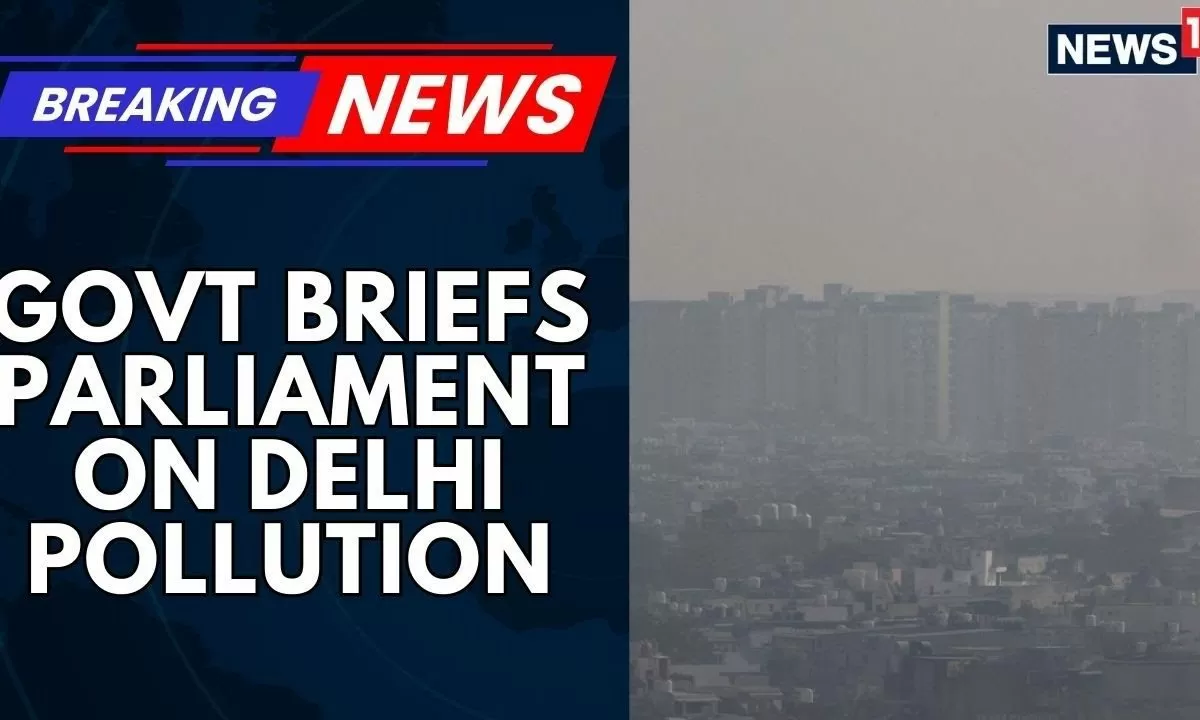
The government recently briefed Parliament on the alarming air pollution situation in Delhi, reporting nearly two lakh cases of acute respiratory illness over the past three years. This announcement has once again brought to light the severe consequences of air pollution on the health of citizens, especially in the capital city.
According to the data presented by the government, there has been a significant increase in the number of respiratory illness cases in Delhi, with a staggering 20% rise from 2017 to 2019. This is a matter of concern and requires immediate action to control the rising pollution levels.
Air pollution is not a new issue in Delhi, and it has been a persistent problem for several years. The city’s air quality has reached hazardous levels, leading to an increase in cases of respiratory and cardiovascular diseases. The government’s report further highlights the need for urgent measures to address this issue and protect the health of its citizens.
The government’s proactive step to brief Parliament on the air pollution situation in Delhi is commendable. It shows their commitment to tackling this pressing issue and taking necessary steps to improve the city’s air quality. It is a clear indication that the government is taking the matter seriously and is ready to work towards finding a solution.
The report presented by the government also sheds light on the severity of the situation and brings attention to the need for collective efforts to combat air pollution. It is not just the government’s responsibility, but every citizen must also take necessary steps to reduce their contribution to air pollution. We must all work together to create a cleaner and healthier environment for ourselves and future generations.
One of the main causes of air pollution in Delhi is vehicular emissions. The government has taken several measures to control this, such as the implementation of the odd-even scheme, promoting the usage of public transport, and encouraging the adoption of electric vehicles. However, there is still a long way to go, and more significant steps need to be taken to reduce the number of vehicles on the roads and promote the use of eco-friendly modes of transportation.
Furthermore, the government’s report also highlights the role of industrial pollution in deteriorating the air quality in Delhi. It is essential to regulate and monitor industrial emissions strictly to reduce their impact on the environment. The government must also encourage industries to adopt cleaner technologies and promote sustainable practices to reduce their contribution to air pollution.
Apart from vehicular and industrial emissions, crop burning and construction activities are also significant contributors to air pollution in Delhi. The government must enforce strict regulations to curb crop burning and monitor construction activities to ensure they are following eco-friendly practices. Additionally, there is a need for more green cover and urban forestry to help absorb pollutants and improve the air quality in the city.
In conclusion, the government’s report on the air pollution situation in Delhi is a wake-up call for all of us. It is a reminder that we need to address this issue as a priority and take necessary actions to reduce air pollution. The government has shown its commitment to tackling this problem, but it is up to each one of us to do our part in creating a cleaner and greener environment for ourselves and future generations. Let us all work together towards a healthier and more sustainable future for Delhi.
