
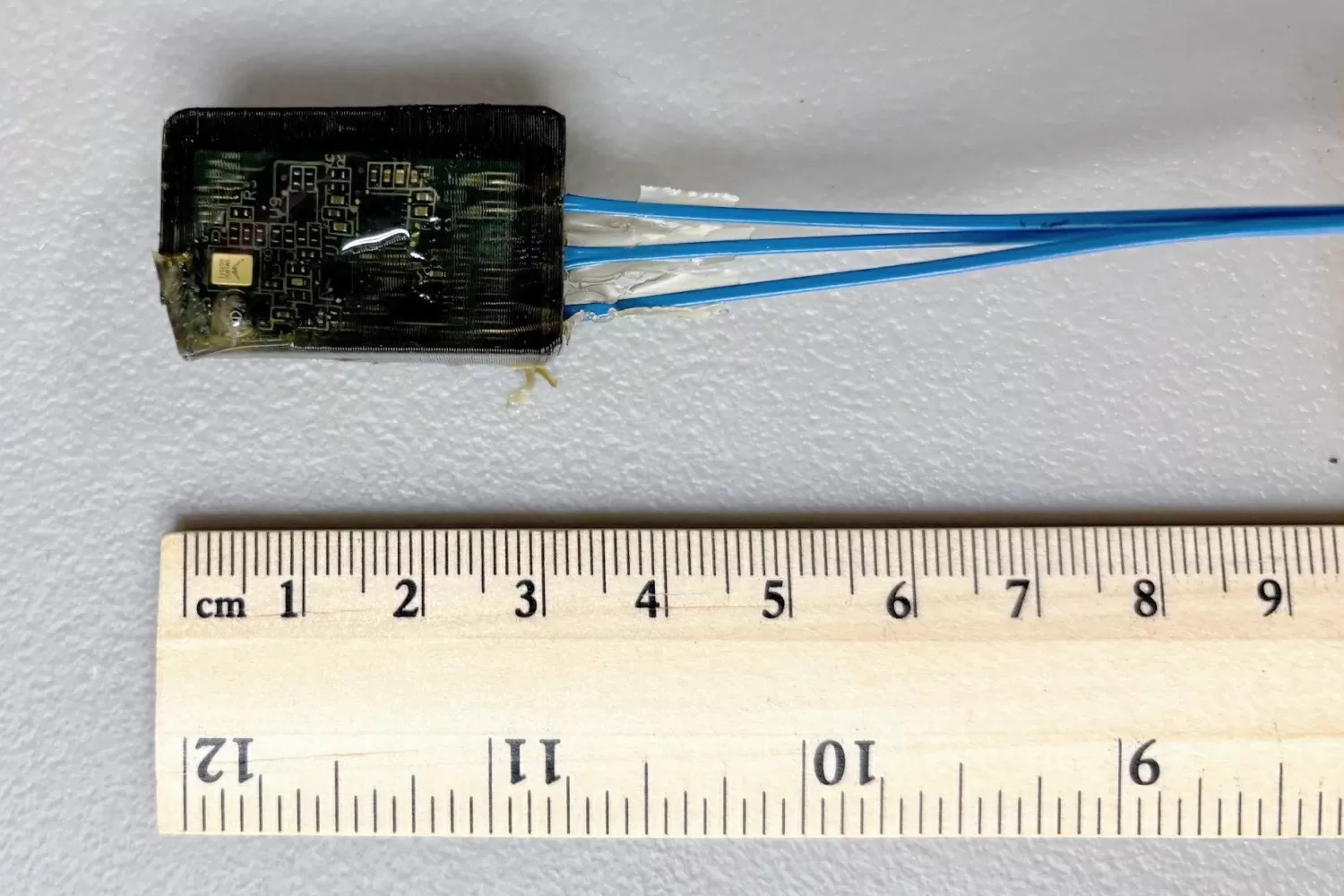
MIT Lincoln Laboratory, a research and development center for the United States Department of Defense, has recently made a groundbreaking discovery in the field of underwater acoustics. Their team of researchers has designed a hydrophone using common MEMS (Micro-Electro-Mechanical Systems) parts, which has the potential to revolutionize defense, industrial, and undersea research applications.
For those unfamiliar with the term, a hydrophone is a device used to detect and measure sound underwater. It is an essential tool for a variety of industries, including defense, oil and gas, and marine research. However, traditional hydrophones can be bulky, expensive, and difficult to deploy. This is where the innovation of the MIT Lincoln Laboratory team comes in.
By utilizing common MEMS parts, the team has managed to create a hydrophone that is smaller, more cost-effective, and easier to deploy than its predecessors. MEMS technology involves the use of miniaturized mechanical and electronic components, typically found in consumer electronics such as smartphones and tablets. By incorporating these parts into their design, the researchers have not only reduced the size and cost of the hydrophone but also increased its sensitivity and accuracy.
One of the key benefits of this new hydrophone is its versatility. Its compact size allows it to be easily integrated into various systems, including unmanned underwater vehicles (UUVs) and underwater sensors. This makes it a valuable tool for defense applications, such as detecting enemy submarines and monitoring underwater activity. The hydrophone’s increased sensitivity also allows for more precise measurements, making it ideal for industrial applications like underwater mapping and oil and gas exploration.
But the potential of this new hydrophone extends beyond just defense and industrial uses. It also has significant implications for undersea research. With its compact size and high sensitivity, the hydrophone can be used to study marine life and underwater ecosystems in a non-invasive manner. This is crucial for understanding and preserving our oceans, which are facing increasing threats from human activities.
The team at MIT Lincoln Laboratory has also addressed the issue of power consumption in their design. By utilizing low-power MEMS components, the hydrophone can operate for extended periods without the need for frequent battery replacements. This is particularly beneficial for long-term research projects and defense operations.
The development of this hydrophone is a testament to the ingenuity and expertise of the researchers at MIT Lincoln Laboratory. By combining their knowledge of underwater acoustics with the latest advancements in MEMS technology, they have created a game-changing device that has the potential to benefit multiple industries.
The team’s achievement has not gone unnoticed, and their work has already garnered attention from various organizations. The United States Navy has expressed interest in incorporating the hydrophone into their UUVs, while oil and gas companies are looking to use it for underwater exploration. This recognition further highlights the potential impact of this innovation.
In addition to its practical applications, the new hydrophone also has the potential to inspire further research and development in the field of underwater acoustics. By showing that common MEMS parts can be used to create a highly sensitive and accurate hydrophone, the team has opened up new possibilities for future advancements in this area.
In conclusion, the MIT Lincoln Laboratory researchers’ design of the hydrophone using common MEMS parts is a remarkable breakthrough with far-reaching implications. Its compact size, cost-effectiveness, and versatility make it a valuable tool for defense, industrial, and undersea research applications. We can only imagine the endless possibilities that this innovation will unlock in the years to come. The team’s achievement is a testament to the power of collaboration and the potential of technology to make a positive impact on our world.
