
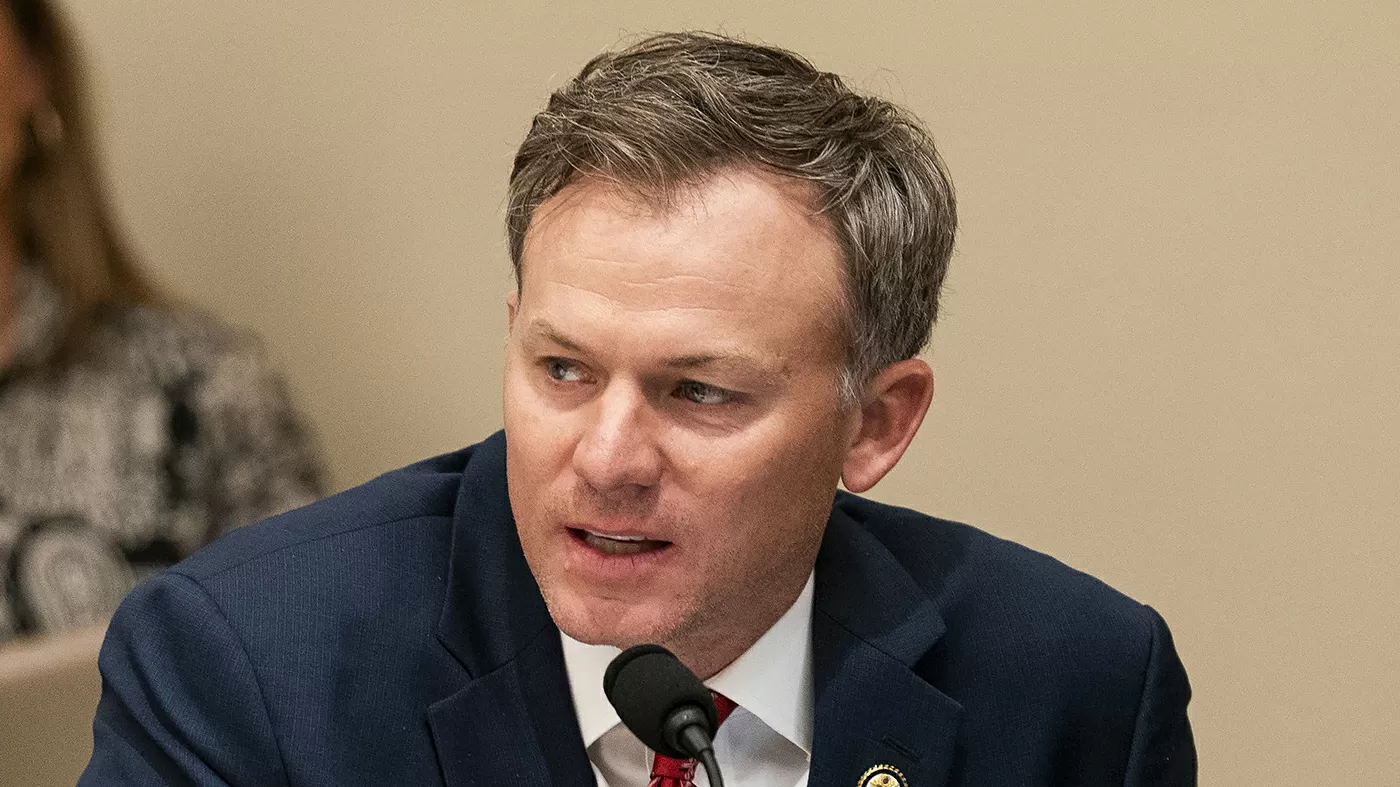
The House floor is usually a place for dignified debates and important legislative decisions. However, on Tuesday, something unexpected happened – a slang term was used by one of the representatives. This term, “6-7”, has been increasingly popular among teenagers and has now reached the House floor. While it may seem like a harmless term, its usage in such a serious setting raises some concerns.
It all started when Rep. Blake Moore (R-Utah), serving as Speaker pro tempore, asked for a vote on a measure. Instead of using formal language, he chose to use the slang term “6-7”. This term, which has been commonly used by teenagers to describe anything and everything, has now made its way into the political sphere. This incident has sparked a discussion on the appropriateness of using slang terms in a professional setting.
While some may argue that using slang terms makes politicians seem more relatable and approachable, others believe that it diminishes the seriousness of the issues being discussed. In this case, the term “6-7” was used to ask for a simple vote, but what if it is used to refer to a crucial policy decision? Will it still be seen as harmless slang or will it be seen as a lack of professionalism?
Moreover, the usage of slang terms in the House floor is not only concerning because of its potential impact on the seriousness of the discussions, but also because it sets a bad example for younger generations. As adults and leaders, politicians have a responsibility to use appropriate and respectful language, especially in formal settings. By using slang terms, they are sending a message to the younger generation that it is acceptable to use informal language in any situation.
Rep. Moore may have thought that using the term “6-7” was a clever and casual way to ask for a vote, but it is important to remember the impact of our words, especially in a public setting. As leaders, politicians have the power to influence and shape the language used by society. Using slang terms on the House floor only perpetuates the idea that it is acceptable to use such language in important and formal settings.
Some may argue that the usage of slang terms is a reflection of the changing times and that politicians should adapt to the language used by younger generations. While it is important to stay current and understand the language used by the youth, it is equally important to maintain a level of professionalism and respect in formal settings. As leaders, politicians have a duty to set an example and uphold the standards of language and behavior that are expected in the House floor.
In conclusion, the incident of “6-7” being used on the House floor may seem trivial, but it raises important questions about the appropriateness of using slang terms in a professional setting. It also highlights the responsibility of politicians to use respectful and appropriate language, especially when representing the nation. Let us hope that this incident serves as a reminder for all leaders to be mindful of the language they use and the impact it can have on society.
