
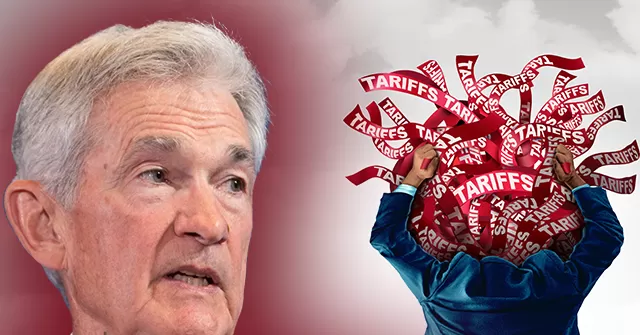
A new paper from the Federal Reserve Bank of San Francisco has just turned the economic establishment’s long-held belief on its head. For years, we have been told that tariffs drive up inflation and hurt the economy. But this new study is challenging that narrative and suggesting that the truth may be quite different.
The study, titled “Tariffs and Inflation: An Empirical Investigation,” was conducted by economists at the Federal Reserve Bank of San Francisco. It examined data from the United States and nine other advanced economies over the past 30 years. The results were surprising and have caused quite a stir in the economic community.
Contrary to popular belief, the study found that tariffs do not have a significant impact on inflation. In fact, the researchers found that the effect of tariffs on inflation is close to zero. This is a significant finding as it goes against the mainstream narrative that tariffs are a major driver of inflation.
The paper’s lead author, Senior Research Advisor Aaron Flaaen, stated, “We find that tariffs have had little impact on inflation in the US or in other advanced economies in recent decades.” This statement flies in the face of what many economists and policymakers have been preaching for years. It challenges the idea that tariffs lead to higher prices for consumers and can potentially harm the economy.
So, what does this mean for the current economic climate? Well, for starters, it suggests that the fears of inflation caused by tariffs may have been overblown. This is particularly relevant as the US continues to engage in a trade war with China, resulting in increased tariffs on goods from the Asian country. Many opponents of the trade war have warned that these tariffs will ultimately lead to higher prices for American consumers. However, this study indicates that this may not be the case.
This new research also calls into question the effectiveness of using tariffs as a tool to control inflation. It suggests that other factors, such as monetary policy and changes in the labor market, may have a much larger impact on inflation. This could have significant implications for how policymakers approach economic issues in the future.
The study also examined the effects of tariffs on economic growth and found that tariffs have a minimal impact on GDP growth. This further challenges the notion that tariffs are harmful to the economy. In fact, the paper’s authors state that a temporary increase in tariffs may actually have a positive impact on economic growth in the short term.
The findings of this study have been met with both praise and skepticism. Some economists have welcomed the new research, while others remain unconvinced. However, what is clear is that this study has sparked a much-needed conversation and debate about the impact of tariffs on the economy.
It is crucial to note that this research does not discount the negative effects of tariffs, such as disrupted supply chains and increased costs for businesses. But it does suggest that the impact on inflation and economic growth may not be as significant as previously thought.
In light of this new evidence, it is time for the economic establishment to reevaluate its stance on tariffs. The idea that tariffs are inherently harmful to the economy and lead to inflation may need to be revisited. As with any economic policy, the impact of tariffs is complex and cannot be reduced to a simple cause-and-effect relationship.
In conclusion, the new paper from the Federal Reserve Bank of San Francisco is a game-changer. It challenges the long-held belief that tariffs drive up inflation and harm the economy. While the study may not settle the debate on tariffs once and for all, it has certainly brought some much-needed nuance to the conversation. As we continue to navigate the ever-changing economic landscape, it is crucial to consider all the evidence and be open to challenging our beliefs.
