
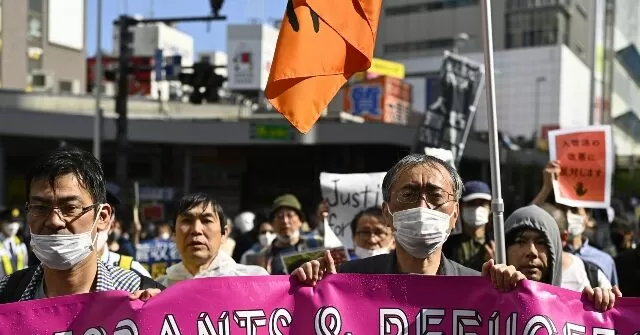
Japan’s recent elections have brought to light a pressing issue that is facing almost every industrialized nation in the world, from America to Asia. The Japanese people do not want to open their borders to mass migration, but with their own demographic collapse rapidly approaching, they may have no choice but to import the next generation of young workers.
This dilemma has been brewing for years, as Japan’s birthrate continues to decline and its population ages. In fact, the country’s population is expected to decrease by 40 million people by 2065, with almost 40% of its citizens being over the age of 65. This demographic collapse is due to a combination of factors such as a low fertility rate, an aging population, and a reluctance to accept immigrants.
The Japanese government has implemented various policies in an attempt to reverse this trend, such as offering financial incentives for couples to have more children and increasing support for working mothers. However, these efforts have not been enough to offset the declining birthrate and aging population.
As a result, the issue of mass migration has become a hot topic in Japan’s recent elections. The ruling Liberal Democratic Party (LDP) has long opposed immigration, but with the country’s labor shortage becoming more and more apparent, even they are starting to consider the possibility of opening their borders to foreign workers.
But the Japanese people are not easily convinced. They have a strong sense of cultural identity and are wary of the potential impact that mass migration could have on their society. They fear losing their unique culture and traditions, and are concerned about the strain that an influx of immigrants could put on their already struggling economy.
This sentiment is not unique to Japan. Many industrialized nations, including the United States and countries in Europe, are facing similar challenges with their own aging populations and declining birthrates. The fear of losing cultural identity and the strain on resources are common concerns among citizens of these countries.
However, the reality is that in order to sustain their economies and maintain their standard of living, these nations may have no choice but to open their borders to foreign workers. This is a difficult decision to make, but it is one that must be faced in order to ensure a prosperous future for these countries.
The Japanese people are not alone in their struggle. The world is changing, and with it, the dynamics of global migration. The issue of mass migration is not one that can be easily ignored or solved, but it is one that must be addressed with careful consideration and an open mind.
Fortunately, there are success stories of countries that have successfully managed to balance their need for foreign workers with preserving their cultural identity. Canada, for example, has a strong immigration system that has allowed them to attract skilled workers while maintaining their unique cultural heritage.
It is time for Japan and other industrialized nations to follow suit and find a way to address their demographic collapse while also preserving their cultural identity. This may require a shift in mindset and a willingness to embrace change, but it is a necessary step in securing a bright future for these countries.
In conclusion, the recent elections in Japan have brought to light a poignant issue that is facing many industrialized nations: the struggle to resist mass migration while facing a demographic collapse. This is a complex issue that requires careful consideration and an open mind from both the government and its citizens. It is time for these countries to find a balance between sustaining their economies and preserving their cultural identity, in order to ensure a prosperous future for all.
