
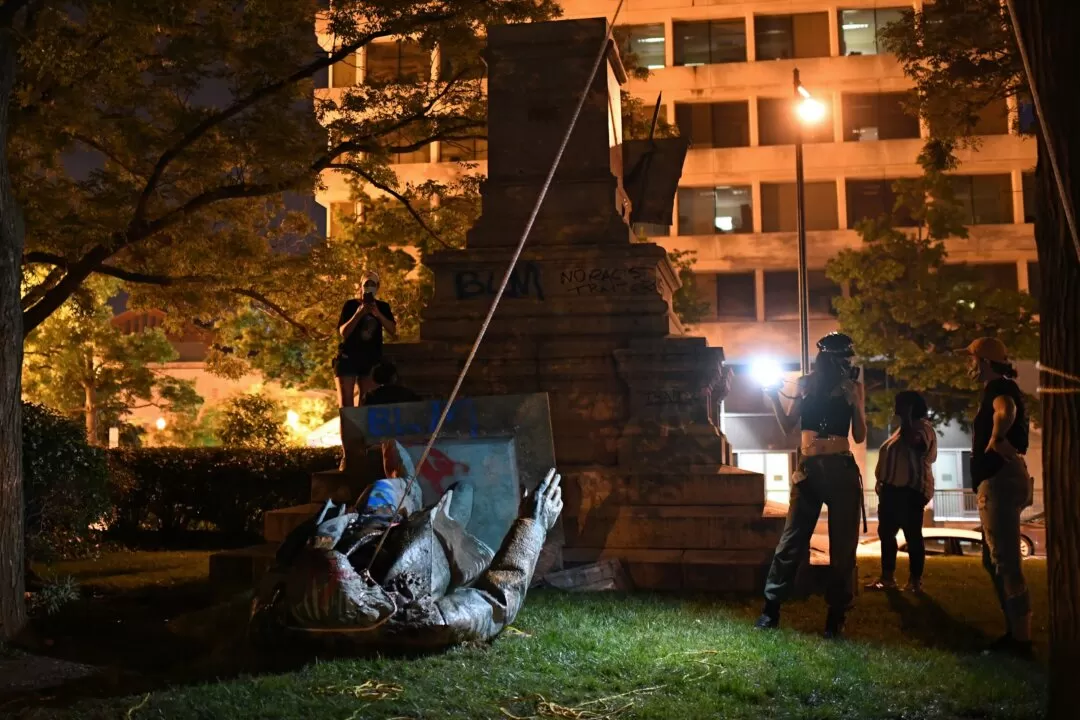
The Albert Pike statue, a symbol of the Confederacy, was torn down during the George Floyd riots in June 2020. This act of protest and defiance against racial injustice has sparked a nationwide conversation about the role of Confederate monuments in our society.
The statue, located in Washington D.C., has been a source of controversy for years. Erected in 1901, it depicts Albert Pike, a Confederate general and prominent figure in the Freemason community. For many, the statue represented the glorification of a dark and painful chapter in American history.
The decision to remove the statue was not a sudden one. In fact, it was a result of years of activism and advocacy by various groups, including the local community and Native American tribes. The statue was also a target for vandalism and defacement, with graffiti and red paint often covering its base.
However, it was the death of George Floyd, an unarmed black man who was killed by police in Minneapolis, that sparked a wave of protests and civil unrest across the country. As people took to the streets to demand justice and an end to systemic racism, the Albert Pike statue became a focal point of the demonstrations.
On the night of June 19, 2020, protesters gathered around the statue, determined to bring it down. Despite attempts by law enforcement to stop them, the statue was pulled down and set on fire. The scene was both chaotic and powerful, as people cheered and chanted in solidarity.
The tearing down of the Albert Pike statue was a symbolic moment for many. It represented a rejection of the glorification of Confederate leaders and a demand for accountability for the injustices of the past. It was a powerful statement that Black lives matter and that the time for change is now.
The aftermath of the statue’s removal was met with mixed reactions. Some praised the protesters for their actions, while others condemned the destruction of public property. However, it cannot be denied that the act of tearing down the statue sparked a much-needed conversation about the role of Confederate monuments in our society.
For many, these statues represent a painful reminder of a time when slavery and racism were rampant. They serve as a glorification of individuals who fought to preserve a system of oppression. As a result, many have called for the removal of these monuments, arguing that they have no place in a country that claims to value equality and justice for all.
On the other hand, there are those who argue that these statues are a part of our history and should be preserved. They argue that removing them erases a significant part of our past and that we should learn from it rather than try to erase it.
However, it is important to note that the removal of the Albert Pike statue does not erase history. It is a step towards acknowledging and confronting the painful truths of our past. It is a step towards creating a more inclusive and just society for all.
The tearing down of the Albert Pike statue was not an act of violence or destruction. It was an act of resistance and a call for change. It was a powerful moment that brought people together and ignited a movement for racial justice.
In the wake of this event, many other Confederate monuments have been removed or are in the process of being removed across the country. This is a clear indication that the voices of the people cannot be silenced and that change is possible when we come together and demand it.
The tearing down of the Albert Pike statue may have been a small victory, but it is a significant one. It is a reminder that we have the power to challenge and change the systems and structures that perpetuate injustice. It is a symbol of hope and a call to action for a better and more equitable future.
In conclusion, the tearing down of the Albert Pike statue during the George Floyd riots in June 2020 was a powerful and necessary act of protest. It sparked a nationwide conversation about the role of Confederate monuments in our society and served as a symbol of resistance against racial injustice. It is a reminder that we must continue to fight for equality and justice for all.
