
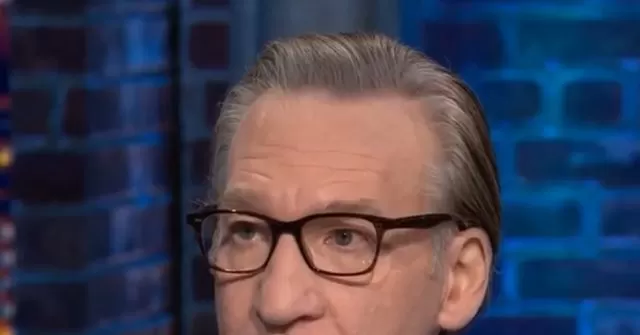
In a recent episode of HBO’s “Real Time,” host Bill Maher addressed a concerning trend among young liberals – the glorification of violence as a means to an end. Maher’s closing monologue on Friday’s broadcast shed light on a growing problem within the left, but he was quick to clarify that it is not representative of the majority of the party.
Maher began by acknowledging the current political climate, where both the left and the right seem to be at odds with each other. He pointed out that while the right has its fair share of “crazies” who have been given a platform and power, the left is not immune to this phenomenon either. Maher then went on to highlight the issue of violence among young liberals, stating that it is a “growing problem” that cannot be ignored.
The host’s concern stems from recent incidents where violence has been used as a tool to express political dissent. From the protests against conservative speakers on college campuses to the clashes between far-left and far-right groups, Maher believes that some young liberals have adopted a dangerous mindset that sees violence as a legitimate form of protest.
But Maher was quick to clarify that this is not representative of the majority of the left. He acknowledged that the majority of liberals are peaceful and do not condone violence as a means to an end. However, he also pointed out that the problem lies in the fact that these violent individuals are often given a platform and are seen as the face of the left, which can be damaging to the party’s image.
Maher’s words serve as a wake-up call for the left to address this issue before it escalates further. The glorification of violence is not only counterproductive but also goes against the core values of liberalism – equality, justice, and non-violent resistance. It is important for the left to distance itself from these individuals and make it clear that violence is not an acceptable form of political expression.
Moreover, Maher’s message also serves as a reminder to the right that they too have a responsibility to not give a platform to the “crazies” within their own party. The rise of far-right groups and their extremist ideologies have also contributed to the current political divide and have given rise to a dangerous “us vs. them” mentality.
In a time where political tensions are high, it is crucial for both sides to engage in civil discourse and find common ground instead of resorting to violence. As Maher rightly pointed out, “violence begets violence” and it is up to both the left and the right to break this cycle.
In conclusion, Maher’s monologue serves as a reminder to the left that violence is not the answer and that it is important to distance themselves from those who promote it. It also serves as a reminder to the right that they too have a responsibility to not give a platform to extremist ideologies. It is only through open and respectful dialogue that we can bridge the divide and move towards a more united and peaceful society.
