
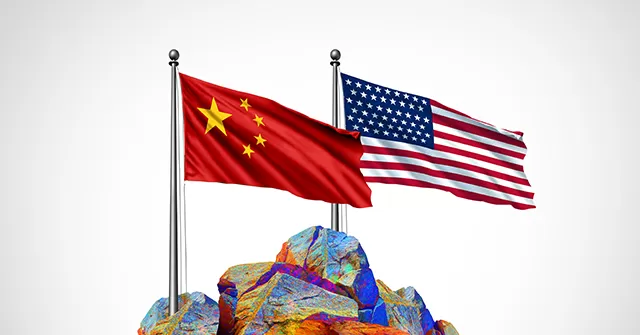
China has been dominating the global rare earths market for the past three decades, with its aggressive pricing strategies and monopolistic control. This has caused major concerns for the rest of the world, especially for the United States, as it heavily relies on these rare earth minerals for its high-tech industries. In order to break China’s monopoly and secure a stable supply chain, it is essential for the US to implement a price floor for rare earths.
Rare earths are a group of 17 elements that are crucial for the production of various high-tech products such as smartphones, electric vehicles, and military equipment. China holds a significant advantage in this market, as it accounts for more than 80% of the global production of rare earths. This dominance has been achieved through a combination of low labor costs, lax environmental regulations, and government subsidies. As a result, China has been able to flood the market with cheap rare earths, making it difficult for other countries to compete.
The consequences of this monopoly are far-reaching. The US, which heavily relies on rare earths for its defense and technology industries, has been particularly affected. In 2010, China imposed an export quota on rare earths, causing a sharp increase in prices and a shortage of supply. This move was seen as a warning to the US and other countries that rely on rare earths, as China could use its control over the market as a political weapon.
The US has been trying to reduce its dependence on Chinese rare earths by investing in domestic production and seeking alternative sources. However, these efforts have not been sufficient to break China’s monopoly. In fact, China has been able to maintain its dominance by continuously lowering prices and flooding the market with cheap rare earths. This has made it difficult for other countries to compete, as they cannot match China’s low prices.
This is where the concept of a price floor comes into play. A price floor is a government-imposed minimum price for a particular product. In the case of rare earths, a price floor would ensure that the price of these minerals does not fall below a certain level, thus preventing China from flooding the market with cheap rare earths. This would not only help other countries to compete but also provide a stable and secure supply chain for rare earths.
Implementing a price floor for rare earths would require cooperation from other countries as well. The US, along with its allies, should come together to form a coalition and set a minimum price for rare earths. This would not only break China’s monopoly but also create a level playing field for other producers. It would also incentivize domestic production in other countries, reducing their dependence on China.
Some may argue that a price floor goes against the principles of free-market economics. However, in the case of rare earths, market forces alone cannot ensure a fair and stable supply chain. China’s aggressive pricing strategies and monopolistic control have proven this. A price floor would not only protect the interests of other countries but also prevent China from using rare earths as a political weapon.
Moreover, implementing a price floor for rare earths would also have positive environmental implications. China’s lax environmental regulations have resulted in severe pollution and ecological damage in the areas where rare earths are mined. By setting a minimum price, other countries would be encouraged to produce rare earths in a more environmentally sustainable manner, reducing the overall impact on the environment.
In conclusion, China’s thirty-year price war has shown that market forces alone cannot build a secure supply chain for rare earths. The US and its allies must take action to break China’s monopoly and secure a stable supply chain. Implementing a price floor for rare earths would not only level the playing field for other producers but also have positive environmental implications. It is time for the US to take a proactive approach and work towards creating a fair and secure rare earths market for the benefit of all.
