
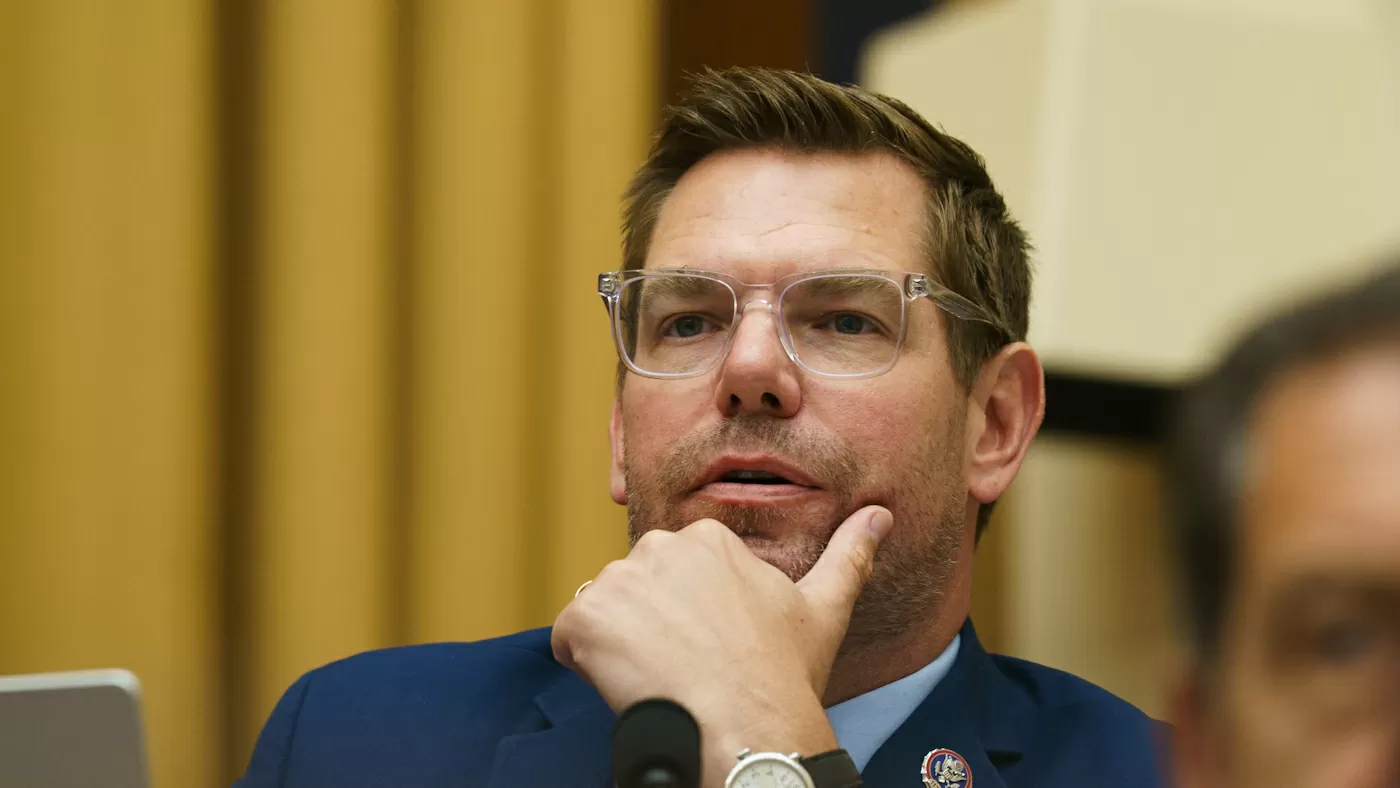
Rep. Eric Swalwell, a Democrat from California, recently made a bold statement regarding the future of U.S. Immigration and Customs Enforcement (ICE). He asserted that if the Democratic party regains the majority in the 2026 midterm elections, they will work towards prohibiting ICE officers from covering their faces during enforcement operations. This statement has sparked a lot of discussion and raised important questions about the role of ICE and the use of masks during their operations.
Swalwell’s comments were made during an interview with The New York Times, where he said, “When we are in the majority, the masks are coming off.” This statement comes at a time when ICE has faced intense scrutiny for their actions and treatment of immigrants, especially during the Trump administration. Many have criticized the agency for its lack of transparency and accountability, and Swalwell’s statement serves as a promise to address these issues.
The use of masks by ICE officers during enforcement operations has been a contentious issue. While the agency argues that it is for their safety and to protect their identities, critics argue that it creates a culture of secrecy and allows for potential abuse of power. Many have raised concerns about the use of excessive force and mistreatment of immigrants by officers who are essentially unidentifiable.
Swalwell’s statement has been met with mixed reactions. Some see it as a necessary step towards holding ICE accountable, while others believe it will hinder their ability to carry out their duties effectively. However, the congressman has made it clear that this is not a decision that will be taken lightly and that proper measures will be put in place to ensure the safety of ICE officers.
The issue of immigration has been a highly debated topic in the United States, and the role of ICE has been at the center of it all. While the agency’s primary responsibility is to enforce immigration laws and protect national security, there have been numerous reports of misconduct and human rights violations. This has led to calls for reform and even calls for the agency to be abolished altogether.
Swalwell’s statement is another indication of the Democratic party’s stance on immigration and their plans for the future. With the midterm elections coming up in 2026, it is clear that the party is already strategizing and discussing ways to make significant changes if they regain control of the government. The issue of ICE and their use of masks is just one of the many issues that will be addressed.
The use of masks by law enforcement agencies has been a topic of discussion in recent years, and it is not limited to ICE. In the wake of the COVID-19 pandemic, many departments have mandated the use of masks to protect officers and the public. However, this has also raised concerns about accountability and transparency, and Swalwell’s statement adds another layer to this complex issue.
Some have argued that prohibiting ICE officers from wearing masks will put them at risk and make them more vulnerable to retaliation from those they are trying to apprehend. However, Swalwell has made it clear that measures will be taken to ensure the safety of officers. This could include providing alternative protective gear or implementing stricter protocols for identifying officers during operations.
The debate over ICE’s use of masks is just one aspect of a broader conversation about immigration and the role of law enforcement. The Democratic party’s promise to address this issue if they regain the majority in 2026 is a strong indication of their commitment to reform and accountability. It also serves as a reminder that the power to make changes lies in the hands of the voters.
In conclusion, Rep. Eric Swalwell’s statement regarding the use of masks by ICE officers has sparked a significant discussion about the agency and its practices. While there are valid concerns on both sides, it is clear that the issue of immigration and the use of masks will continue to be a hot topic in the years to come. The 2026 midterm elections will be a crucial moment for the future of ICE, and it is up to the voters to decide whether they want to see changes in the agency’s operations. As Swalwell said, “When we are in the majority, the masks are coming off.”
