
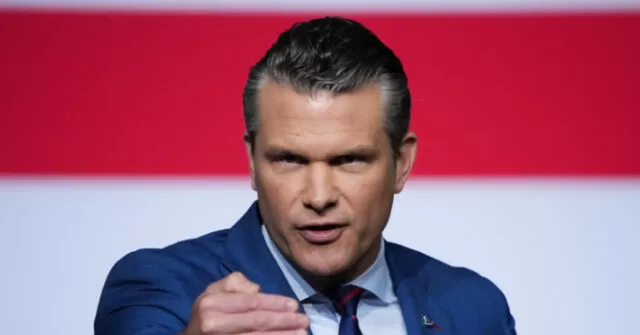
Secretary of War Pete Hegseth has recently announced new standards on fitness and grooming for military officials. In his statement, he emphasized the importance of maintaining a professional appearance and physical fitness in the armed forces. As part of these new standards, military officials will no longer be allowed to have beards or long hair.
This decision has been met with mixed reactions, with some applauding the move towards a more uniform and disciplined appearance, while others express disappointment at the loss of personal expression. However, it is important to understand the reasoning behind this decision and the benefits it will bring to the military as a whole.
First and foremost, the military is a highly respected and revered institution that represents our country and its values. As such, it is crucial for its members to maintain a professional and disciplined appearance at all times. This includes being clean-shaven and having a neat and tidy haircut. These new standards will ensure that military officials project a strong and unified image, both to their fellow soldiers and to the public.
Moreover, physical fitness is a fundamental aspect of military training and operations. It is essential for soldiers to be in top physical condition in order to carry out their duties effectively and protect our nation. By enforcing stricter fitness standards, the military will be able to ensure that its members are physically capable of meeting the demands of their job. This will not only improve the overall performance of the armed forces, but also enhance their reputation as a strong and capable fighting force.
Some may argue that allowing beards and long hair does not affect one’s ability to perform their duties. However, it is important to note that these grooming choices can have a significant impact on hygiene and safety. In the military, where soldiers are often in close quarters and exposed to harsh environments, maintaining proper hygiene is crucial to prevent the spread of diseases and maintain overall health. Additionally, long hair can pose a safety hazard in combat situations, as it can get caught in equipment or obstruct vision. By enforcing these new standards, the military is prioritizing the well-being and safety of its members.
Furthermore, these new standards will also promote equality and inclusivity within the military. Allowing beards and long hair can create a divide between those who are able to grow them and those who cannot. This can lead to feelings of exclusion and discrimination among soldiers. By having a standard grooming policy for all, the military is fostering a sense of unity and camaraderie among its members.
It is also worth noting that these new standards are not uncommon in other branches of the military. The Navy, Air Force, and Marine Corps already have similar grooming policies in place. This move by the Army is simply aligning with the standards of other branches and promoting a sense of uniformity among all branches of the military.
In conclusion, Secretary of War Pete Hegseth’s announcement of new fitness and grooming standards for military officials is a positive step towards maintaining a professional and disciplined image for the armed forces. These standards will not only improve the overall appearance and performance of the military, but also promote equality and inclusivity among its members. It is important for soldiers to remember that these standards are in place to uphold the values and reputation of the military, and to ensure the safety and well-being of all its members. Let us embrace these changes and continue to serve our country with pride and professionalism.
