
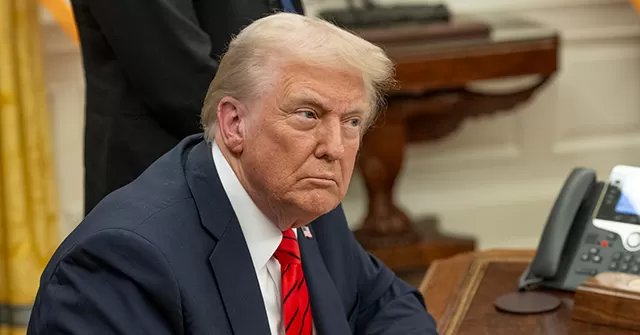
President Donald Trump has recently sparked controversy with his comments on the possibility of reopening insane asylums in the United States. During a recent interview on his crime crackdown in Washington, DC, Trump expressed his belief that society “can’t have these people walking around” with severe mental illnesses.
The president’s comments have been met with both support and criticism, with some applauding his willingness to address the issue of mental illness, while others have expressed concern over the potential consequences of reopening asylums.
In the interview, Trump stated, “We have to start building institutions again because, you know, if you look at the ’60s and ’70s, so many of these institutions were closed. And the people were just allowed to go onto the streets. That was a terrible thing for our country.”
His statement refers to the deinstitutionalization movement of the 1960s and 1970s, which aimed to shift the care of individuals with mental illnesses from institutions to community-based settings. While this movement had good intentions, it ultimately led to a lack of resources and support for those with severe mental illnesses, resulting in many ending up on the streets or in the criminal justice system.
Trump’s remarks have reignited the debate on how to best address mental illness in the United States. Some argue that reopening asylums would provide a safe and secure environment for those with severe mental illnesses to receive proper treatment and care. Others argue that this approach is outdated and that community-based services and support should be the focus.
However, regardless of one’s stance on the issue, it is clear that mental illness is a pressing problem in the United States. According to the National Institute of Mental Health, approximately one in five adults in the US experiences mental illness in a given year. This not only affects the individual but also has a significant impact on their families, communities, and the economy.
In light of this, it is commendable that President Trump is addressing the issue and considering all possible solutions. His willingness to explore the idea of reopening asylums shows a commitment to finding a solution to the mental health crisis in the country.
Furthermore, Trump’s comments also highlight the need for a comprehensive approach to addressing mental illness. Reopening asylums alone will not solve the problem. It is crucial to also invest in community-based services, such as mental health clinics and support programs, to provide a well-rounded approach to treatment and care.
Moreover, the president’s stance on the issue also brings attention to the need for more education and awareness surrounding mental illness. Many people still hold stigmatizing views towards mental health, which can prevent individuals from seeking help and support. By openly discussing the issue, Trump is helping to break down these barriers and promote a more understanding and accepting society.
In conclusion, President Trump’s comments on the possibility of reopening insane asylums have sparked a much-needed conversation on how to address mental illness in the United States. While his remarks may be controversial, they shed light on a pressing issue that requires attention and action. It is essential to approach this issue with an open mind and consider all possible solutions to ensure that those with severe mental illnesses receive the care and support they need. Let us hope that this conversation leads to positive change and a better future for those struggling with mental illness in our country.
