
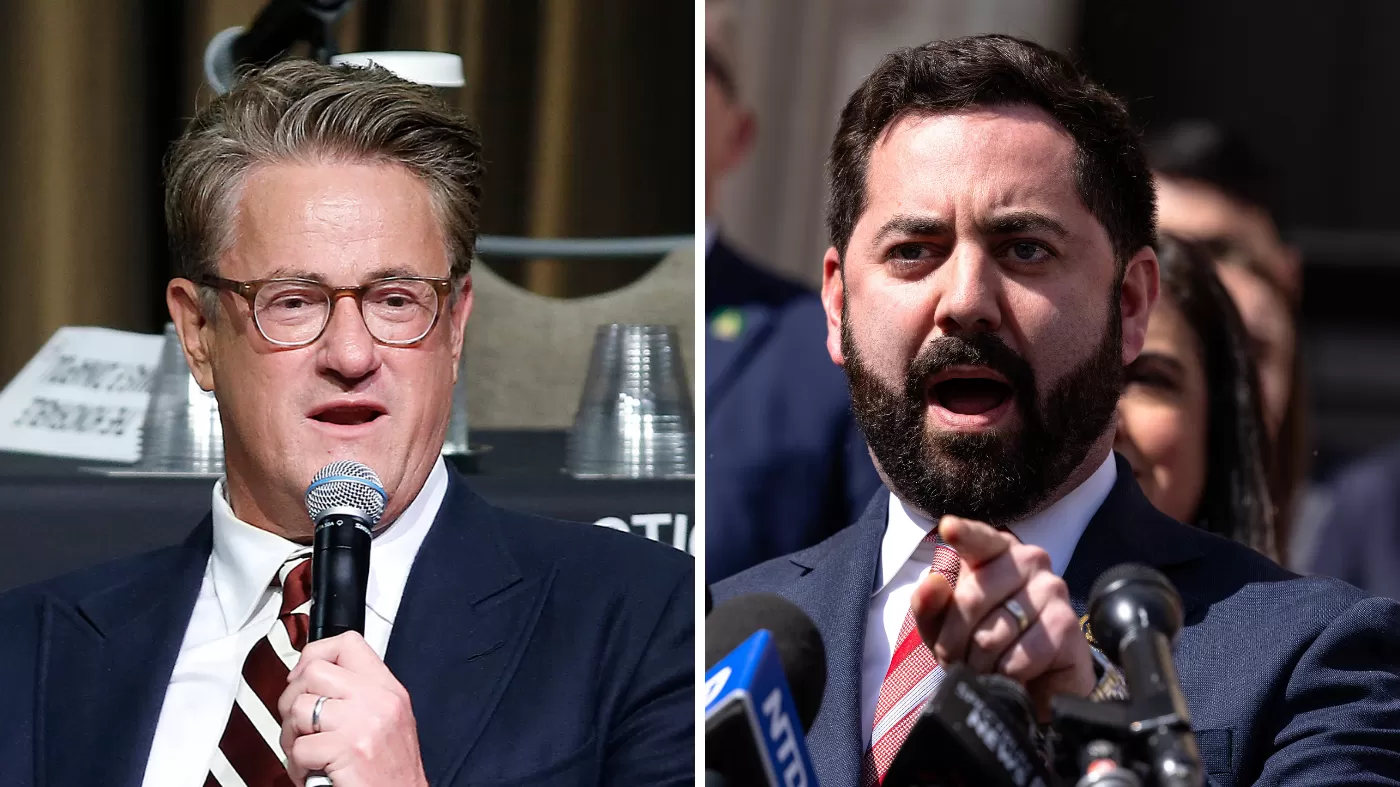
MSNBC pundit Joe Scarborough found himself in a heated debate with Republican Congressman Mike Lawler (R-N.Y.) over the recent cuts to Medicaid that were passed by Congress as part of President Trump’s spending bill. The two clashed during a segment on Scarborough’s morning talk show, with Lawler accusing the Congressional Budget Office (CBO) of simply regurgitating the same talking points as the state.
The discussion centered around the $1.5 trillion spending bill that was recently passed by Congress, which included significant cuts to Medicaid, the government program that provides healthcare coverage to low-income individuals and families. The cuts, which were championed by the Trump administration, have been met with widespread criticism and concern from both Democrats and Republicans.
During the segment, Scarborough questioned Lawler about the impact of these cuts on the millions of Americans who rely on Medicaid for their healthcare needs. However, Lawler seemed to deflect the question by attacking the CBO, the non-partisan agency responsible for analyzing the budgetary and economic impact of legislation.
Lawler accused the CBO of simply echoing the same talking points as the state, implying that their analysis was biased and unreliable. This sparked a fiery response from Scarborough, who defended the CBO and their role in providing accurate and unbiased information to Congress.
The exchange between the two men highlighted the deep divide between Democrats and Republicans when it comes to healthcare policy. While Democrats argue that the cuts to Medicaid will have a devastating impact on the most vulnerable members of society, Republicans maintain that the program is in need of reform and that these cuts are necessary to reduce government spending.
However, what is clear is that the cuts to Medicaid will have a significant impact on millions of Americans. According to the CBO, the spending bill will result in a reduction of $1.4 trillion in federal spending on healthcare over the next decade, with the majority of these cuts coming from Medicaid.
This has raised concerns among healthcare experts and advocates, who fear that these cuts will result in reduced access to healthcare for low-income individuals and families. The CBO estimates that around 14 million people will lose their Medicaid coverage by 2026 as a result of these cuts.
In addition, the spending bill also includes a provision that would allow states to impose work requirements on Medicaid recipients, a move that has been criticized by Democrats as a way to further limit access to healthcare for those in need.
During the segment, Scarborough also pointed out that the majority of Americans support Medicaid and believe that it is an important program that should be protected. He argued that the cuts to Medicaid were not in line with the wishes of the American people and that Congress should listen to their constituents instead of blindly following the party line.
Lawler, on the other hand, defended the cuts and argued that they were necessary to reduce government spending and promote fiscal responsibility. He also accused Democrats of using scare tactics to oppose the cuts and urged them to come up with alternative solutions to address the rising costs of healthcare.
The debate between Scarborough and Lawler highlights the ongoing battle over healthcare policy in the United States. While both sides have valid arguments, it is clear that the cuts to Medicaid will have a significant impact on the lives of millions of Americans.
As the discussion came to a close, Scarborough urged viewers to pay attention to the decisions being made by their elected officials and to hold them accountable for their actions. He also encouraged Americans to educate themselves on the issues and to make their voices heard through their votes.
In the end, it is up to Congress to find a solution that balances the need for fiscal responsibility with the importance of providing access to healthcare for all Americans. As the debate continues, it is important for both sides to listen to each other and work towards a compromise that will benefit the American people.
