
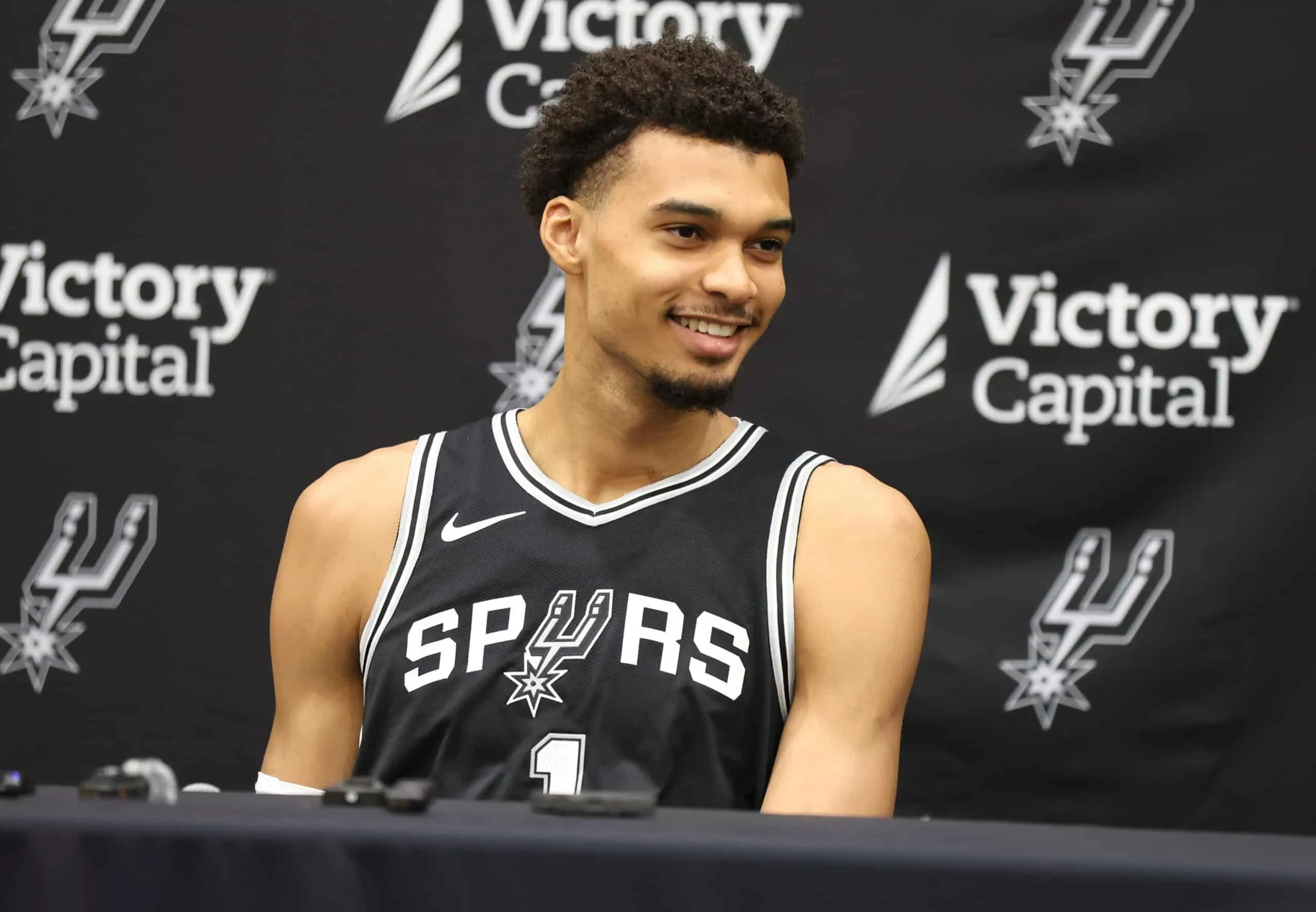
In February, the NBA world was rocked with the news of Victor Wembanyama’s deep vein thrombosis diagnosis in his right shoulder. The condition, a dangerous blood clot that has ended the careers of many athletes, forced the San Antonio Spurs to make a difficult decision – to shut down their promising young player for the rest of the 2024-25 season. At just 21 years old, Wembanyama had already shown incredible potential and was on track to become a star in the league. The announcement of his diagnosis was met with shock and disappointment from fans and the basketball community alike.
For those who may not be familiar with him, Victor Wembanyama is a 7’3″ French basketball player who has been making waves in the sport since he was a teenager. He has been hailed as the future of the NBA with his impressive height, athleticism, and skill on both ends of the court. Wembanyama’s journey to the NBA has been a remarkable one, and his diagnosis of deep vein thrombosis was a major setback for him and his team.
Deep vein thrombosis (DVT) is a condition where a blood clot forms in a deep vein, usually in the legs. It can be caused by a variety of factors, including prolonged sitting or immobility, injury, and certain medical conditions. DVT is a serious condition that can lead to complications such as pulmonary embolism, where the blood clot travels to the lungs and blocks blood flow. This can be life-threatening, and it is crucial to detect and treat DVT early.
The news of Wembanyama’s diagnosis was a wake-up call for the NBA and its players. It highlighted the importance of monitoring and taking care of one’s health, especially for young athletes who push their bodies to the limit. The Spurs’ decision to shut down Wembanyama for the season was a testament to their commitment to the player’s well-being. They understood the severity of DVT and did not want to risk Wembanyama’s health and future in the league.
The Spurs’ announcement also shed light on the prevalence of DVT in professional sports. Many athletes, such as Chris Bosh and Serena Williams, have been diagnosed with DVT in the past, and it has affected their careers significantly. The physical demands of playing at the highest level can put athletes at a higher risk for DVT, and it is crucial for teams and players to be aware of this and take preventive measures.
The Spurs’ decision to shut down Wembanyama for the season was a tough one, but it was the right one. It showed that the team prioritizes the health and well-being of their players above everything else. While it may be disappointing for fans not to see Wembanyama on the court this season, it is a small price to pay for his long-term health and career.
Fortunately, Wembanyama’s diagnosis was caught early, and he has been receiving the necessary treatment and care. The Spurs have assured fans that they will continue to monitor his progress and provide updates on his condition. This news should give fans hope that Wembanyama will be back on the court in no time, stronger and healthier than ever.
In the meantime, Wembanyama’s diagnosis should serve as a reminder to all athletes, young and old, to prioritize their health and listen to their bodies. It is essential to take breaks and rest when needed, to stay hydrated, and to seek medical attention if any concerning symptoms arise. The NBA has also taken measures to educate players about DVT and its prevention, emphasizing the importance of early detection and treatment.
Despite the setback, Wembanyama remains positive and determined to come back stronger. His resilience and determination are a testament to his character and will surely inspire other young athletes facing similar challenges. The NBA community has shown an outpouring of support for Wembanyama, and we can all look forward to seeing him back on the court in the future.
In conclusion, the Spurs’ announcement about Victor Wembanyama’s DVT diagnosis was a significant moment in the NBA. It highlighted the importance of player health and the prevalence of DVT in professional sports. While it may be disappointing not to see Wembanyama play this season, his health and well-being should always come first. We wish him a speedy recovery and look forward to seeing him back on the court, dominating the
