
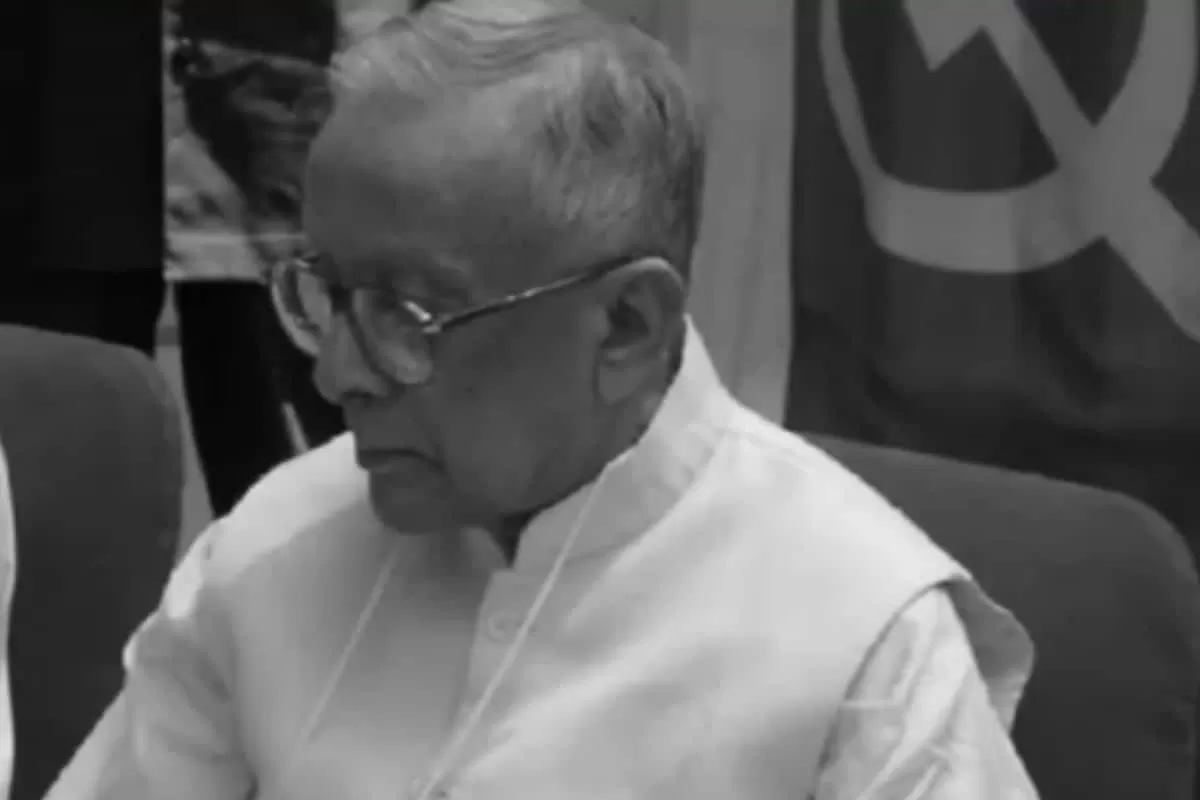
Jyoti Basu, the former Chief Minister of West Bengal, was a prominent figure in Indian politics. He was a leader of the Communist Party of India (Marxist) and served as the Chief Minister of West Bengal for an impressive 23 years. However, what many people may not know is that he was once offered the position of Prime Minister of India, but he declined. This decision has been called a ‘historic blunder’ by Basu himself and is considered a missed opportunity for India’s communist movement.
In 1996, the Indian National Congress, led by P.V. Narasimha Rao, was facing a crisis. The Congress had lost its majority in the Lok Sabha and was struggling to form a stable government. In this situation, the then President of India, Shankar Dayal Sharma, invited Jyoti Basu to form the government and become the Prime Minister of India. This was a historic moment as it was the first time that a communist leader was offered the position of Prime Minister in India.
However, to the surprise of many, Basu declined the offer. He cited the lack of support from his own party and the Left Front as the reason for his decision. This decision was met with disappointment and criticism from many, including his own party members. Basu later called it a ‘historic blunder’ and a missed opportunity for the communist movement in India.
Basu’s decision to decline the offer of Prime Minister has been a topic of debate and discussion for many years. Some argue that he should have accepted the offer and used the opportunity to bring about significant changes in the country. Others believe that his decision was a principled one, as he did not want to compromise his party’s ideology and principles.
One of the main reasons for Basu’s decision was the lack of support from his own party. The Communist Party of India (Marxist) was divided on the issue of supporting a Congress-led government. Some members believed that supporting the Congress would go against the party’s ideology, while others saw it as an opportunity to bring about change from within the government. This division within the party ultimately led to Basu’s decision to decline the offer.
Another factor that played a role in Basu’s decision was the Left Front’s stance on supporting a Congress-led government. The Left Front, which was a coalition of communist and socialist parties, had a significant presence in West Bengal and other states. The Front had a policy of not supporting any government at the center, which was not led by them. This policy was seen as a major hindrance in Basu’s path to becoming the Prime Minister.
Basu’s decision to decline the offer of Prime Minister was met with mixed reactions. While some praised him for sticking to his principles, others criticized him for missing out on a historic opportunity. However, Basu remained firm in his decision and continued to serve as the Chief Minister of West Bengal until 2000.
Looking back, it is evident that Basu’s decision to decline the offer of Prime Minister was a significant moment in Indian politics. It not only showcased his integrity and commitment to his party’s ideology but also highlighted the challenges faced by the communist movement in India. It also brought to light the importance of unity and support within a party, especially in times of crisis.
Basu’s decision also had a lasting impact on the Indian political landscape. It showed that the communist movement in India was not yet ready to take on the responsibility of leading the country. It also highlighted the need for a strong and united left front, which could have potentially changed the course of Indian politics.
In conclusion, Jyoti Basu’s decision to decline the offer of Prime Minister was a significant moment in Indian politics. While some may see it as a missed opportunity, others view it as a principled decision. However, one thing is for sure, Basu’s legacy as a leader who stood by his principles and fought for the rights of the people will always be remembered. His contribution to the communist movement in India will continue to inspire generations to come.
