
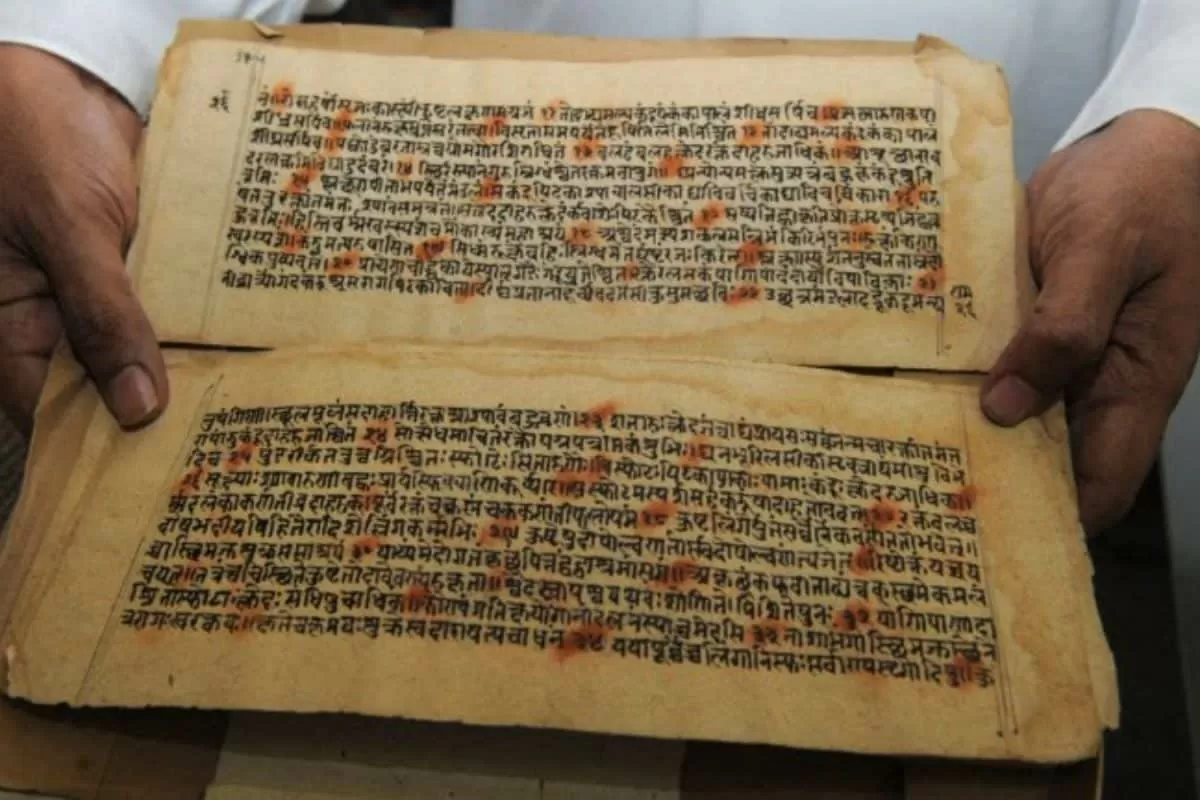
These priceless records – written on palm leaf, birch bark, parchment, cloth, or handmade paper – span a vast linguistic spectrum, providing us with a glimpse into the rich history and diverse cultures of our world. From ancient civilizations to modern societies, these records serve as a testament to the human need for communication and preservation of knowledge.
The use of various materials for recording information dates back to thousands of years. In ancient India, palm leaf manuscripts were used to document religious texts and epics such as the Ramayana and Mahabharata. These delicate leaves were carefully inscribed with intricate Sanskrit verses, showcasing the skill and dedication of the scribes. Similarly, birch bark was used in ancient Russia to record important legal and religious texts, providing us with valuable insights into their way of life.
As societies evolved, so did the materials used for recording information. Parchment, made from animal skin, was widely used in Europe during the Middle Ages. The famous Magna Carta, a document that laid the foundation for modern democracy, was written on parchment. Its durability and versatility made it the preferred choice for important legal and religious documents.
Cloth, another material used for recording information, has been used by various cultures around the world. In ancient Egypt, papyrus was made from the pith of the papyrus plant and was used to create scrolls and manuscripts. The Chinese also used silk to record important texts, which were highly prized for their durability and elegance. In fact, the world’s oldest surviving printed book, the Diamond Sutra, was printed on silk in China in the 9th century.
However, the most widely used material for recording information throughout history has been handmade paper. Invented in China during the Han Dynasty, paper revolutionized the way information was recorded and disseminated. It allowed for the mass production of books, making knowledge more accessible to the general public. This led to a surge in literacy rates and the spread of ideas and cultures.
The use of these various materials for recording information has not only preserved important historical records, but it has also allowed for the development and evolution of languages. These records have been written in a vast linguistic spectrum, ranging from ancient languages such as Sanskrit and Latin, to modern languages like English and Mandarin. They provide us with a window into the evolution of languages and the way they have been influenced by different cultures and civilizations.
These priceless records have also played a crucial role in the preservation of indigenous languages. Many of these languages were at risk of extinction due to the dominance of more widely spoken languages. However, these records have helped in the revival and preservation of these languages, allowing them to continue to thrive and be passed down to future generations.
Moreover, these records have not only preserved written language, but they have also helped in the development of oral traditions. In ancient societies, where writing was not prevalent, oral traditions were used to pass down knowledge and stories from one generation to the next. These records have helped in the preservation of these oral traditions, providing us with a deeper understanding of our past and cultural heritage.
In today’s digital age, where information is easily accessible at the click of a button, it is important to remember the value of these priceless records. They serve as a reminder of our roots, our diversity, and our shared humanity. They have stood the test of time and have survived wars, natural disasters, and the passage of time, making them truly priceless.
In conclusion, these records written on palm leaf, birch bark, parchment, cloth, or handmade paper, are not just mere documents, but a reflection of our collective history and cultural heritage. They have shaped our understanding of the world and have allowed us to connect with our past. It is our responsibility to preserve and protect these priceless records for future generations, so that they too can learn from and appreciate the vast linguistic spectrum that they represent.
