
A Massive Bomb and the Republican Divide: The Debate Over Direct U.S. Involvement in Striking Iran
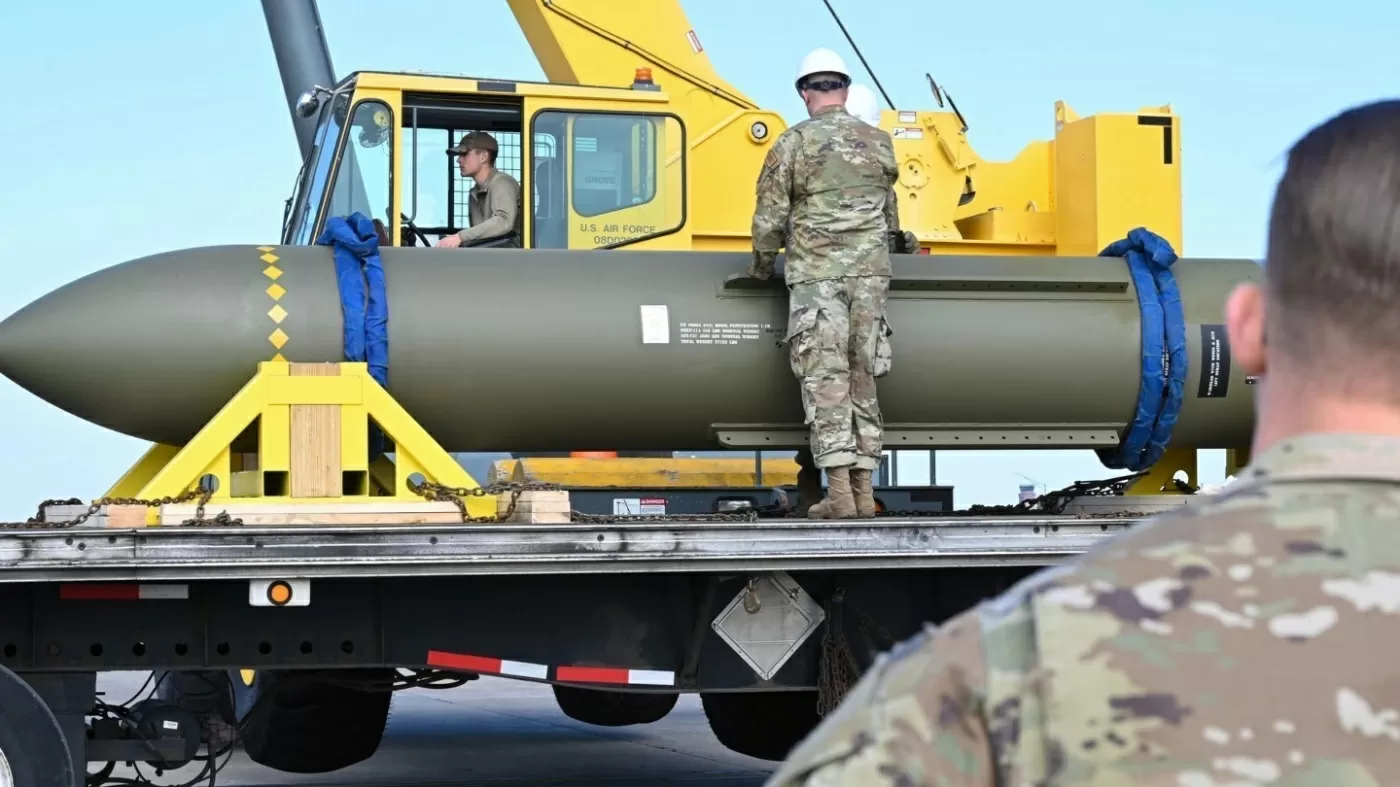
The tension between the United States and Iran has been a hot topic in recent years, with both sides engaging in a war of words and threats. However, the recent development of a massive bomb, known as a “bunker buster,” has brought the debate over direct U.S. involvement in striking Iran to the forefront of political discussions. This powerful weapon has become a point of contention among Republicans, with some advocating for its use and others cautioning against it. At the heart of this divide lies the Fordow nuclear facility in Iran, and the question of whether the U.S. can afford to let it remain intact.
The Fordow nuclear facility, located deep underground in the mountains near the city of Qom, has been a source of concern for the international community for years. It is believed to be one of Iran’s key sites for uranium enrichment, a process that can be used to produce nuclear weapons. Despite Iran’s claims that the facility is for peaceful purposes, many experts believe that it is a crucial part of their nuclear weapons program. This has led to growing calls for the U.S. to take action and prevent Iran from obtaining nuclear weapons.
Enter the “bunker buster,” a massive bomb designed to penetrate deep into the ground and destroy underground targets. This weapon has been a topic of discussion among Republicans, with some arguing that it is the only way to effectively destroy the Fordow facility and prevent Iran from obtaining nuclear weapons. They point to the fact that traditional bombs may not be powerful enough to penetrate the thick layers of rock and concrete that protect the facility. As such, they argue that the U.S. must be prepared to use the bunker buster if necessary.
On the other hand, there are those within the Republican party who caution against the use of the bunker buster. They argue that such a move would be seen as an act of aggression and could escalate tensions with Iran. They also point out that the use of this weapon could have devastating consequences, not only for the Fordow facility but also for the surrounding area and its inhabitants. This has led to a divide within the party, with both sides fiercely defending their stance.
Supporters of U.S. involvement in striking Iran argue that the country’s nuclear ambitions pose a significant threat to global security. They point to Iran’s history of supporting terrorist organizations and their aggressive rhetoric towards the U.S. and its allies. They argue that the U.S. cannot afford to sit back and allow Iran to continue down the path towards nuclear weapons. The use of the bunker buster, they believe, is a necessary step in preventing this from happening.
However, opponents of direct U.S. involvement in striking Iran argue that there are other ways to address the issue without resorting to military action. They point to the success of the Joint Comprehensive Plan of Action (JCPOA), also known as the Iran nuclear deal, which was signed in 2015. This agreement aimed to limit Iran’s nuclear program in exchange for the lifting of economic sanctions. While the U.S. withdrew from the deal in 2018, other countries involved have continued to uphold it. Opponents of the bunker buster argue that the U.S. should instead focus on diplomatic efforts and working with its allies to find a peaceful solution.
The debate over direct U.S. involvement in striking Iran is a complex and contentious issue, with valid arguments on both sides. However, one thing is clear: the Fordow nuclear facility is a significant threat, and the U.S. cannot afford to ignore it. Whether the bunker buster is the right solution remains to be seen, but what is certain is that the U.S. must take decisive action to prevent Iran from obtaining nuclear weapons.
In the end, the decision on whether to use the bunker buster or pursue other avenues lies with the U.S. government. However, it is crucial that this decision is made with careful consideration and a thorough understanding of the potential consequences. The U.S. must also work closely with its allies and the international community to find a solution that ensures the safety and security of all nations.
In conclusion, the debate over direct U.S. involvement in striking Iran is a complex and divisive issue, with the bunker buster at its center. While there are valid arguments on both sides, what is clear is that the U.S. cannot allow the
