
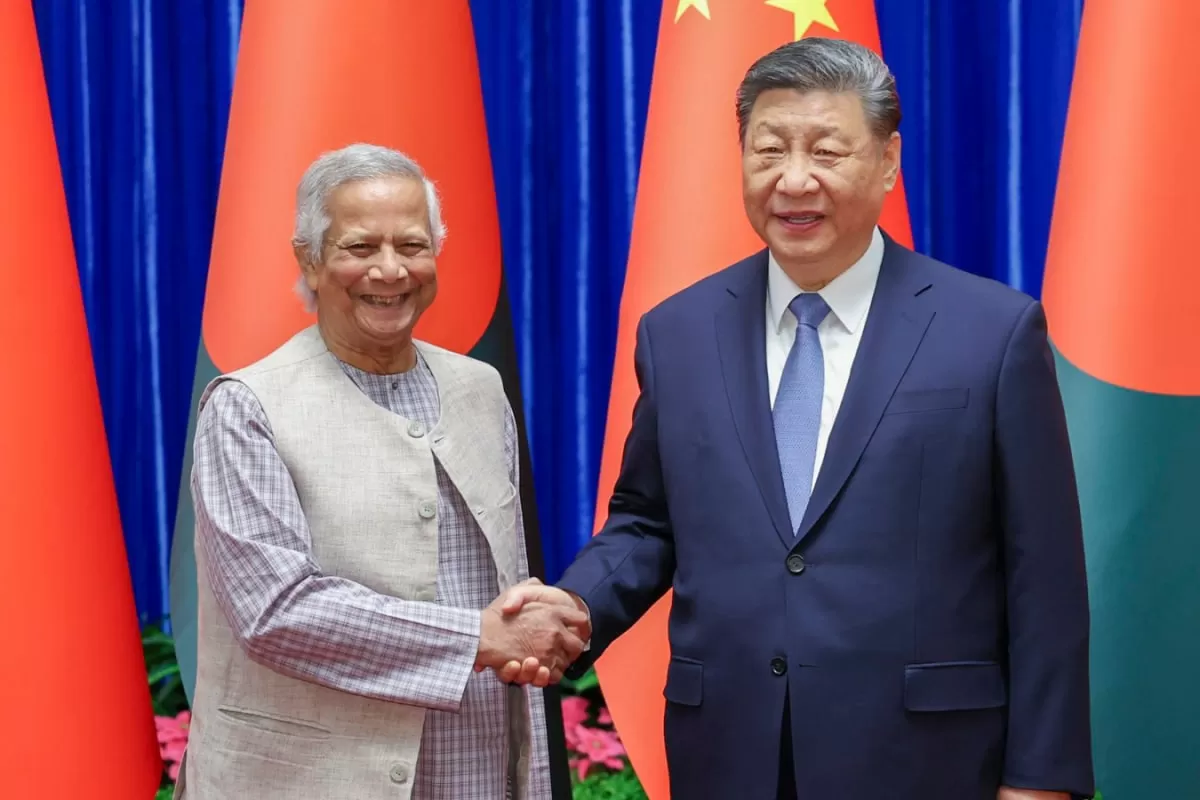
China has been making headlines in recent years for its growing economic and military prowess. With its massive population and rapid development, China has become a major player in the global arena. However, one aspect of China’s rise that often goes unnoticed is its role as the linchpin of an emerging axis in Asia.
This axis, which also includes countries like Pakistan and North Korea, is seen as a counterweight to India’s rising influence in the region. As China leverages its economic and military might, it has become a key player in shaping the political landscape of Asia.
China’s economic might is evident in its Belt and Road Initiative (BRI), a massive infrastructure project that aims to connect China with the rest of Asia, Europe, and Africa. Through this initiative, China is not only expanding its economic reach, but also gaining political influence in the countries where these projects are being implemented.
One of the most significant projects under the BRI is the China-Pakistan Economic Corridor (CPEC). This $62 billion project aims to connect China’s western region with the Pakistani port of Gwadar, providing China with a direct route to the Arabian Sea. This has not only strengthened China’s ties with Pakistan, but also given it a strategic foothold in the Indian Ocean.
Moreover, China’s economic investments in countries like Sri Lanka, Bangladesh, and Nepal have also increased its influence in the region. These countries, which were once considered within India’s sphere of influence, are now turning towards China for economic assistance. This has not only boosted China’s image as a global economic power, but also given it a strong foothold in India’s backyard.
China’s military influence in the region is also on the rise. With the world’s largest standing army and a growing navy, China has been flexing its military muscles in the region. Its military presence in the South China Sea has been a cause of concern for its neighboring countries, including India.
China’s close relationship with North Korea is also seen as a strategic move to counter India’s rise. With North Korea’s nuclear capabilities and its tense relationship with the United States, China has gained a key ally in the region. This alliance not only gives China an upper hand in any potential conflict with India, but also strengthens its position as a global power.
However, China’s role as the linchpin of this emerging axis is not solely based on countering India’s rise. It also serves China’s own interests and strategic goals. As China becomes more assertive in its foreign policy, it sees the need to counter the influence of other major powers in the region, namely the United States and Japan.
China’s growing alliance with Pakistan and North Korea also serves as a buffer against these countries’ alliances with India. This has become especially important as India strengthens its ties with the United States and Japan, which are seen as China’s main rivals in the region.
Moreover, by becoming the linchpin of this axis, China is also expanding its global influence and asserting its position as a major player in international affairs. With its economic and military might, China has the potential to shape the political landscape of Asia and beyond.
In conclusion, China’s role as the linchpin of this emerging axis cannot be overstated. As it leverages its economic and military influence to counter India’s rise, it is also advancing its own strategic goals and expanding its global influence. However, this should not be seen as a negative development, as a strong and stable China can bring stability and prosperity to the region. As China continues to rise, it is important for all countries to work towards maintaining a peaceful and cooperative relationship in order to ensure a positive future for Asia and the world.
