
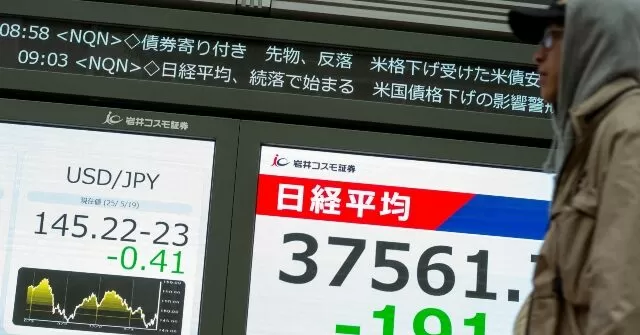
Japan’s economy has been hit hard in the first quarter of 2025, with a contraction that has taken analysts by surprise. This is the first time in a year that Japan’s economy has experienced a decline, and it is a cause for concern for the country’s leaders and citizens alike. However, this economic downturn did not happen overnight. It is a result of long-standing issues that have been plaguing Japan’s economy for years.
The recent contraction in Japan’s economy can be attributed to a combination of factors, including the ongoing trade war between the United States and China, as well as the impact of the COVID-19 pandemic. However, it is important to note that Japan’s economic struggles began long before these external factors came into play.
One of the main reasons for Japan’s economic woes is its aging population. Japan has one of the oldest populations in the world, with a declining birth rate and a rapidly aging workforce. This has resulted in a shrinking labor force and a decrease in consumer spending, which has had a significant impact on the country’s economy.
Another major issue facing Japan’s economy is its high levels of public debt. Japan’s debt-to-GDP ratio is one of the highest in the world, standing at over 200%. This has put a strain on the government’s finances and has limited its ability to stimulate the economy through fiscal policies.
Furthermore, Japan’s economy has been struggling with deflation for many years. This means that prices have been consistently falling, making it difficult for businesses to make a profit and for the economy to grow. The government has tried various measures to combat deflation, but it has been a persistent issue that has hindered Japan’s economic growth.
Despite these challenges, Japan’s economy has shown resilience and has managed to maintain a steady growth rate in recent years. However, the recent contraction has raised concerns about the country’s economic future. The government has taken steps to address these issues and has implemented policies to boost economic growth.
One of the measures taken by the government is the implementation of Abenomics, a set of economic policies introduced by Prime Minister Shinzo Abe in 2012. These policies aim to stimulate economic growth through a combination of monetary easing, fiscal stimulus, and structural reforms. While Abenomics has had some success in boosting Japan’s economy, it has not been able to fully address the underlying issues.
Another important step taken by the government is the promotion of women’s participation in the workforce. With a shrinking labor force, Japan has recognized the need to tap into the potential of its female population. The government has implemented policies to encourage more women to enter the workforce and has also introduced measures to support working mothers.
In addition, the government has also been focusing on promoting innovation and entrepreneurship in order to drive economic growth. Japan has a strong reputation for technological advancements, and the government is working towards creating an environment that fosters innovation and supports startups.
Despite the challenges facing Japan’s economy, there is still hope for a brighter future. The country has a highly skilled workforce, a strong education system, and a culture of hard work and resilience. With the right policies and strategies in place, Japan can overcome its economic struggles and emerge as a stronger and more prosperous nation.
In conclusion, Japan’s recent economic contraction is a cause for concern, but it is not a surprise. The country has been facing long-standing issues that have hindered its economic growth for years. However, with the government’s efforts to address these issues and the determination of its people, Japan can overcome this setback and emerge as a stronger and more resilient economy. The future of Japan’s economy is in the hands of its leaders and citizens, and with the right approach, the country can overcome this challenge and thrive in the years to come.
