
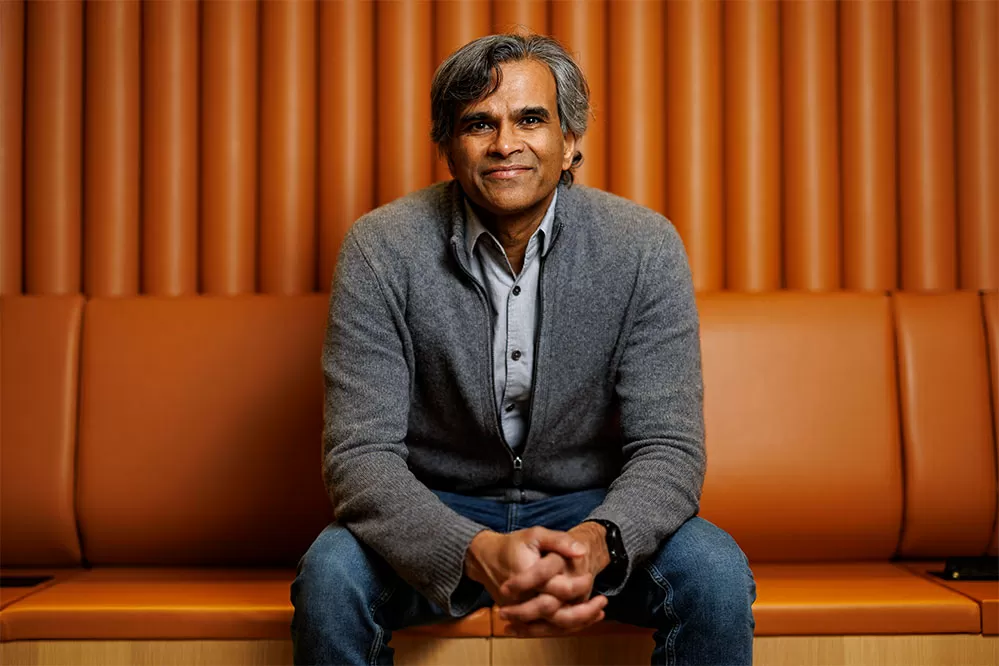
Sendhil Mullainathan is a name that has become synonymous with groundbreaking research in the fields of behavioral economics and machine learning. With a career spanning over two decades, Mullainathan has made significant contributions to these fields, earning him numerous accolades and recognition from his peers. But what sets him apart from other researchers is his unique perspective, shaped by his personal experiences and diverse background.
Born in Tamil Nadu, India, Mullainathan grew up in a household where education was highly valued. His parents, both professors, instilled in him a love for learning and a curiosity to understand the world around him. This early exposure to academia laid the foundation for his future career in research.
Mullainathan’s journey in the field of economics began at Cornell University, where he completed his undergraduate studies. He then went on to earn a Ph.D. in economics from Harvard University, where he was mentored by renowned economists such as Lawrence Summers and Andrei Shleifer. It was during this time that Mullainathan’s interest in behavioral economics was sparked.
Behavioral economics is a branch of economics that combines insights from psychology and economics to understand how people make decisions. Mullainathan was drawn to this field because it offered a more realistic approach to understanding human behavior, compared to the traditional economic models that assume people always act rationally. He was fascinated by the idea that people’s decisions are influenced by their emotions, biases, and social norms, rather than just rational thinking.
After completing his Ph.D., Mullainathan joined the faculty at the Massachusetts Institute of Technology (MIT), where he currently holds the position of the Robert C. Waggoner Professor of Economics. At MIT, he co-founded the Abdul Latif Jameel Poverty Action Lab (J-PAL), a research center that uses randomized controlled trials to evaluate the effectiveness of social policies and programs. J-PAL has become a global leader in the fight against poverty, and Mullainathan’s contributions have been instrumental in its success.
Mullainathan’s research has focused on understanding the behavior of individuals and institutions, and how this behavior affects economic outcomes. He has published numerous papers on topics such as discrimination, poverty, and decision-making, which have been widely cited and have had a significant impact on the field of economics. His work has also been featured in top academic journals, including the American Economic Review and the Quarterly Journal of Economics.
In recent years, Mullainathan has also turned his attention to the field of machine learning, which involves using algorithms and statistical models to analyze large datasets. He believes that combining insights from behavioral economics with machine learning can lead to a better understanding of human behavior and decision-making. This interdisciplinary approach has the potential to revolutionize the way we think about and solve complex economic problems.
Mullainathan’s expertise in both behavioral economics and machine learning has led to collaborations with researchers from various fields, including computer science, psychology, and public policy. His work has also caught the attention of policymakers, who have used his research to design more effective policies and interventions.
Apart from his academic achievements, Mullainathan is also a sought-after speaker and has given talks at prestigious institutions such as the World Bank, the Federal Reserve, and the United Nations. He has also been recognized for his contributions with numerous awards, including the MacArthur Fellowship, also known as the “Genius Grant.”
But what truly sets Mullainathan apart is his unique perspective, shaped by his personal experiences. As an Indian-American, he has a deep understanding of the cultural and social factors that influence decision-making in different societies. This has allowed him to bring a fresh and diverse perspective to his research, challenging traditional economic theories and offering new insights.
Mullainathan’s journey from a small town in India to becoming a leading researcher in the fields of behavioral economics and machine learning is an inspiration to many. He has shown that with hard work, determination, and a unique perspective, one can achieve great success and make a significant impact in their chosen field.
In conclusion, Sendhil Mullainathan’s contributions to the fields of behavioral economics and machine learning have been nothing short of remarkable. His research has not only advanced our understanding of human behavior but has also had a real-world impact on policies and interventions. With his unique perspective and interdisciplinary approach, Mullainathan continues to push the boundaries of knowledge and inspire future generations of researchers.
