
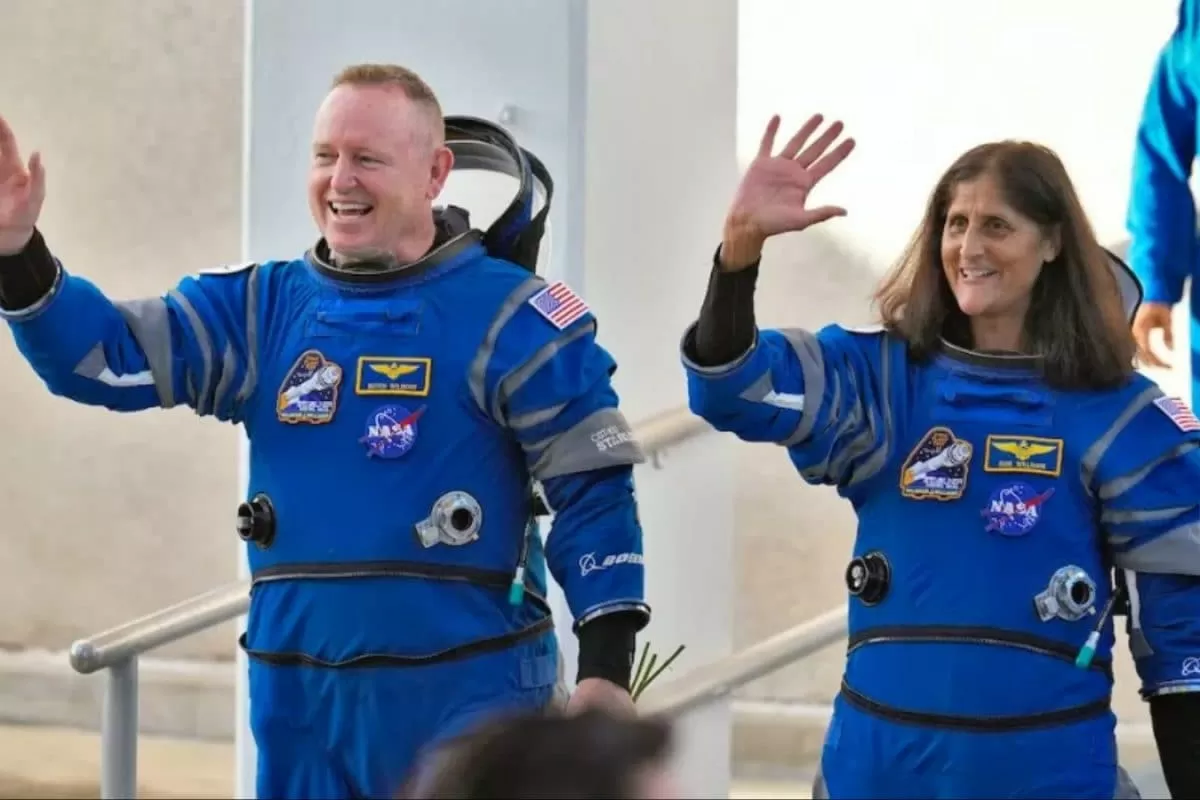
After a grueling nine months in microgravity, NASA astronauts Sunita Williams and Butch Wilmore are set to return to Earth. While many may think that their journey has been smooth and effortless, the truth is that they have faced numerous challenges and hardships during their stay in space. One of the biggest concerns for both astronauts upon their return is the possibility of muscle atrophy, bone density loss, and “baby feet,” which can make walking difficult.
Muscle atrophy is a condition that occurs when muscles are not used or exerted for an extended period of time. In microgravity, the human body experiences a significant decrease in the need for muscle use, as there is no gravity to fight against. This results in the muscles becoming weaker and smaller over time. For Williams and Wilmore, this means that their muscles may have significantly weakened during their stay in space, making it difficult for them to perform everyday tasks upon their return to Earth.
In addition to muscle atrophy, astronauts also face the risk of bone density loss during long-term space missions. On Earth, our bones are constantly working against gravity, which helps to strengthen and maintain their density. However, in microgravity, bones do not have this added pressure, causing them to lose their strength over time. This can lead to conditions such as osteoporosis, where bones become more fragile and prone to fractures. For Williams and Wilmore, this means that their bones may have become weaker during their stay in space, making them more susceptible to injuries upon their return to Earth.
But perhaps one of the most surprising effects of microgravity on the human body is the development of “baby feet.” This condition occurs due to the lack of pressure on the feet in microgravity, causing the skin to soften and thicken. This can then lead to a loss of sensitivity in the feet and make walking on solid ground extremely uncomfortable and difficult. For Williams and Wilmore, this could mean that they will have to relearn how to walk once they return to Earth.
Despite these potential challenges, Williams and Wilmore are determined to overcome them and are already preparing for their return to Earth. They have been following a strict exercise regimen to keep their muscles and bones as strong as possible during their stay in space. This includes a combination of cardiovascular and strength training exercises, as well as using specialized equipment to mimic the effects of gravity on their bodies.
In addition to physical training, the astronauts have also been closely monitored by NASA’s medical team, who have been studying the effects of long-term space missions on the human body. This research is crucial for future space missions, as it will help scientists and astronauts better prepare for the challenges that come with living and working in microgravity.
Williams and Wilmore are also looking forward to the support of their loved ones and the warm welcome they will receive upon their return to Earth. They have been in constant communication with their families and friends, who have been a source of motivation and encouragement throughout their journey. The two astronauts are eager to share their experiences and findings with the world, inspiring future generations to pursue careers in space exploration.
As their mission comes to an end, Williams and Wilmore are grateful for the opportunity to spend nine months in microgravity and contribute to the advancement of space research. They are determined to overcome any challenges that may come their way and are excited to return to Earth and share their incredible journey with the world. Their resilience and determination serve as a reminder to us all that no challenge is too great when we set our minds to achieving our goals.
