
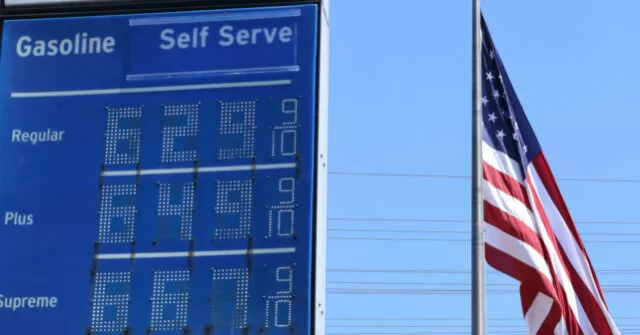
The consumer price index (CPI) for March was recently released, and it showed that higher gasoline prices had a significant impact on the overall index. However, experts have noted that outside of the energy sector, price pressures remained relatively muted. This is great news for consumers, as it indicates that the recent rise in gasoline prices may not have a widespread impact on the economy. This article will take a closer look at the CPI report and what it means for the future of the economy.
According to the latest data, the CPI rose by 0.6% in March, the largest increase since August 2012. This was mainly driven by a 9.1% spike in gasoline prices, which accounted for almost half of the overall increase. This may be concerning at first glance, as it could lead to fears of warflation – a term used to describe a period of rising prices caused by an increase in military spending. However, a deeper analysis of the report shows that this is not the case.
Firstly, the rise in gasoline prices was largely due to the recent surge in oil prices, which was driven by geopolitical tensions in the Middle East. This is a temporary factor that is unlikely to have a lasting effect on the economy. In fact, as tensions ease and oil prices stabilize, we can expect the CPI to return to more normal levels.
Secondly, outside of the energy sector, price pressures remained subdued. The core CPI, which excludes volatile food and energy prices, only rose by 0.3% in March. This is in line with expectations and indicates that there is no widespread inflationary pressure in the economy. This is important because it means that the recent rise in energy prices is not spilling over into other sectors, which could have a more significant impact on the overall economy.
Furthermore, the CPI report also showed that the cost of shelter, which is a major component of the index, remained stable in March. This is a positive sign, as it suggests that rental and housing costs are not rising at an alarming rate. This is especially important for low-income households who are most vulnerable to any increase in housing costs.
The post March CPI report is a clear indication that warflation is limited to energy prices and is not having a widespread impact on the economy. This is great news for consumers, who may have been worried about the potential consequences of rising gasoline prices. It also provides some relief for the Federal Reserve, which has been tasked with keeping inflation in check. With the CPI remaining relatively stable outside of the energy sector, the central bank can continue on its path of gradual interest rate hikes without having to worry about a sudden spike in inflation.
Moreover, the CPI report also highlights the resilience of the US economy. Despite the recent surge in gasoline prices, consumer spending remains strong, and the overall economy is continuing to grow. This is a testament to the strength of the American consumer, who has shown time and again their ability to weather economic storms.
In conclusion, the March CPI report is a reassuring sign for the US economy. While the rise in gasoline prices may have pushed up the overall index, it is evident that outside of the energy sector, price pressures are muted. This means that the recent increase in gasoline prices is not likely to have a significant impact on the economy in the long run. As tensions ease and oil prices stabilize, we can expect the CPI to return to more normal levels, providing further relief for consumers and policymakers alike. So, let’s take this latest report as a positive sign and continue to have faith in the strength of the American economy.
