
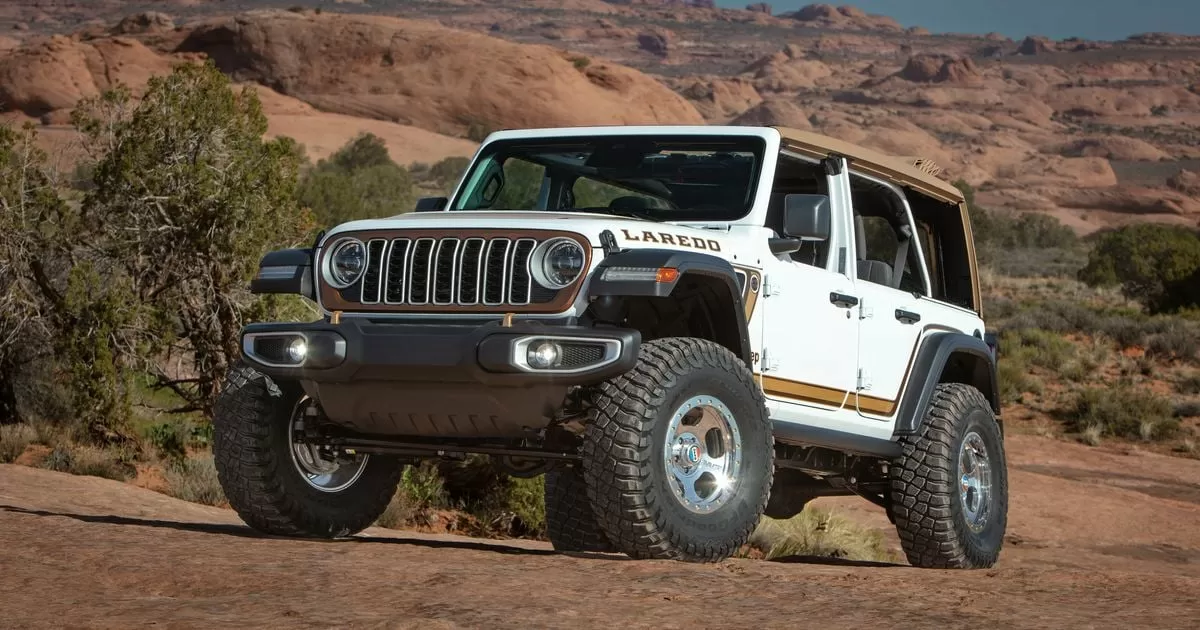
In the world of automobiles, there are few brands that have a distinct and iconic identity like Jeep. Known for its rugged design and off-road capabilities, Jeep has been a favorite among adventure seekers and outdoor enthusiasts for decades. However, in recent years, there has been a noticeable trend of other automakers copying Jeep’s design. While some may see this as a threat to Jeep’s identity, the American off-road brand sees it as a validation of their success and a boost to their own identity.
Jeep’s rugged design has become synonymous with the brand and is instantly recognizable by people all over the world. From its signature seven-slot grille to its boxy shape, Jeep’s design has remained consistent over the years, making it stand out in a sea of similar-looking vehicles. This has been a key factor in Jeep’s success and has helped the brand build a loyal fan base.
However, with the rise of SUVs and crossovers in the market, many automakers have started to incorporate elements of Jeep’s design into their own vehicles. This has led to some critics questioning whether Jeep’s identity is being diluted by these copycats. But Jeep’s response to this is simple – imitation is the sincerest form of flattery.
Jeep’s Chief Marketing Officer, Olivier Francois, believes that the more automakers copy Jeep’s design, the stronger their own identity becomes. In an interview with CNBC, Francois said, “We are the original, and we are the authentic. And when you are the authentic, you have a lot of people trying to copy you.” He further added, “It’s a compliment, and it’s a validation of our success.”
Jeep’s confidence in its own identity is not unfounded. The brand has a rich history and heritage that sets it apart from its competitors. It was first introduced as a military vehicle during World War II and has since evolved into a household name. Jeep’s off-road capabilities have been put to the test in various terrains and have proven to be unmatched. This has earned the brand a reputation for being tough, reliable, and adventurous.
Moreover, Jeep’s design is not just about looks; it’s about functionality. The brand’s vehicles are designed to withstand the toughest of conditions, making them ideal for off-road adventures. This is something that other automakers may struggle to replicate, as it requires a deep understanding of the brand’s DNA and engineering expertise.
Jeep’s design has also evolved over the years, keeping up with the changing times while still staying true to its roots. The brand has introduced new models like the Jeep Renegade and the Jeep Gladiator, which have been well-received by consumers. This shows that Jeep is not afraid to innovate and adapt, while still maintaining its unique identity.
In fact, Jeep has embraced the trend of other automakers copying its design and has even used it to its advantage. In 2018, Jeep launched a marketing campaign called “The Originals,” which featured the brand’s iconic design and highlighted its authenticity. The campaign was a huge success and helped reinforce Jeep’s identity as the original and the best.
Jeep’s success and strong identity have also attracted the attention of other automakers who have formed partnerships with the brand. For instance, Jeep has collaborated with Mopar, a subsidiary of Fiat Chrysler Automobiles, to create a line of accessories and performance parts for Jeep vehicles. This not only adds value to Jeep’s brand but also solidifies its position as a leader in the off-road market.
In conclusion, while some may see the trend of other automakers copying Jeep’s design as a threat, the American off-road brand sees it as a testament to its success and a reinforcement of its identity. Jeep’s rugged design has stood the test of time and has become an integral part of the brand’s DNA. As the saying goes, “Imitation is the sincerest form of flattery,” and for Jeep, it only strengthens their identity as the original and the best.
