
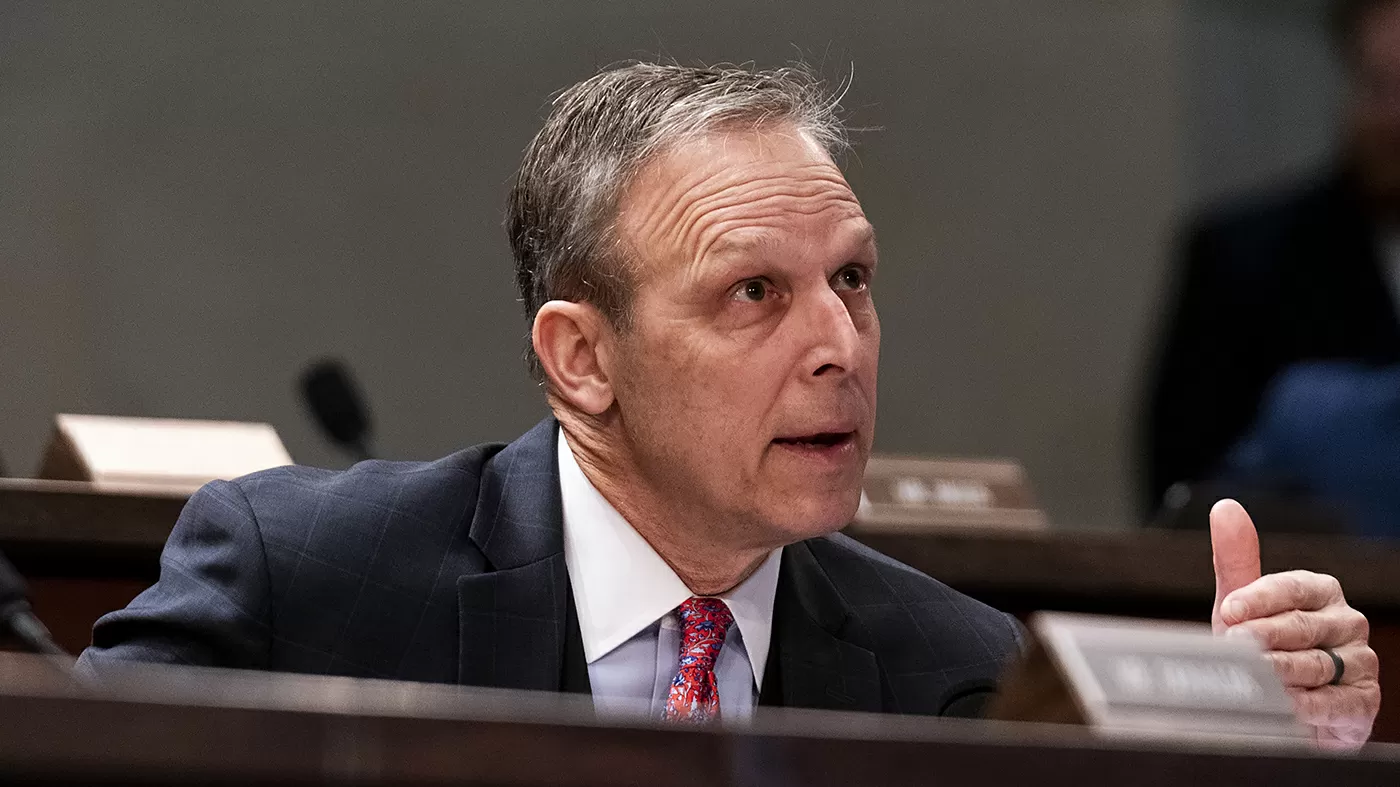
Rep. Scott Perry (R-Pa.) has suggested an interesting and thought-provoking solution to the ongoing debate over the $200 billion supplemental funding request from the Pentagon for its military operations. During an appearance on CNN’s “The Source,” Perry proposed that the Iranian regime should be the one to foot the bill, rather than Congress.
Perry argued that since it was Iran who “started the war,” they should be the ones responsible for covering the costs of the ongoing military operation. This bold suggestion has sparked a new conversation about the role of the Iranian regime in the current conflict and their responsibility in funding it.
The congressman’s statement has received mixed reactions, with some praising his innovative thinking and others expressing skepticism. However, one thing is certain – Perry’s idea has opened up a new perspective on the issue and should be given serious consideration.
It is no secret that tensions between the United States and Iran have been escalating in recent years. The Iranian regime has been accused of supporting terrorist groups and destabilizing the region, while the U.S. has taken a hardline stance against their nuclear program.
In light of these tensions, the U.S. has been forced to increase its military presence in the Middle East to maintain stability and protect its interests. This has resulted in a significant financial burden on the American taxpayers, with the Pentagon requesting an additional $200 billion in funding for its operations.
Perry’s proposal challenges the traditional notion that it is the responsibility of Congress to approve and allocate funds for military operations. Instead, he suggests that the country responsible for initiating the conflict should be held accountable for its costs.
This idea is not without precedent. In the past, countries that have initiated wars have been required to pay reparations or contribute to the costs of rebuilding efforts. Therefore, it is not unreasonable to expect the same from Iran in this situation.
Moreover, this proposal aligns with the principles of fairness and justice. It is only right that the country responsible for causing harm and destruction should bear the financial burden of their actions. It also sends a strong message to other nations that aggression and violence will not be tolerated and that they will be held accountable for their actions.
Perry’s suggestion also has practical implications. By holding Iran responsible for funding the military operation, the U.S. can alleviate some of the financial burden on its taxpayers. This would also free up funds that could be used for other important domestic issues, such as healthcare and education.
Of course, there are legitimate concerns about the feasibility of this proposal. Some may argue that it is unrealistic to expect Iran to fulfill such a large funding request, especially given their strained relationship with the U.S. However, it is worth exploring the possibility and negotiating with Iran to find a solution that is mutually beneficial.
In conclusion, Rep. Scott Perry’s suggestion to have the Iranian regime foot the bill for the $200 billion supplemental funding request from the Pentagon is a bold and innovative idea that deserves serious consideration. It challenges the traditional notion of funding military operations and sends a strong message of accountability to those who initiate conflicts. It is a solution that not only has practical implications but also aligns with principles of fairness and justice. It is time for Congress to think outside the box and consider all options to address this pressing issue.
