
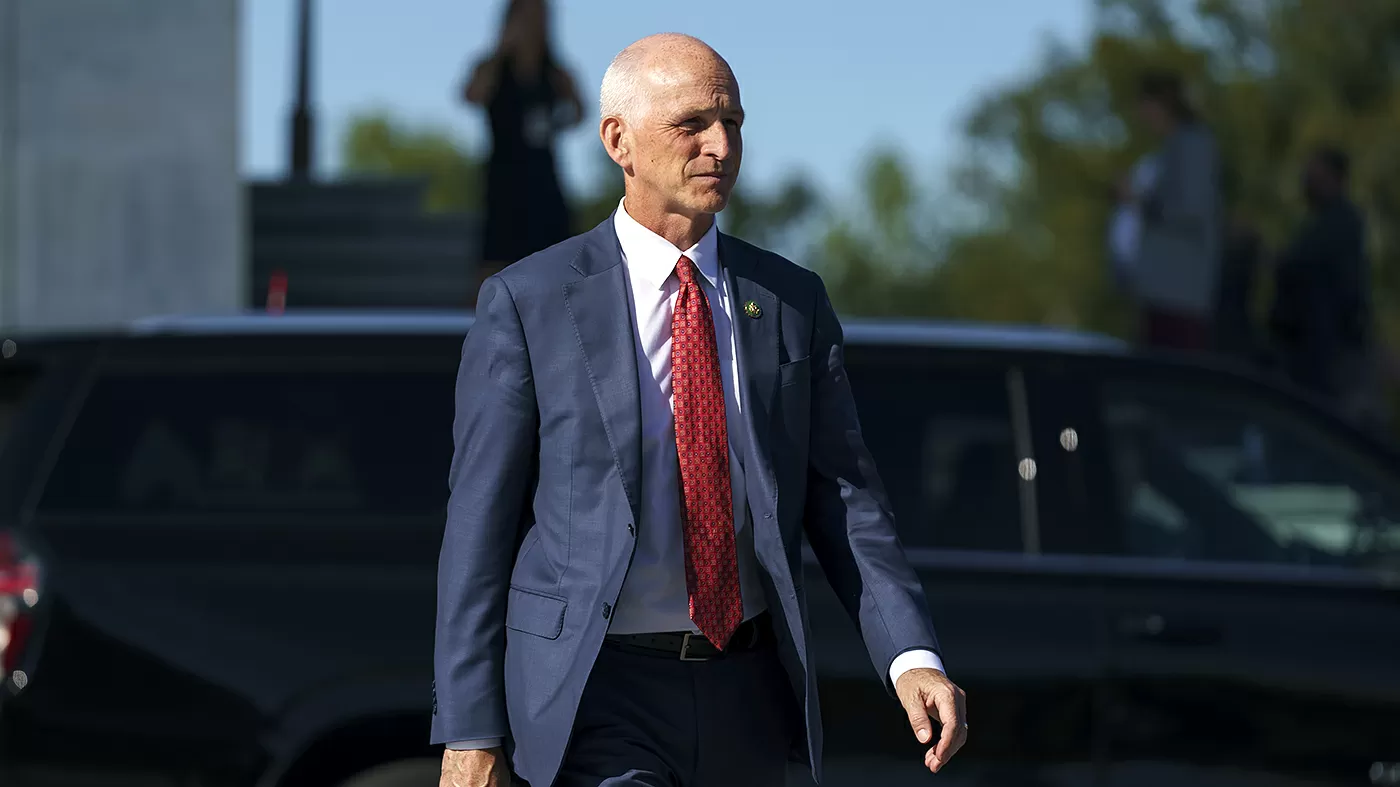
Rep. Adam Smith (D-Wash.) recently spoke out about the U.S.-NATO relationship, acknowledging that there is a “legitimate problem” between the two parties. However, he also suggested that the issue may not necessarily be the fault of the U.S. alliance.
During a press conference on Tuesday, Smith expressed his concerns about the noticeable differences in how NATO has handled U.S. operations in Iraq and Afghanistan compared to the current conflict in Iran. He stated, “Well, there is a disconnect between how NATO operated in Iraq and Afghanistan and how they are currently operating in Iran.”
His remarks come at a crucial time as tensions continue to escalate between the U.S. and Iran following the recent U.S. airstrike that killed top Iranian general Qasem Soleimani. The strike has sparked concerns about the potential for a larger conflict in the region and has put a strain on the U.S.-NATO relationship.
Smith acknowledged that there have been challenges in the U.S.-NATO relationship, particularly in regards to the differing approaches to handling conflicts. He explained, “There is a difference in how we perceive the threat from Iran and how our European allies perceive it. This has led to some disconnect in how we approach the situation.”
While some may view this as a negative development in the U.S.-NATO relationship, Smith remained optimistic and emphasized the strong bonds between the two parties. He affirmed, “But I also want to stress that despite these challenges, the U.S. and NATO have a strong and enduring relationship.”
Smith also pointed out that the U.S. and NATO have successfully worked together in the past and continue to do so in various areas, including counterterrorism and nuclear deterrence. He highlighted the importance of maintaining this relationship and finding ways to address any challenges that arise.
The U.S. and NATO have been strong allies for decades, with the alliance serving as a vital pillar of security and stability in Europe and beyond. However, as with any relationship, there are bound to be bumps in the road. It is important to address these issues and work towards finding solutions that benefit both parties.
As the U.S. and NATO navigate through these challenges, it is crucial to remember the common goals and values that bind them together. Both parties share a commitment to promoting democracy, peace, and security around the world. This shared vision should serve as a guiding force as they work towards resolving any issues in their relationship.
In conclusion, Rep. Adam Smith’s remarks shed light on the current state of the U.S.-NATO relationship and the challenges it is facing. Despite these challenges, it is evident that the U.S. and NATO remain strong allies with a deep-rooted partnership. As they continue to work towards addressing any issues, it is essential to remember the strength and importance of their relationship and the shared goal of promoting global peace and security.
